daniel chigunwe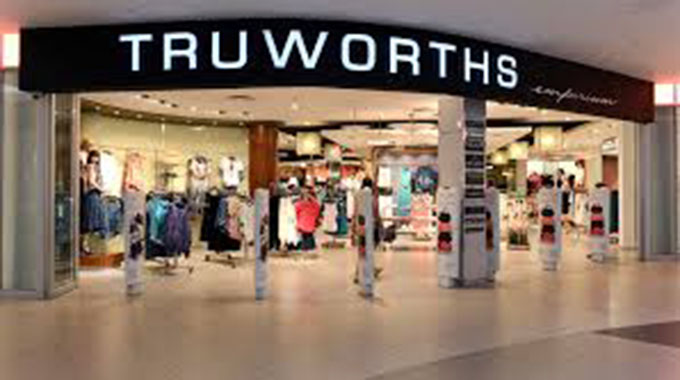
Business Writer
Clothing retailer, Truworths, is set to raise $2,227 billion through a rights offer to capitalise the company in order to sustain its viability.
In a circular, the company said the additional capital will increase working capital funding at a sustainable cost in light of the high interest rate environment and reduce borrowings.
The funds will also finance the opening of new formats of Truworths chain stores and improve the product assortment.
According to the circular, the rights offer involves 384,067,512 ordinary shares of a nominal value of $0.0001 each, at a rights offer price of $5.80 per share, on the basis of one (1) new ordinary share for every one (1) ordinary share in issue as at the Record Date.
The rights offer shares represent 50 percent of the company’s enlarged issued ordinary share capital after the proposed rights offer.
The clothing retailer said recently that the Zimbabwean economy has been facing significant economic challenges, highlighted by a rapidly depreciating exchange rate resulting in high inflation accompanied by a decline in economic growth.
It said this was exacerbated by the Covid-19 pandemic, which saw Truworths retail outlets closed for periods in excess of eight weeks in line with the government’s stipulated lockdowns, as the company was considered a non-essential service.
As a result, no government support was given, nor was there any concession on costs during the period.
“This period also witnessed the country going into hyperinflation from July 2019 on.” At the onset of hyperinflationary conditions, the business reduced its exposure to credit sales because of the loss of value of its debtors’ books,” reads part of the circular.
Furthermore, the company said sales value performance was negatively affected by price controls enforced by the central bank through the use of the official exchange rate in the sale of merchandise.
“The business maintained a competitive US dollar price in order to be able to compete on a US dollar basis, as translating the US dollar price to Zimbabwe dollar prices at the auction rate resulted in uneconomic Zimbabwe dollar prices and a loss of value,” Truworths said.
It noted the informalisation of the economy, which has resulted in cheap and fake imports selling at below manufacturing costs, against which the business could not compete.


 Online Reporter