Chronicle Editor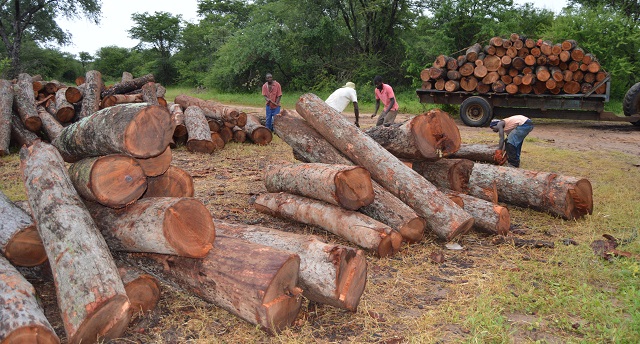
Sikhumbuzo Moyo, Senior Reporter
TSHOLOTSHO Rural District Council will soon enforce its 2019 resolution of barring timber logging companies from exporting raw timber from the district as the local authority steps up efforts of ensuring that locals fully benefit from their natural resources.
Timber is one of the key natural resources that the district is endowed with, which has the potential to generate revenue streams for the local authority if fully harnessed. Tsholotsho is also rich in gold deposits, methane gas and wildlife.
In terms of wildlife, for every quota sold, Tsholotsho RDC retains 36 percent while 60 percent benefits the community with the remaining four percent being channelled towards the Community Areas Management Programme for Indigenous Resources (Campfire).
Methane gas deposits are found in Wards 3 and 4. While there has been interest to explore the gas by some investors who undertook feasibility studies, nothing much has been done so far to realise revenue from the natural resource.
There are five companies with timber logging contracts in Tsholotsho RDC and these are Zenzela, Nala, TN Harlequin, Teak Barons and Alumcury. Some of the companies have been complying with the council resolution.
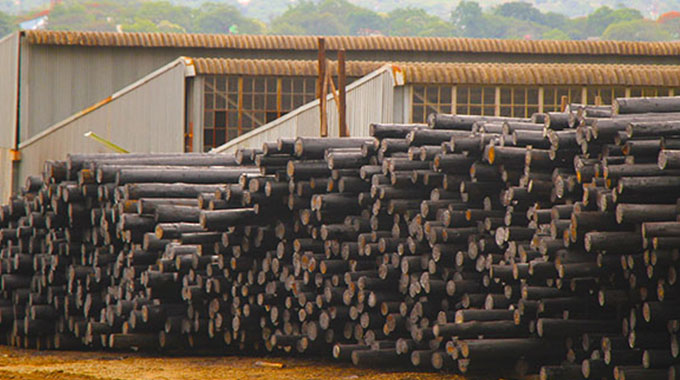
They have set up processing plants in their areas of operation such as Sodaka village where harvested timber is processed into planks before it is taken out of the district.
Tsholotsho RDC chairperson Mr Esau Siwela said council will make it mandatory for companies with timber concessions in the district to set up furniture manufacturing factories as part of efforts to create employment.
“There is a standing resolution by council that no timber will leave Tsholotsho unprocessed, but that resolution has not been enforced due to certain clauses in the contracts that the authority has with those companies. We buy expensive furniture in Tsholotsho yet it’s our timber,” he said.
Timber logging companies have been accused of failing to plough back to the community through routine maintenance of roads and availing employment opportunities to locals.
“Tsholotsho must benefit from its natural resources and while royalties are coming, we feel it’s not enough. A furniture factory using timber from Tsholotsho cannot operate from Bulawayo or Harare when it can still do the same from our district,” said Mr Siwela.
“By enforcing the council resolution, we are moving towards industrialisation of Tsholotsho district.”
The poor road network in the district has been cited as one of the impediments to the development of the district. The government has since embarked on the rehabilitation of the 115km Bulawayo-Tsholotsho road with tarring of the 10km stretch already underway.
Under the Infrastructure, Utilities and Digital Economy cluster, Zimbabwe’s economic blueprint, the National Development Strategy (NDS 1) prioritises the completion of road rehabilitation projects. The main aspirations of NDS1 include infrastructural development as a key enabler in attaining Vision 2030 of having an upper middle-income economy.
NDS 1 notes that “a road can become an economy” and in this regard, focus will be on the development of feeder roads into communities as a way of developing underdeveloped remote areas. – @skhumoyo.



 Online Reporter