

 admin
admin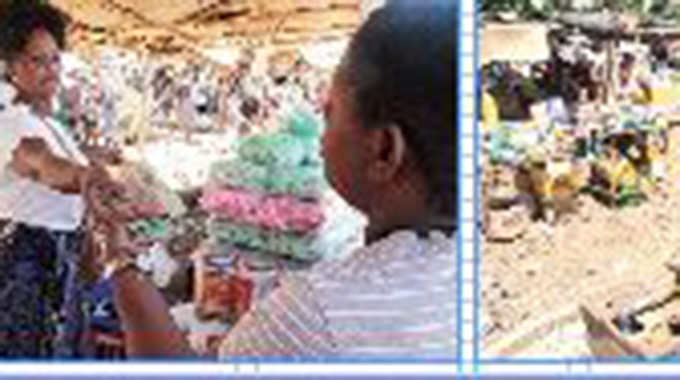
Beaven Dhliwayo,Features Writer
IT is a hot Wednesday morning at Tsiga market in Harare’s heavily populated Mbare suburb.
The place is bustling with customers buying mostly basic commodities.
After more than a decade of economic challenges that triggered decline of formal businesses, Tsiga market situated in Mbare’s Joburg Lines — populated by informal traders — has emerged as a centre for profitable engagements.
At the busy market, Mambo Dhuterere’s “Mweya ndisesekedze” song comes from a nearby radio. There are different sections to the song.
As cars drive up and down a road near Tsiga, police in a green double cab spot some suspicious activity and make a sudden halt.
In a movie style, about six police officers jump out and surround a bus that is offloading boxes of varying products, including crates of foreign beers.
They question the source of the cargo and also ask for receipts.
What ensues is a scene of adrenaline-fueled energy as the bus and a huge truck are unloaded at speed.
Urgent deals are made with stall owners at Tsiga. Transporters and sales representatives with carts and stalls piled high with cooking oil, sugar, rice, diapers, school stationery, spaghetti, macaroni, powdered milk, flour, washing powder, bathing soap, hand and body lotions, biscuits, and candles, among a variety of basic commodities are a common feature.
The market is a hive of activity even during holidays — which traders describe as the magic times when they record massive sales.
The hustle and bustle brings a life to Tsiga market, where so much untaxed hard cash is exchanging hands on a daily basis.
Tsiga is no place for those without cash. It is a cash economy, where goods are sold in US dollar and bond notes only.
Bond coins attract an additional charge and one cannot buy using swipe or mobile money.
The crowd has a life of its own, with traders touting on top of their voices, while buyers move like enchanting shoals of fish.
There is chatter between sellers and buyers, old friends catching up, new friends made.
At Tsiga market, hundreds of people buy their supplies, with many claiming that the goods have fair prices than those found in most formal supermarkets.
Despite the blazing celestial fireball in the sky, many people including maids, housewives, the elderly, street hawkers and even the trendy visit the market which harbours over 3 000 traders.
Cash in and cash out stalls are also popular, with notes and coins attracting a 25 and 20 percent premium respectively, much cheaper than in the central business district and other areas.
Tsiga has literally become an underground economy where clandestine market or series of illegal transactions are happening in broad daylight.
Everything happening at the market has some aspect of illegality or is characterised by some form of noncompliant behavior with the country’s set of rules.
From smuggling foreign made goods to selling cash, Tsiga has become a million-dollar untaxed economy.
However, there are other things that grab attention at the market.
Napping council
The Harare City Council is obviusly sleeping on the job.
At another entrance there is a big pile of garbage emitting an unbearable smell.
Over the years, boiled vegetables, cardboard boxes, burned meat, old cloths, sadza, empty bottles and mouse droppings, among other rubbish, have intermingled into a stench that brings tears to the eyes.
“It’s now two years without any action from the local authority,” said Forbes Chihambakwe a vendor at Tsiga.
“We have no water or toilets at this facility, which exposes us to various communicable diseases, yet traders are paying $150 per table every month.
“To remove the garbage, council asked each table to pay US$1. We have over 3 000 tables here and everyone paid, but up to now nothing has been done.”
The poor old lady
Shupikai Huchu (52), is a food vendor at Tsiga. She is cooking sadza under her shed and visibly looks worried.
Her skin is “toasted and tortured” by both wood fire and the sun due to monotonous exposure.
The stench of sweat is evident.
Her untidy hair and worn out clothes are a sure sign of rough living.
Shupikai’s eyes are firm to the untrained eye, yet one can easily see loneliness as they become unfocused.
Her eyes have seen a lot and not all of it is pleasurable, and her hardened look and stone-cold gaze tells a sad story.
She works tirelessly all day to find some form of nourishment for her grandchildren.
“I am struggling to fend for my four grandchildren,” said Shupikai. “Their parents died of AIDS and am the one looking after them.
“I am failing to secure a Form One place for the other kid because the nearest school is asking for a US$10 bribe to speed the enrolment process. On a busy day, I make about US$5 which I use for their upkeep.”
Shupikai said the vendors are constantly arrested by the police, yet there are no water and ablution facilities at Tsiga.
If formalised, Tsiga could be a good example of a Ghetto wholesale.



 Online Reporter