admin
admin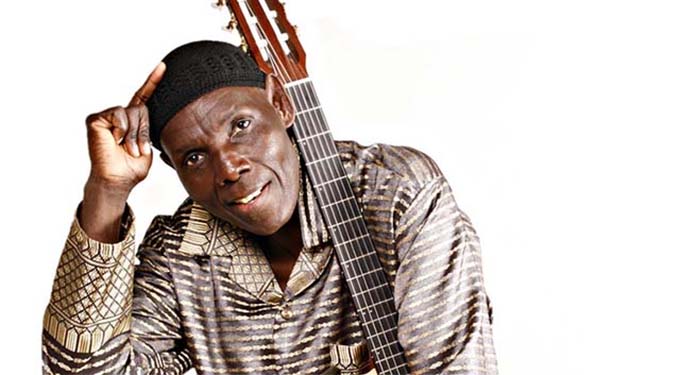
Tendai Manzvanzvike Foreign Editor
BRITISH philosopher Francis Bacon says: “The job of the artiste is always to deepen the mystery.” That was centuries ago, but it remains as relevant today as it was in the 16th century.
We saw that when music icon Dr Oliver “Tuku” Mtukudzi passed on last week. The national hero status bestowed on him by the Government of Zimbabwe, the celebration of his life, the exceptional send-off he was given in his Madziwa rural home on Sunday deepened that mystery.
Tuku’s death showed that artistes are nobody’s persons — their families included. He became a global icon even at death because he was a social, cultural, economic, political and religious commentator.
If Tuku could compose a song celebrating the United Nations’ Golden Jubilee, what it means is that Zimbabwe was now that huge house of stone where he would come and get back to, to fertilise his creative mind.
Therefore, if Tuku was that gigantic artiste, there is no way that some opposition politicians would try to appropriate him, and overshadow his demise through their antics.
MDC Alliance leader Nelson Chamisa tried to do that — distract people’s attention from Tuku to whatever it is that he was trying to achieve for Twitter, Facebook, Instagram lovers, and for the following day’s headlines.
It was cheap to try and blight the posterity of a hardworking man who started his music career in the 1970s. Releasing 66 albums is no mean task, for the songs in all of them have messages for different audiences. This is why he had such an appeal to international audiences.
But, it should be noted that this pigeon-holing of Tuku into a particular political orientation started about two decades ago when he released the album “Bvuma” (acknowledge) in 2001, which most people thought was a political satire directed at former president Robert Mugabe.
While some claimed that the song was telling the former president that he should admit that he was old enough to retire, others argued that he should acknowledge that his administration was facing challenges.
Soon after its release, the writer attended a Tuku special show at the National Sports Stadium. The Movement for Democratic Change under the leadership of the late Morgan Tsvangirai was during that period using the “red card” motif as a pointer that they were showing Zanu-PF the red card, just as they do in soccer for players who would have committed a serious foul.
So vivid were the events of that Saturday night that when I had an opportunity to interview Tuku in 2002, I raised it, and eventually sent him an email with a rebuttal to “Bvuma”, as people in the opposition thought it was a song sympathising with their anti-Government stance. But more of that later.
As Tuku and his band serenaded revellers from the just released album in the packed hall, it was evident that although they danced to all songs, they were waiting for the hit song “Bvuma”. It was as though he knew it, because he took his time, while revellers called out: “Play Bvuma! Play Bvuma!”
So, when he struck the first string, the unthinkable happened because within seconds, merrymakers — both men and women — started waving red cards, while some were busy pulling them out of their pockets.
The atmosphere was suddenly very threatening because anything could have happened. Despite the presence of a number of police details, this writer regretted why apart from Leonard Dembo and Simon “Chopper” Chimbetu, she was a Tuku fan. Fortunately, the show ended without incident.
Back to the rebuttal that I eventually had with Tuku. Ours was a relationship of “tsano/tsano” (in-law), which we reduced to calling one another Mukoma Tuku and Sis Tendai, respectively.
My 2002 diary has a number of entries when we tried to get Tuku for a television interview. Other personalities entered in that diary include Reverend Andrew Wutawunashe, former Miss Malaika Brita Masalethulini, Ambuya Miriam Mlambo, Allan Riddell, Professor Phineas Makhurane, John Bredenkamp, Dr Arikana Chihombori, Peter Chingoka, Eyahra Mathazia, Andy Flower, politicians and others.
On March 7, 2002 we had a 90-minute interview with Tuku at the TV station I worked for, and it was during that interview that Tuku said his music career started the very day he was born, when he gave his first baby-cry.
Before he went into the studio, I asked Tuku what he meant by “Bvuma”, and I also wanted to know whether it was a political song.
Philosophical, and being the wordsmith that he was, he told me that people have a tendency of ascribing meanings to songs, in order to suit what they want, which is not necessarily what the artiste intended.
Later, I emailed him my thoughts about the misinterpretation of the song, because people just wanted to hear what tickled their fancies. They were oblivious to the meaning of ageing and that the lyrics refer to both genders.
Imi mai makwegura,
Hamucharugona machembera,
Makuraka musazoramba!
Nemi baba tarirai muone,
Mwana yave mhandara,
makuraka musazoramba!
Above all, they failed to understand this ambiguous question in the lyrics:
“Kuchembera chii; chiiko kuchembera?” (What does ageing mean?)
I told Tuku that although we cannot discount the organic elements such as the effects of advancing age, which opposition party supporters were stuck with, we could not ignore the key question in his lyrics: “Kuchembera chii; chiiko kuchembera?”
I added that with age comes knowledge, wisdom, understanding and a general appreciation of one’s environment or life.
Since “Bvuma” was released a year before Tuku celebrated his Golden Jubilee, this writer believes that the artiste was saying something about his long walk in the music industry. It might have coincided with the political events of the day, but the song remains relevant.
But did “Tsano” respond to the rebuttal? No and it did not affect the professional relationship we had, whose landmark was the peace sign.
Over the years, there have been spirited efforts to try and box Tuku into a particular political party and thinking. When he entertained guests at Tsvangirai and Elizabeth Macheka’s marriage ceremony, the “Bvuma” motif was revived as people believed that he was an MDC-T sympathiser.
When former president Mugabe and first lady Grace Mugabe contributed US$10 000 after the tragic death of his son Sam, some quarters thought that he had sold out the opposition.
The artiste deepened the mystery more when he also performed at Mrs Mugabe’s birthday bash.
We seem to forget that art is not confined to space and time, but, above all, that artistes are free spirits. They are our oracles whether they sing, write, paint and/or do sculptures.
If they are confined to time, space and/or region —it means the death of creativity. Imagine if the British political systems of the time had appropriated the works of William Shakespeare? One political party might have closed his works to the world.
Tuku refused to be restricted because politics is not the only subject that makes the world go round. This is why Chamisa’s grandstanding was regrettable and also a non-event.
Rest in eternal peace Samanyanga!



 Online Reporter