admin
admin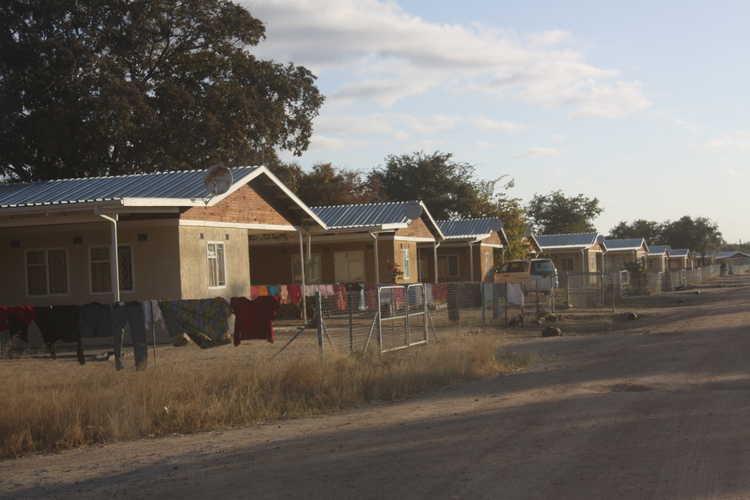

Would you like to live in a town where electricity supply is constant? Or where clean tap water pumps all day and all night long?
If your answer is yes to either one or both of the above questions, then Turf Town, a very unlikely area, sounds like the dreamland you have been yearning for.
At a time when most of the country’s municipalities are reeling from a combination of dwindling finances and managerial incompetence, Mhondoro-Ngezi Rural District Council has emerged as the silver lining to a dark cloud with their model urban settlement that will rank among the best development projects ever undertaken in the sanctions-battered Zimbabwean economy.
The magical village city of Turf Town is situated at a crossroads, only 70 kilometres from the Harare-Bulawayo highway at the Selous intersection, but it is also approachable from the Harare-Masvingo route, being just 56km from Beatrice.
Locals call it Zimbabwe’s fastest growing town where, quite literally, everything still works.
Turf’s evolution has been rapid from its origins as a cattle ranch in the 1980s, to its period as a mining compound in the 1990s and now finally, in the 2000s, a brimming town with unbelievably low levels of unemployment.
Many in the working age-group are employed by Zimplats, the country’s biggest platinum miner while the rest are occupied in a variety of other services. One aspect that visitors to the settlement have never failed to remark on is the viable partnership that the mine and council have been able to strike.
“Our agreement is that whichever piece of land the mine constructs, it leaves 10% for use by the council and that is why we are telling investors they will not face bottlenecks in accessing residential or commercial stands,’’ Timothy Sithole, the Mhondoro-Ngezi RDC town planner said.The sum result has been 3 000 houses springing up in the Mashonaland West settlement at a rate of about 400 houses per year since 2009 when large-scale building operations began.A private land developer, Searlcom Construction, which was awarded the contract to build and transfer Phase One and Two of Turf Village, completed its work on time during one of the greatest construction booms undertaken by a local authority in the country.
Phase One saw the construction of 66 one-bedroomed, 69 two-bedroomed and 46 three-bedroomed precast-concrete modular houses. Afterwards, a new contract was negotiated for the next phase of Turf Village comprising 20 one-bedroomed, 20 two-bedroomed, 10 three-bedroomed houses, 56 domestic quarters and one pre-primary school.
By March 2010, Phase Two of Turf Village entailing the construction of 306 one-bedroomed, 152 two-bedroomed, 191 three-bedroomed and 191 domestic quarters had been done and dusted and all the council now awaited was town status, which is still pending.
The Sunday Mail Extra news crew was surprised to be advised, after asking for directions to the local ghetto, that they were actually standing on it. The usual indicators were missing: puddles of raw sewage, uncollected garbage strewn all over the roadsides and youths milling around aimlessly.
At midday the streets in the residential areas of Turf are practically deserted. All that is visible are housewives going about their outdoor household chores, children playing on their frontyards and young women braiding each other, their gossip centred in the merry happenings of their little buzzing town.
Otherwise at this hour, almost everyone of working age is at their earning-place, most of them ensconced in Zimplats’ mills and pits which form the lifeblood of the small Turf population that might approximately number less than 10 000 people.
In the other group of workers are the municipal employees, shop-keepers, civil servants, NGOs and general labourers, who at some point or other have benefitted from projects commissioned by the mine.
According to Busi Chindove, head Corporate Affairs at Zimplats, “Bricks at Turf Village are produced by members of the community who we supported by facilitating the establishment of a co-operative driven by women, providing technical and business skills training and supplying brick-moulding machines.”
“By project completion, they would have moulded and supplied nearly eight million bricks and earned close to US$500 000. Beyond the current Zimplats project, they will be equipped to continue running the brick making venture as a small-scale enterprise supplying bricks for other contracts within the district and province.”Aware though that Turf residents will not continue to live on platinum alone, the town fathers are already planning for the inevitable future.
“When we make the call for investment, we are not restricting ourselves to a particular sector, normally we say anyone who wants to invest. Because in the unlikely event of the mine closing, Turf must not turn into a ghost town,’’ vows Sithole, who at 34, has the zeal and stamina to steer through Turf’s development.
His design since arriving at the then sleepy growth point in 2009 seems to be going according to plan. Four commercial banks, among them BancABC, ZB, Stanbic and CABS have so far set up shop with a fifth reported to be on the way.
A popular supermarket chain has also staked its presence and will soon be joined by another whose construction is already underway. A guest-house is also expected to open its doors in the this year.
And, although donkeys and chickens still run riot among the scores of traders brandishing their wares in flea markets at the shopping centre, formal business in Turf Town is generally booming.
“We are developing Turf Village to become one of the fastest growing urban centres in this country,” said Zimplats chief executive officer Alex Mhembere.


 Online Reporter