Siphakeme .Mnindwa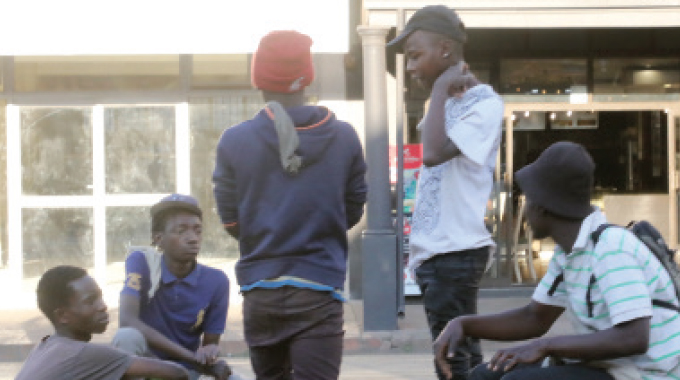
Peter Matika, [email protected]
IN the heart of Bulawayo, better known as the City of Kings and Queens, the sun sets to the bustling sounds of engines and the chirping of birds. Streetlights flicker to life, unfolding a troubling situation that plays out almost every evening in the city centre streets.
Once a patchwork of laughter and camaraderie among the youth, the pavements have recently become battlegrounds for turf wars among street children.
Tensions are palpable as different groups vie for control over the same patches of pavement. The stakes are high, and the air is thick with uncertainty.
“I used to play with my friends here. Now, it’s not safe. We can’t even sit down without worrying about being chased away,” says Khumbulani Dube, who recently returned to the streets after a failed attempt to build a life for himself.
With a voice barely above a whisper, he points to a corner along 9th Avenue, explaining that the conflict is not just about space—but about survival.
Many of these children are not just fighting for territory but for access to necessities such as food and shelter. With limited resources and support, the pressure to assert dominance has led to confrontations that can turn violent in an instant.
The minors, mainly boys, often overlooked and misunderstood, are caught in a cycle of conflict that has left many concerned about their safety and well-being.
As dusk falls, the usual gathering spots—parks, alleyways, and street corners—undergo an unsettling shift. What is during the day a haven for play and friendship morphs into a landscape marked by tension and territorial disputes.
Groups of children, some as young as 14, now claim ‘ownership’ over certain corners and areas, leading to altercations that quickly escalate into physical confrontations—sometimes resulting in bloodshed.
“It is heartbreaking to see. These kids are just trying to find their place in a world that has largely forgotten them. When they fight over territory, it’s not just about the space—it’s about survival, identity, and a desperate need to belong,” said a woman who regularly provides food, clothing, and blankets to some of these children along 9th Avenue.
The reasons behind these turf wars are complex. For many of these ‘street kids’, the streets are more than just a place to hang out—they are a refuge from unstable home lives.

In a world where they often feel powerless, claiming a corner of the street can provide a sense of control. Unfortunately, this desire for belonging often leads to conflict, with rival groups fighting for dominance.
Community organisations have been stepping in to address these escalating tensions. Programmes aimed at conflict resolution and team-building activities are being introduced, in the hope of redirecting the children’s energy into something positive.
“The problem is that they do not have a place they can call home. The streets are run by gangs at night. It’s crucial to provide alternatives. We want to show them that they can find strength in unity, not division,” said the woman, who prefers to remain anonymous.
She acknowledged that these efforts are not without their challenges.
“Many children are reluctant to participate, feeling that their loyalty lies with their group. It’s hard to break the cycle. They see their friends as family, and when that bond is threatened, it’s like a fight for survival,” she said.
Local shop owners have also noticed the shift.
“I’ve seen kids who used to come in and buy food now looking over their shoulders,” said a manager at a fast-food outlet in the city.
“It’s heartbreaking. They are just trying to get by, but this fighting is getting worse.”
Other businesses have, on several occasions, called upon the authorities and care organisations to remove these children from the streets, as their properties and premises bear the brunt of the fights.
Some are even going as far as sponsoring safe spaces where children can gather to play, learn, and grow without fear of confrontation. Initiatives such as mentorship programmes are also emerging, providing these children with role models who can guide them towards a brighter future.
Amid the turbulence, the resilience of these street children shines through, with some starting to take care of themselves through self-sustainable business ventures.
They are not just victims of circumstance but survivors—each with their own story, dreams, and potential.
The streets may be rough, but with compassion, understanding, and a collective effort from the community, there is a glimmer of hope that these children can find a way to thrive together rather than remain at odds.



 Online Reporter