Wallace Ruzvidzo-Herald Reporter
REGIONAL integration must translate into tangible economic benefits for ordinary people, with COMESA member States called upon to accelerate cross-border trade, invest in infrastructure and strengthen industrial cooperation.
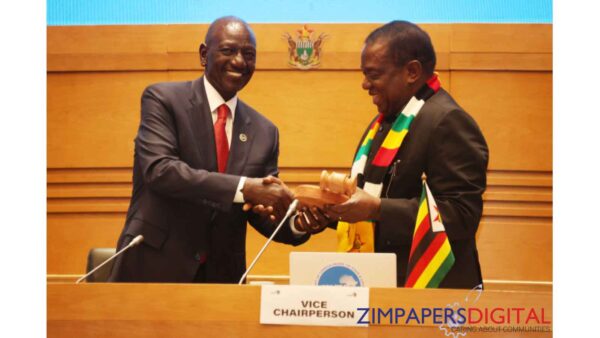
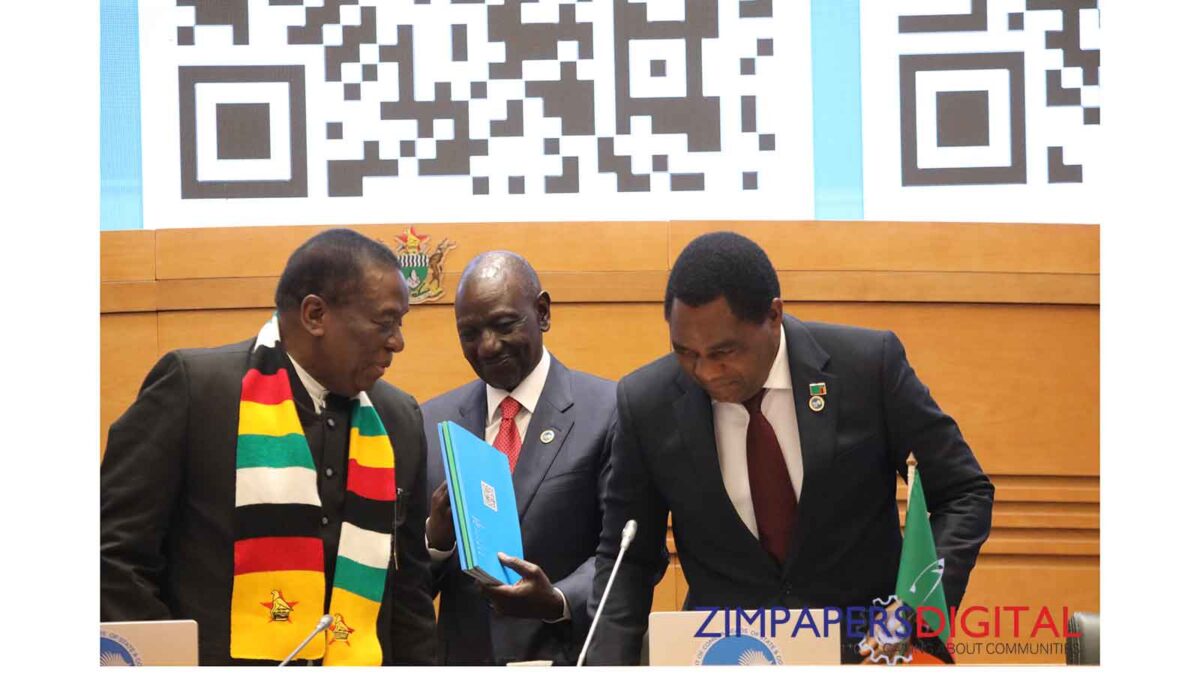
The call came as leaders gathered for the 25th Summit of COMESA Heads of State and Government in Harare yesterday, where outgoing chairperson and Kenyan President William Ruto handed over the chairmanship to President Mnangagwa, with Zambian President Hakainde Hichilema assuming the position of vice chairperson.
Beyond the formal change of leadership, discussions at the summit highlighted the need for member States to harness their collective markets, resources and institutions to drive investment, industrialisation and sustainable economic growth.
The figures reflect the progress made since the establishment of the COMESA Free Trade Area in 2000, with intra-COMESA exports rising from about US$2 billion to more than US$14 billion in 2025.
The growth demonstrates the potential of regional integration, showing how reducing trade barriers and opening markets can create opportunities for businesses across the region.
United Nations Economic Commission for Africa Executive Secretary Mr Claver Gatete brought a wider continental perspective to the discussions, saying Africa needed to leverage its collective market to add more value to its economies.
“COMESA has the resources and institutions to achieve much more,” he said in a virtual address.
Mr Gatete said COMESA countries could pursue cross-border industrial cooperation while calling for accelerated cross-border transmission, direct infrastructure investment and the mobilisation of financing.
His remarks brought the importance of infrastructure into sharp focus, as a common market cannot function effectively if goods, services, capital and people cannot move efficiently across borders.
The issue also resonated with COMESA Secretary-General Ms Chileshe Mpundu Kapwepwe, who called on the private sector, investors, development partners, business leaders, financial institutions and entrepreneurs to identify practical measures to accelerate trade, industrialisation and investment.
“A private sector communiqué will be presented to this summit on Heads of State and Government, ensuring that business priorities directly inform regional decision-making,” she said.
Ms Kapwepwe acknowledged the support provided by the bloc’s cooperating partners, including the European Union, World Bank, African Development Bank, United Nations and other agencies.
“Their financial and technical support has contributed significantly to our programmes in development and socio-economic transformation,” she said.
However, the summit also highlighted the need for COMESA to make greater use of the resources and opportunities already available within the region.
Ms Kapwepwe said the bloc had the markets, natural resources, human capital, institutions, private sector and strategic framework needed to advance regional development.
What was required now, she said, was collective determination to mobilise resources and make the investments necessary to turn these assets into sustainable prosperity.
“I wish determination to translate our decisions into committed action.”
“Let us ensure that the theory, ‘one market, one future’ becomes more than a statement of aspiration, but one that reaffirms our commitment,” she said.
African Continental Free Trade Area (AfCFTA) Secretary-General Mr Wamkele Mene said the organisation was on track to achieve its economic objectives despite challenges, including high transport and logistics costs, infrastructure deficits and visa restrictions that inhibit the movement of traders.
Mr Mene said it was critical for member countries to ratify the protocol to deepen trade for the benefit of African citizens.
“Despite all of these challenges, in 2026, our projections are that Africa’s intra-Africa trade shall be valued at US$230 billion, an increase of 10 percent,” he said.
Mr Mene said it was essential to make the African Continental Free Trade Area a fully functional market that delivers tangible commercial opportunities and jobs, opportunities for young people, the private sector, and citizens across the continent.
“COMESA is a leading model of market integration, leveraging trade instruments such as the Trade and Development Bank and reinsurance facilities that enable trade,” he said.