Online Reporter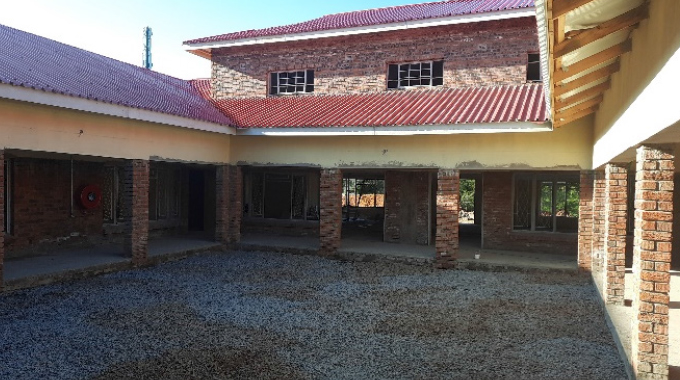
Nothando Zondo, [email protected]
AFTER more than 20 years of delays and false starts, the long-awaited Insiza Civil Registry offices are finally close to completion, bringing fresh hope to the community.
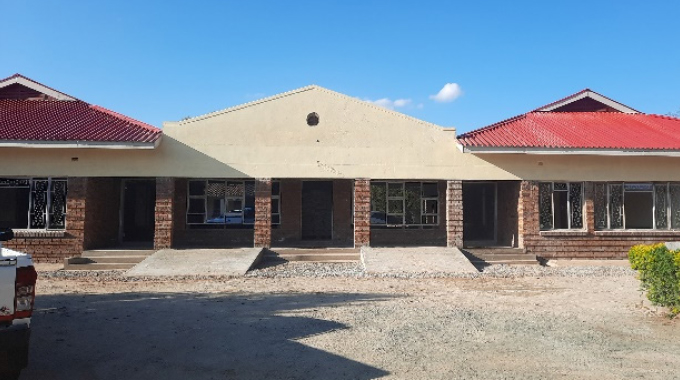
Construction of the facility is now 98 percent complete, marking a major breakthrough for a project that has stalled repeatedly since it first began in 2001.
For many residents, this progress signals the end of a long wait for easier access to essential Government services.
Work resumed on 19 January 2026 after Treasury released ZiG$20.7 million.
The funds, which were deposited into the Public Works Department (PWD) Matabeleland South account on 14 January, enabled procurement, mobilisation of workers and the resumption of construction.
The project, which is being implemented by the PWD, first commenced in 2001 but stalled three times at window level, hampering efforts to complete the facility.
Civil registry offices in most rural areas of the country are vital for securing legal identity and unlocking socio-economic rights.
By providing access to birth certificates and national identity documents, these offices help bridge the gap for marginalised communities, ensuring rural citizens can enrol in school, access healthcare, vote and claim state protections.
Of late, the Civil Registry Department, with support from partners including the United Nations Children’s Fund (UNICEF), has been actively working to computerise sub-offices and expand both physical and mobile service delivery, driven by a national vision that no Zimbabwean should be left behind due to geography or poverty.
Speaking on the background and significance of the project, the Provincial Director of Public Works, Engineer Sijabuliso Harold Ncube, said the revival demonstrated the Government’s commitment to improving service delivery and completing long-standing infrastructure projects.
“The commencement of works under the National Independence Legacy Projects Programme brought renewed hope to the people of Insiza after the project had remained incomplete for many years,” he said.
“The release of Treasury funds enabled mobilisation of resources, procurement of materials and deployment of manpower to ensure the project progresses towards completion.”
He added that stakeholders remained committed despite operational challenges.
The scope of work includes building, carpentry, plumbing, electrical installations, painting and tiling.
At its peak, the site employed 58 workers, including bricklayers, carpenters, electricians, painters, tilers and general hands.
The workforce has since been reduced to 37 as the project approaches completion.
Project manager Mr Gilmore Motsi said the building is now at an advanced stage, with snagging and rectification in progress.
“Overall progress is at 98 percent completion. Following the final inspection on 24 April, the building was snagged and rectification of defects commenced immediately in some trades.
“Most of the remaining works are minor finishing aspects expected to be completed within the revised timeframe.”
Outstanding works include the construction of manholes and septic tanks, installation of the feeder pillar and connection to ZESA, roofing of the ablution block, as well as final painting, glazing and courtyard finishing.
Mr Motsi said the initial target of 10 April was missed due to several challenges.
“The project encountered difficulties such as prolonged procurement processes, delayed supply of materials by some local suppliers, labour turnover caused by the shunning of the ZiG currency, and bad weather which affected productivity,” he said.
The beneficiary handover, initially scheduled for 3 May, has been deferred pending instruction from project superiors.
Once completed, the registry offices are expected to improve access to civil registration services in Insiza District and strengthen public service delivery.
Over the years, civil registry services in Insiza have been handled by the District Registry located at the Insiza Rural District Council offices in Filabusi.
It is envisaged that the new complex under construction will enable the Government to expand local services, particularly given that in some instances residents have had to travel to Bulawayo or Gwanda for passport applications and processing.
Recently, the Ministry of Home Affairs and Cultural Heritage announced plans to computerise Civil Registry Department sub-offices across Zimbabwe, a move expected to transform service delivery, enhance data protection and bring essential services closer to citizens.
Home Affairs and Cultural Heritage Minister, Honourable Kazembe Kazembe, said the drive to modernise civil registration is aligned with President Mnangagwa’s Vision 2030, which seeks to build an empowered upper-middle-income society.
He said the computerisation of sub-offices will ensure that Government services are more efficient, transparent and accessible to every Zimbabwean, regardless of location.
“By computerising our civil registry sub-offices, we are safeguarding citizens’ records, improving security, and ensuring every Zimbabwean has their rights protected. This reflects the Second Republic’s broader vision for good governance, a vision where Government services are accessible, transparent, and efficient,” he said.
Minister Kazembe explained that the Civil Registry Department is not only responsible for issuing essential documents such as passports, birth and death certificates, and national identity cards, but also serves as custodian of the national citizens’ database.
He said protecting this data through modern digital systems is now a national priority.
“The protection of this data must be treated with utmost care and confidentiality. My ministry remains fully committed to implementing robust measures to safeguard our information systems and processes. Computerisation will play a key role in this regard, making sure records are well documented, accurate, and secure,” he added.
Minister Kazembe said a well-functioning and digitised civil registry system will also provide reliable population data, which is critical for economic planning, governance and monitoring of development goals.
For residents of Matabeleland South, the completion of the new civil registry office complex marks more than just the end of a construction project — it signals easier access to birth certificates, death certificates and identity documents that have long been delayed by distance and limited facilities.
With the building now in its final stages, attention shifts to staffing, equipment and the smooth handover to the Civil Registry Department. Once operational, the centre is expected to reduce travel time for thousands of residents, ease backlogs and bring Government services closer to the people.
It is one of several projects under the National Independence Legacy Programme aimed at closing service delivery gaps in rural areas.
For communities that have waited decades, the opening of these doors will represent a practical step towards a more efficient and accessible public service