Lovemore Dube [email protected]
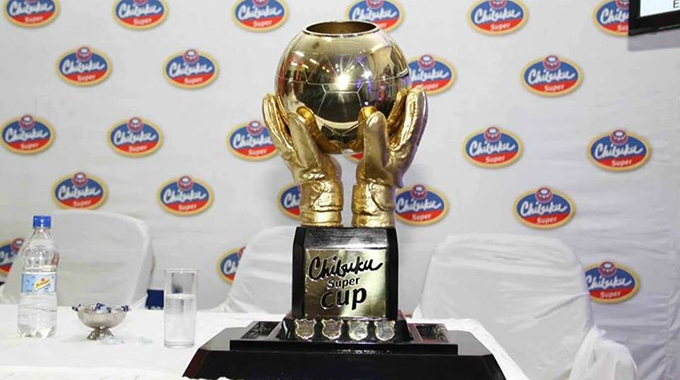
HIGHLANDERS’ history in the Chibuku Cup/Trophy dating back to 1973 and Prince Dube’s form will be at play when his Hardrock clashes with the Bulawayo giants at Chahwanda on Saturday in the final of the 2026 edition.
If the past is anything to go by, Highlanders, who have had a striking season, may see the club atone for its disappointing performance in its 100th-anniversary year.
Bosso turned 100 this year and a lot was expected when Benjani Mwaruwari arrived at Bosso from the UK where he had just finished a high-level football management programme. Nine wins and 18 draws had summed the club’s season before yesterday’s rearranged fixture with Agama after the city giants failed to travel to Wadzanayi at the weekend because of industrial action.
The Chibuku Cup, from its days as the Chibuku Trophy way back in the 1970s has always favoured a new coach at Highlanders.
Could Mwaruwari break the cup drought?
Bosso has not won a tournament since 2019 when under Pieter de Jongh they edged Ngezi Platinum 1-0 to lift the silverware.
With Highlanders having made their Castle Lager campaign a sore point, losing out to little Blackrock in the Round of 32 of the Munhumutapa Challenge Cup, the Chibuku Challenge Cup represents a realistic chance of rescuing some modicum of respect for one of Zimbabwe’s most successful clubs.
In terms of silverware, Highlanders are comparable to Dynamos.
The last time Bosso won, Dube was the pillar, scoring a gem from over 30m out in 2019 at Barbourfields.
He is back with the Kwekwe-based finalists and league champions. He has shown his tenacity and scored the goal that earned the Midlands city its first league championship.
He is a dangerous player who can lurk in the box or go deep into his own half and work his way forward with pace and skill. Apart from shooting, he is a team player who times his movements and throws the ball in good offensive spaces.
Keeping him under lock and key has proved difficult, and it has not come as a surprise that he returned only in July and has already done enough damage to be considered for the Soccer Star of the Year finalists.
“The boys are in a positive frame of mind. These boys can pull any result now; we have worked on them, and they are at a stage where they realise that a good finish will do their careers good going forward. They want to win it for themselves and the badge. They are enjoying their football with the resolve to do their talking on the field after a difficult year. As for the Chibuku Super Cup, we want to win naturally,” Mwaruwari told Zimpapers Sports Hub a few months ago.
History appears to favour Mwaruwari.
Silas Ndlovu then South Region Division One side Highlanders winners of the league title in 1973 won it in his first attempt with his boys firing three past Booker Muchenu in goal for Mangula later to change to Mhangura.
Changes had just been rung at the club with a new executive structure with a board, a constitution and expectations of an annual general meeting and audited accounts.
Ndlovu was not just a coach but a coach/manager with sweeping powers on the recruitment of players and management of their welfare, in what was described as a British-type of club football management then.
That year, Highlanders who were only in their second year in professional football since its launch in 1963, won the Chibuku Trophy, announcing the arrival of a giant on the big stage. Since then Bosso has decided the destination of many titles.
Prior to that July afternoon of 1973, clubs like Eastlands, Rangers and Mashonaland United had failed to win silverware at national level.
But Ndlovu and his gallant sons of the game, some unheralded, had torn the form book apart and given punters who had placed their bets on the minnows from Bulawayo big earnings.
All of a sudden Bosso were now being spoken about at the same breath as Mangula, Dynamos, Salisbury Callies, Cam and Motor (Rio Tinto), Arcadia, Metal Box and Wankie, clubs that had won silverware like the league and Castle Cup.
Ndlovu and his men lost the 1974 and 1976 cup finals.
James Nxumalo became the second coach to win the Chibuku Trophy when a side boasting Mark Watson, Tymon Mabaleka, Doughty Sithole and Majuta Mpofu beat a star-studded Rio Tinto with the likes of Robert Godoka, Wonder Phiri, Raphael Phiri, Victor Mapanda, Joshua Phiri and David Chisambe 4-0 in 1980.
Watson scored a memorable hat-trick.
Nxumalo had not gone extensively on the market and relied on players promoted from the juniors, others from lower division sides like Portuguese, Contex and Old Miltonians.
The club had been on a rebuilding exercise following the 1977 split that gave birth to Olympics.
This was a Rio Tinto with the likes of David Chisambi, Wonder Phiri, Joshua Phiri, Raphael Phiri, Victor Mapanda and Robert Godoka. They were firm favourites to win the trophy while Highlanders appeared to have ridden on luck with just Tymon Mabaleka, Douglas Mloyi, Lawrence Phiri and legendary dribbler Majuta Mpofu the only known stars.
Another Bosso new arrival, Barry Daka, who replaced Bobby Clark who had returned abroad, won the tournament in 1984. Then irrepressible tearaway winger Madinda Ndlovu and rising teenage midfielder Willard Khumalo scored in the 2-1 triumph over Dynamos, whose consolation goal came through Douglas Chinyoka.
Daka would add a second in 1986, a 2-1 win over CAPS United.
He failed to make back to back wins losing 1-0 to Arcadia in 1985 in a match striker Nsukamini Mlotshwa missed a certain goal, and Zimbabwe Saints in 1988 edged Bosso 1-0 with Jimmy Phiri heading the goal that made the difference gifting Chikwata the second Chibuku Trophy after the 1976 one won courtesy of a 4-0 drubbing with goals from the late Max Tshuma (2) and another brace from Gibson Homela who had been flown for the final.
Daka failed in the 1974 and 1976 finals of the same tournament.
With Chibuku bouncing back after pulling out in 1989, now rebranded as the Chibuku Super Cup,
De Jongh left his own mark with the win.
Could this be the tournament to bid farewell some members of the board, executive, technical team and players who have presided over an embarrassing period of the club’s history?
Highlanders have looked improved under Mwaruwari despite not boasting a team that cannot stand pound for pound with the top six clubs in the country.
Bosso appear the only club in Southern Africa among the big guns seemingly content with mediocrity at all levels.
When the season goes by and just one player attracting attention, it’s an indication of the bunch of average players in the camp.
Aaron Ngwenya, Mongameli Tshuma, Andrew Mbeba and Tawanda Shenje are the only players that played better than the rest.
Time will tell, but history or coincidence favours him to carry the day. However, the only football Prince in Zimbabwe football, Dube stands as a potential party spoiler.
Washington Navaya, the Hardrock 17 league goals hero and Neliswa Dlamini stand as stumbling blocks.