FORTUNE MAKONI [email protected]
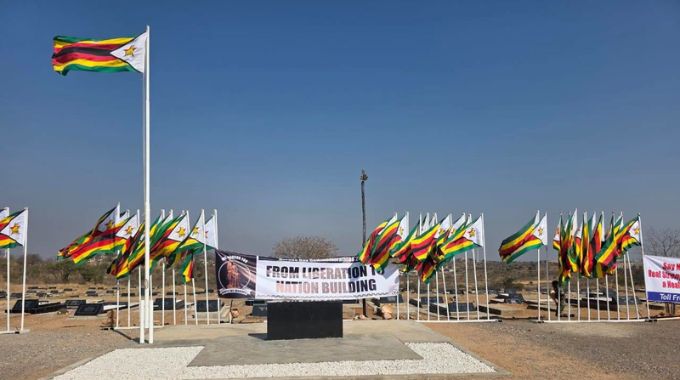
TWO liberation war veterans, Conference Tshalibe and Mzibeni Ntini, have been accorded Liberation War Provincial Hero status, with their burials taking place at Nkulumane Heroes Acre in Bulawayo on separate dates.
Ntini, whose war pseudo-name was Driver Shungu, was buried on Tuesday, 17 November, while Tshalibe, whose war pseudo-name was Billion Munofamese, is expected to be laid to rest this Friday, 20 November.
Ntini, aged 73, died on 14 November at Secret Valley in Umguza, while Tshalibe, aged 70, died on 16 November at Lobengula West in Bulawayo.
In separate letters addressed to Chronicle, ZANU-PF Bulawayo provincial chairman Jabulani Sibanda confirmed the provincial hero status of the two veterans, whose contributions to the liberation struggle helped secure the country’s independence.
According to their biographies, both veterans left the country to join the liberation struggle, receiving military training in Zambia and Angola before serving in different capacities during the war.
Tshalibe was born on 28 May 1956 in the Wenlock area of Gwanda District. He attended Galaza Primary School and Mopane School before relocating to Bulawayo in search of employment.
He worked as a tailor at Welfast Clothing before leaving the country in 1976 to join the liberation struggle.
He travelled through Botswana to Zambia, where he spent time at Nampundu Transit Camp before proceeding to Membeshi Training Camp for military training.
After completing his training, Tshalibe was deployed to Angola, where he was tasked with collecting trucks. He was subsequently attached to War Council chief Akim Ndlovu as a driver, serving in the transport division.
After the war, he was assembled at Gwayi Assembly Point in Matabeleland North and demobilised at Llewellyn Barracks before being integrated into the Zimbabwe National Army.
Ntini, who was born in 1953 under Chief Bunina, attended Shagari Primary School before proceeding to Lower Gweru Mission Secondary School.
He joined the liberation struggle in 1977, travelling through Botswana to Zambia before being transferred from Lusaka to Nampundwe and later Mboma in Angola, where he underwent military training in May that year.
He specialised in artillery gun operations during a six-month training programme before returning to Zambia in 1978, where he served as a section commander.
His unit later moved to Gwayi River, where he was demobilised following the liberation struggle.
In recognition of his contribution to the country’s independence, Ntini was awarded the Liberation Medal and Independence Medal.
After demobilisation, he went to South Africa in search of employment before returning home, where he worked as a handyman and served his family and community.
Tshalibe was married to Antonettah Tsepo Tshalibe (née Dube) and had four children: Buhlebuzile, Buhlebethu, Mzingaye and Mzomuhle Tshalibe.
Ntini was married to Vinolia Moyo and had two children, Angela Ntini Mpofu and Sharmaine Ntombikayise Ntini Mpofu.