Gibson Mhaka, [email protected]
BULAWAYO’S manufacturing and technology sectors could benefit from improving economic ties between Zimbabwe and the United Kingdom, with the British Government expressing interest in supporting local businesses, technology start-ups and export development.
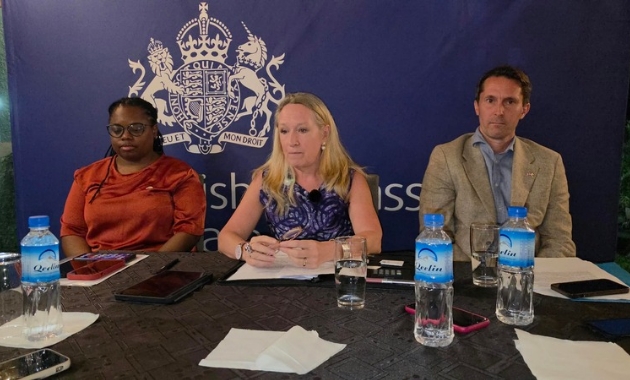
During her maiden visit to Bulawayo on Monday, UK Ambassador to Zimbabwe Gillian Lever said relations between the two countries had reached “a very good stage”, creating opportunities for practical cooperation in trade, investment and development.
The visit comes as the Second Republic under the stewardship of President Mnangagwa intensifies its engagement and re-engagement drive, seeking to rebuild international relations, attract investment and expand Zimbabwe’s access to international markets.
Ambassador Lever, who presented her credentials to President Mnangagwa last month, described the relationship as one based on mutual respect, open dialogue and cooperation, even where the two countries hold differing views.
“We’ve arrived at a very good stage in our relationship with Zimbabwe. I think the relationship is going from strength to strength,” she said.
“Both sides are very focused on a modern and respectful partnership where we can engage on matters of mutual interest, work together, for example, on trade and investment, and where we disagree we’re able to have those conversations in private, in a respectful manner.”
Amb Lever cited recent deals between British International Investment (BII) and Zimbabwean banks, cooperation in horticulture and progress towards a proposed solar power project in the
Midlands Province, known as Vungu, as examples of growing commercial cooperation.
“There are plenty of things going on between our two countries on the trade and investment side,” she said.
For Bulawayo, traditionally regarded as Zimbabwe’s manufacturing hub, the expanding partnership presents opportunities to improve access to finance, strengthen industrial supply chains and develop new export markets.
Through BII-supported interventions, trade finance facilities have been made available through local financial institutions, including NMB and CABS, to help businesses access capital and support commercial activity.
The programme also seeks to widen access to finance for women and young people, including first-time borrowers in rural communities. Amb Lever said she was keen to understand the economic opportunities and challenges in the region, particularly the potential for technology start-ups.
“We’re sort of very conscious that people in this part of Zimbabwe would really like more economic development and more economic opportunities,” she said.
Amb Lever said her delegation had heard of considerable potential for technology start-ups in Bulawayo and would use the visit to explore how the UK could support the sector.
The ambassador also highlighted cooperation to improve trade corridors, including Beitbridge, by reducing delays in the movement of goods. She said the UK was working with the British Standards Institution and the Standards Association of Zimbabwe to help local manufacturers meet international standards required to access export markets.
Zimbabwean exporters also have access to the UK market under the UK-Eastern and Southern Africa Economic Partnership Agreement, which provides duty-free and quota-free access. The UK is undertaking awareness initiatives to help businesses understand and take advantage of the arrangement, potentially widening export opportunities for manufacturers able to meet the required standards.
Beyond trade and investment, the improving relations have opened further dialogue on Zimbabwe’s possible return to the Commonwealth, a longstanding foreign policy objective. Amb Lever said
Britain supported Zimbabwe’s aspiration to rejoin the organisation.
“We’re very keen to see Zimbabwe back in the Commonwealth again when the time is right,” she said.
Amb Lever, however, noted that readmission was not a decision for Britain alone, as it requires a recommendation from the Commonwealth Secretary-General and agreement among member states.
She said the process was moving in a positive direction.
Healthcare also remains an important area of cooperation, with Britain having provided tens of millions of pounds to Zimbabwe’s health sector over the years.
Amb Lever said the UK continued to support global health programmes operating in the country, including the Global Fund to fight HIV and Aids, tuberculosis and malaria, as well as Gavi, the Vaccine Alliance.
However, changing international financing conditions had increased the need for technical assistance, domestic financing and partnerships that harness technology and innovation to improve health outcomes.
The UK was also exploring university collaborations to address longstanding health challenges.
Other areas of cooperation include vocational training for young women in modern farming techniques, livelihood support, the Chevening scholarship programme and efforts to combat gender-based violence and promote women’s participation in public life.
Amb Lever said the UK was also seeking business partners to support scholarships for talented Zimbabweans pursuing postgraduate studies.
The visit reflects the expanding scope of Zimbabwe-UK engagement, with both countries seeking to translate improved diplomatic relations into practical cooperation across economic, social and development sectors.