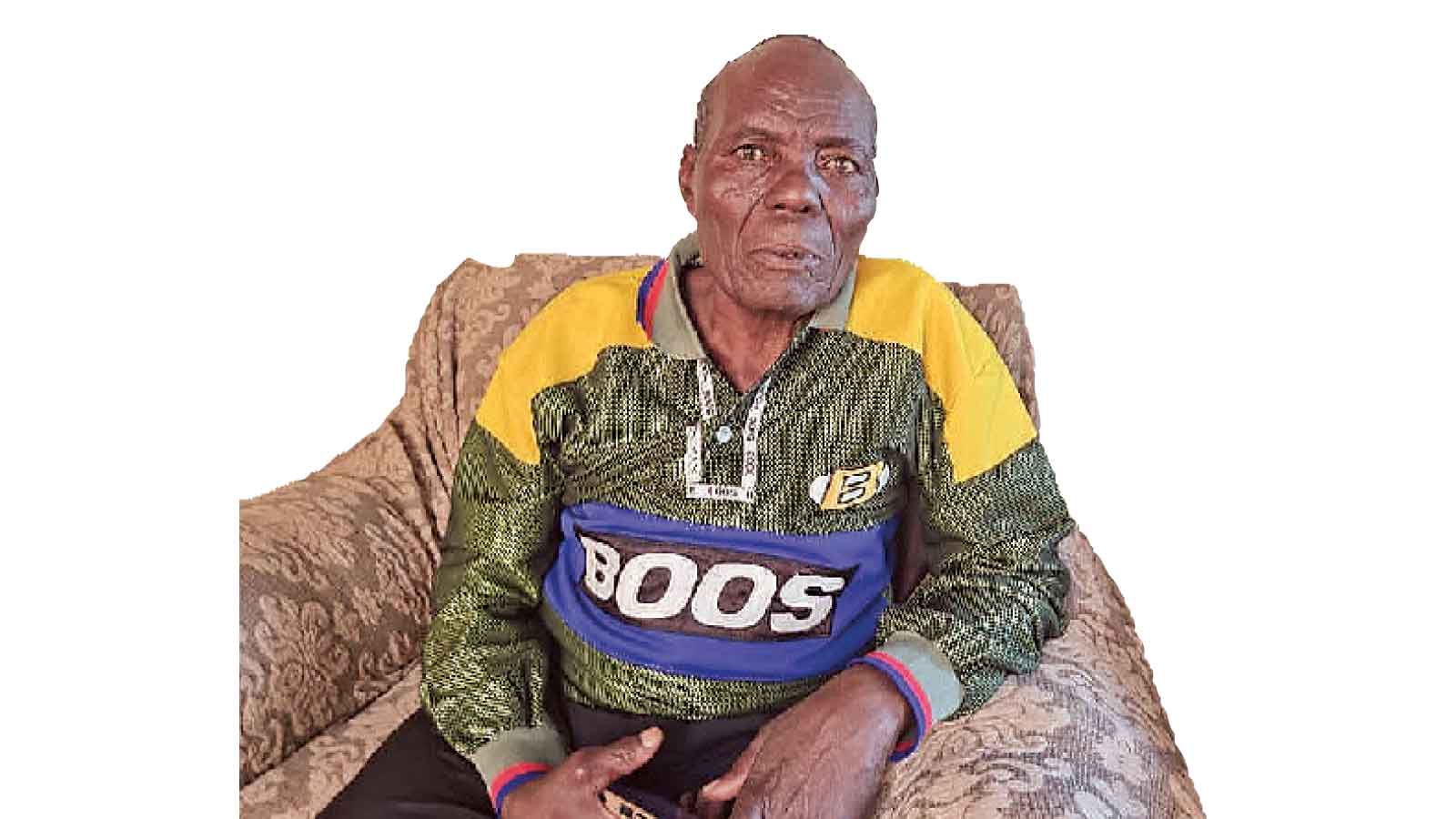
Last week, Lieutenant-Colonel (Retired) Harrison Dzungwa, who was known in the liberation struggle by his Chimurenga name Cde Cover Takurira, recounted the early years of his life to Zimpapers Politics Hub’s KUDA BWITITI. He spoke of growing up in Zimunya and his time working for white employers at a company in Mutare, before making the fateful decision to leave his job and join fellow recruits in Mozambique. However, during his first attempt to cross the border in 1975, via Espungabera in Chipinge, he was arrested by FRELIMO soldiers. This week, he opens up about his days in detention and how he eventually succeeded in crossing into Mozambique to join the struggle
***************
Q: What happened during your time in detention at the hands of FRELIMO soldiers?
A: I spent 16 agonising days in detention. The camp was utterly uninhabitable — overcrowded, filthy and with barely any food to sustain us. My mind kept drifting to my wife, whom I had left pregnant. Not knowing whether I was dead or alive must have been torture for her, and that weighed heavily on me. It was, without question, one of the most stressful periods of my life.
Q: You mentioned living in deplorable conditions. What were some of the worst incidents you witnessed in detention?
A: In that cramped detention room, there were about 20 of us. There were no toilets; we were forced to relieve ourselves in a bucket kept right inside the same room. You can only imagine the suffocating stench that engulfed us day and night.
At one point, a fellow detainee arrived at the camp already injured, and he later died. We had to bury his body ourselves. I had never been accustomed to seeing dead bodies, let alone burying a stranger in a shallow pit. That experience was deeply traumatising.
I knew I had no case to answer, so I believed I wouldn’t be held long. But just my luck — the officer-in-charge, the very person responsible for reviewing our cases, fell seriously ill and was hospitalised. That stalled everything. Our fates hung in limbo for days. The days in detention felt like they would never end. When you are caged, time plays cruel tricks on you — it refuses to move forward. The clock becomes your enemy, and freedom becomes a distant, fading memory.
Q: How were you eventually released?
A: When the officer-in-charge finally returned to duty, he was determined to clear the backlog swiftly. He reviewed my case, heard my side of the story and immediately saw that I had no case to answer. He was astonished that I had been detained in the first place. It turned out they had incomplete information about me, which had fuelled their suspicions. Once everything was clarified, I was set free.
The relief was overwhelming. We were then told we could finally proceed to Mozambique — to the Machazi Camp — to begin our journey to the war front. Two lorries arrived to ferry us there.
Q: How many of you made the trip to Machazi?
A: We were between 50 and 100 recruits. The journey from Espungabera to Machaza was roughly 300 kilometres. We stayed at Machazi for about two weeks, before being moved to a holding camp called Katoronga — a small extension of the main camp, Chibawawa. Once we arrived at Chibawawa, life became a daily grind for survival. The camp housed hundreds of recruits, and we faced two relentless enemies: hunger and jigger fleas.
Those dreadful insects wreaked havoc, leaving many comrades wounded, immobile and crestfallen.
Q: How long did you spend at Chibawawa?
A: About three months. We lived in makeshift barracks built from tree branches and foliage, with crude beds fashioned from the same bush materials. We were organised into military companies of roughly 100 people per barrack. Cooking was done centrally, with each company taking turns. The only time we had enough to eat was when our company was on kitchen duty. Most days, we went hungry.
The shortage was so severe that at times we had sadza with powdered milk as relish. On other occasions, we were given condemned food — and we ate it anyway, because the alternative was starvation.
Q: How did you survive the hunger?
A: Many of us survived through what we called chirenje — going into nearby villages to beg for food from the povo (local people). But luck wasn’t always on our side. Even when we made the long trek to the villages, we didn’t always return with something to fill our stomachs.
Q: At that time, had you started military training?
A: No, not yet. We were still waiting to be moved to Chimoio for proper training. The delays were deeply frustrating, and with that frustration came growing indiscipline. Disorder reigned and disputes frequently erupted between different companies. The only trained fighter among us was Cde Amos Tsano, and his arrival brought a much-needed sense of order.
He instilled discipline and enforced rules that had been sorely lacking.
Q: Can you share more about the jigger flea outbreak?
A: It was horrific. The infestation was severe, and so many comrades suffered terribly. Those insects burrowed into your feet, leaving painful, festering wounds. And we had no medicine — no treatment whatsoever. You simply endured the pain.
Those three months at Chibawawa were truly a torrid time. When we finally left Chibawawa for Chimoio, it felt like a weight had been lifted. We were relieved to leave behind that place of suffering, but little did we know the real trials of the liberation struggle were still ahead.
Next week, Lieutenant- Colonel (Retd) Dzungwa reflects on his time at Chimoio and the next phase of his journey to freedom.