
Society Reporters
FOR over a decade, Zimbabwe has watched with a mixture of awe, envy and wonderment as a parade of ostentatiously wealthy businessmen converted fortune into spectacle: fleets of Rolls-Royces, sprawling mansions, designer everything and spending so extravagant it bordered on performance art.
Two names dominated this gilded narrative.
Both became brands.
Genius “Ginimbi” Kadungure died at 36 in a 2020 Rolls-Royce crash that horrified the nation.
Wicknell Munodaani Chivayo — who had christened himself “Sir Wicknell”— died at 45 in a September 30, 2026 helicopter disaster that claimed his wife, two pilots and an aide.
Their deaths have reignited uncomfortable questions about wealth, visibility and the brutal mathematics of mortality.
Ginimbi: The showman
Before Instagram philanthropy became a business model, there was Ginimbi — a man who understood that in Zimbabwe, visibility was currency.
His public identity fused with his possessions until the distinction blurred entirely.
The Rolls-Royce Wraith was his signature, his brand, his fate.
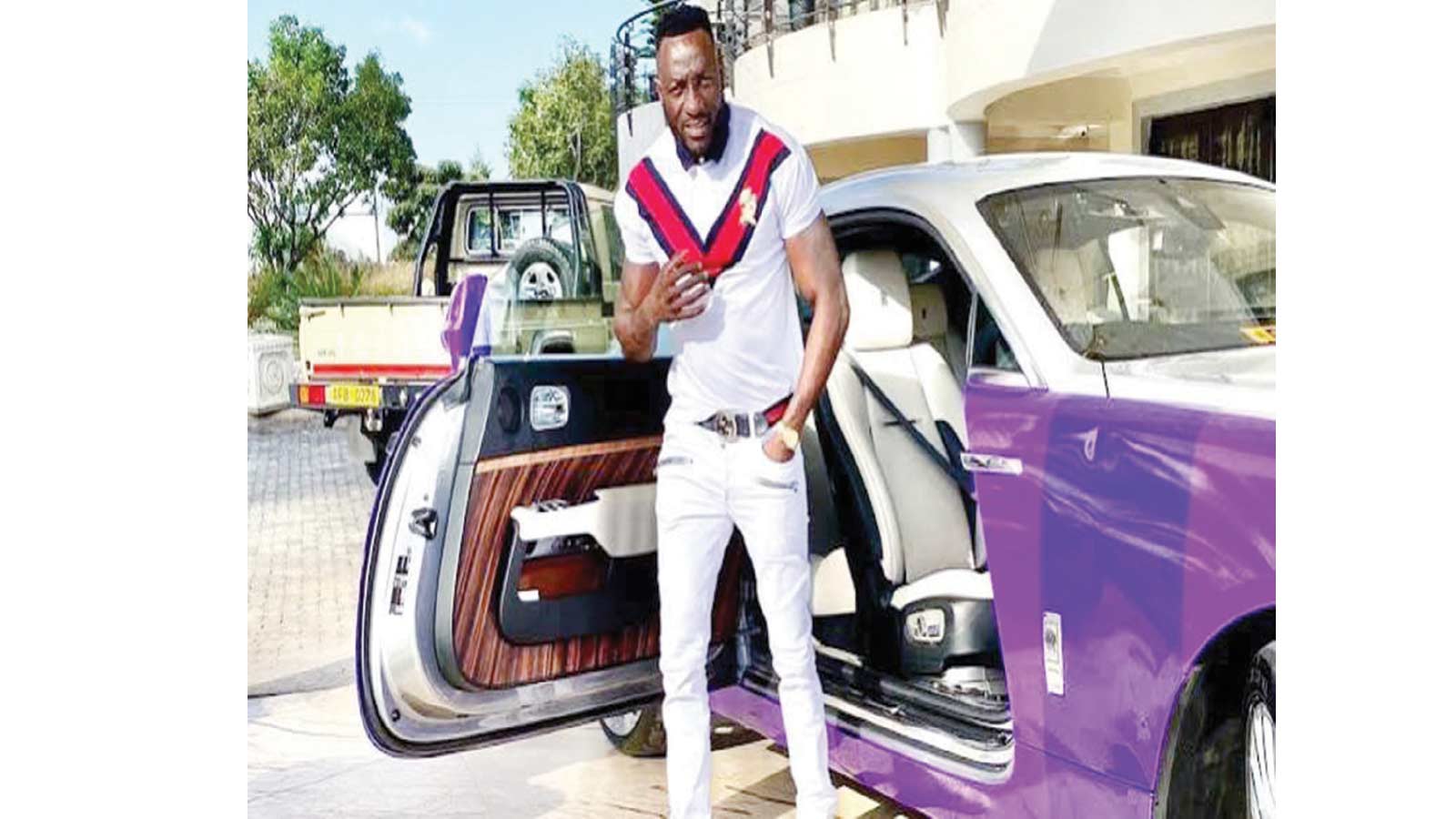
When it collided with a Honda Fit on Borrowdale Road on November 8, 2020, it killed not just Ginimbi but three others — Michelle Amuli, Limumba Karim and Alichia Adams.
The symbolism was almost too brutal to process: the ultimate status symbol became an instrument of death.
Ginimbi’s empire was built on nightlife and celebration.
Dreams Nightlife Club.
Lavish all-white parties that drew celebrities, socialites and businesspeople.
His Domboshava mansion which was more of a palace than a home — became both the backdrop for his extravagant lifestyle and, ultimately, his burial ground.
Thousands made the pilgrimage to Domboshava for his funeral.
The quiet rural area transformed into a showcase of expensive vehicles and prominent personalities — even in death, Ginimbi understood spectacle.
His spending was personal, hedonistic and self-directed.
Cars, parties, fashion, entertainment — all in service of creating an image of a man who had transcended ordinary existence.
Sir Wicknell: When generosity became theatre
Chivayo studied the Ginimbi blueprint and scaled it.
Where Ginimbi collected cars, Chivayo collected fleets.
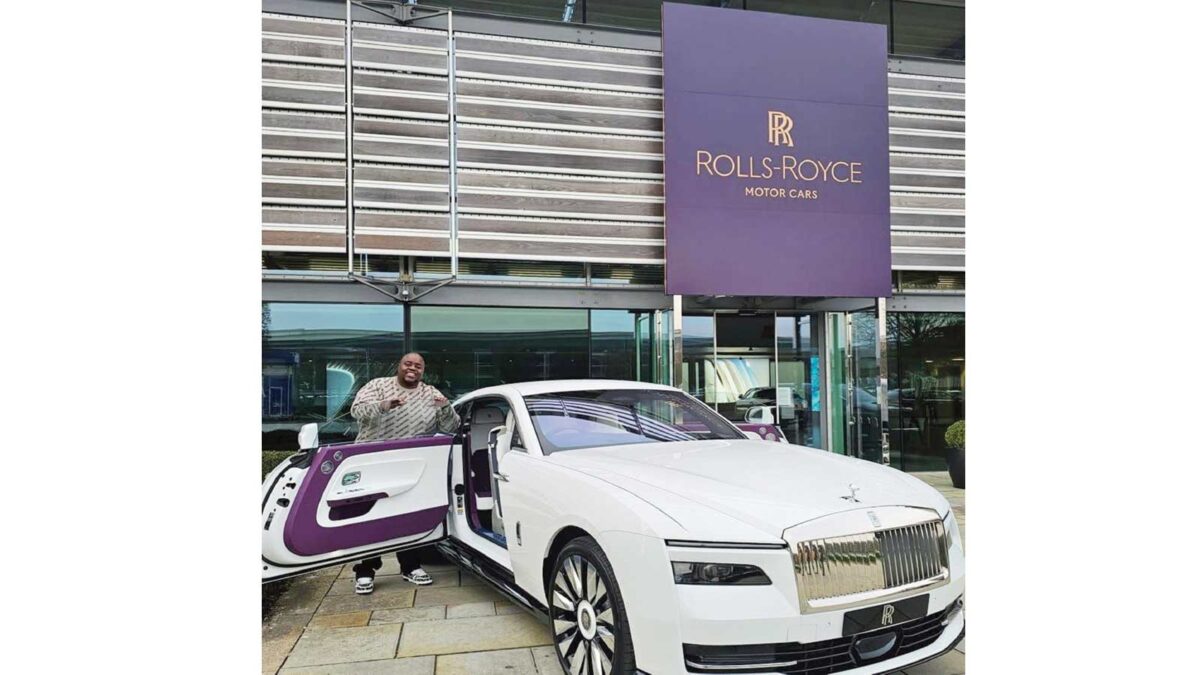
Rolls-Royce Cullinans, Ghosts, Phantoms, a Spectre. Mercedes-Benz Maybachs.
A Mercedes-AMG G63 Brabus. Bentley Bentayga. Lamborghini Urus.
In 2024 alone, he dropped approximately US$1,9 million on vehicles in a single week — four Rolls-Royces, a Maybach, a Range Rover.
Individual vehicles in his collection carried staggering price tags: a Cullinan at US$850 000, a Range Rover at US$450 000, a Mercedes-Maybach GLS600 at US$400 000.
But Chivayo’s true innovation was not accumulation — It was distribution.
He unwittingly weaponised generosity as brand-building.
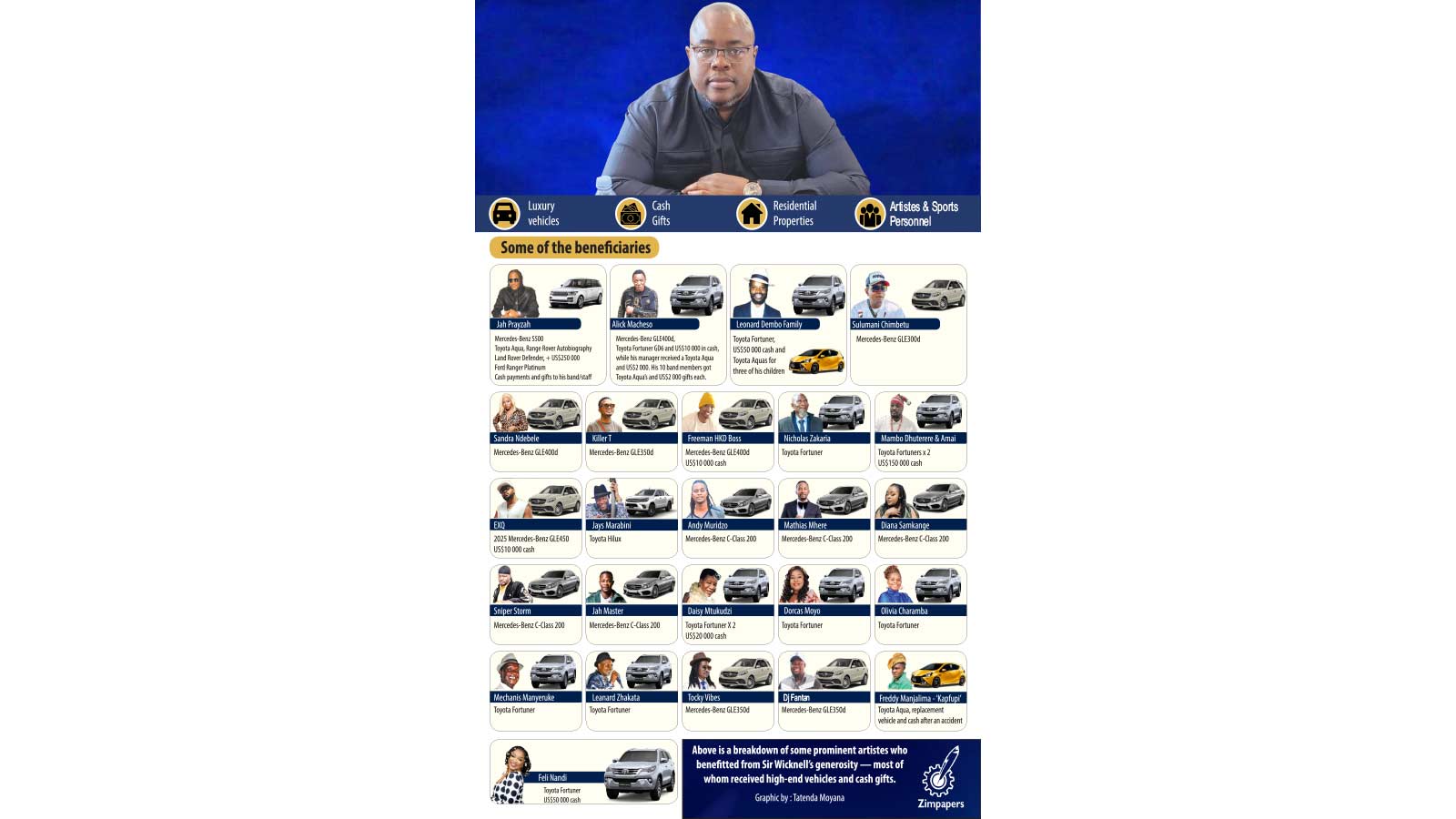
Musicians, church leaders, sports personalities, random social media acquaintances — all became beneficiaries of his largesse.
Jah Prayzah received a Mercedes-Benz S500.
Suluman Chimbetu got a GLE300.
Sandra Ndebele, a GLE400d. The list grew longer.
In September 2026, he pledged US$50 000 each to 40 families of fallen national heroes — US$2 million total — while simultaneously announcing gifts to religious figures.
His final day was characteristic.
Reports indicated he had posted photographs of luxury vehicles he was gifting to two lawyers, alongside US$750 000 in cash.
The man died as he lived: giving away cars and money for public consumption.
The architecture of excess
Both men understood that in Zimbabwe, wealth must be seen to be believed.
Ginimbi’s Domboshava mansion became one of the most recognisable private properties in the country — a monument to personal achievement that eventually became a mausoleum.
Chivayo was developing his own imposing property in Gandami, his rural home area.
He was there before departing on the helicopter flight that ended in tragedy.
These homes were declarations that their owners had moved beyond ordinary measures of success and were determined to live visibly, unapologetically, and — as events would prove — dangerously.
The fashion competition followed similar lines.
Ginimbi’s designer clothes, luxury accessories and celebrity-adjacent lifestyle gave way to Chivayo’s equally conspicuous approach: designer footwear, expensive watches, private aviation.
In one widely circulated post, Chivayo joked about the difficulty of choosing between Louis Vuitton and Salvatore Ferragamo shoes.
The man turned his life into content, and the content turned him into a brand.
Chivayo’s ambitions stretched beyond Zimbabwe’s borders in ways Ginimbi’s never did.
Private aviation became central to his persona.
He was photographed around helicopters and private aircraft.
While Ginimbi’s world revolved around Zimbabwe’s entertainment scene, Chivayo’s increasingly spanned the continent — photographs and meetings with multiple African presidents, influence that extended beyond social media likes.
He donated vehicles, ambulances and cash. At one point, he donated 10 Toyota Land Cruisers and ambulances.
Neither man’s fortune emerged from thin air.
Both attracted scrutiny.
Ginimbi’s business activities and source of wealth were subject to considerable speculation and controversy during his lifetime, including reports concerning tax issues.
Chivayo built his profile around Intratrek Zimbabwe and major energy and construction projects.
His business dealings — particularly surrounding the Gwanda Solar Project — attracted controversy and legal scrutiny.
Criminal proceedings ultimately ended in acquittal.
The final journeys
Perhaps nothing illustrates the tragic symmetry better than how they died.
Ginimbi died driving the very type of luxury vehicle that had become synonymous with his identity — a Rolls-Royce, wrecked on Borrowdale Road.
Six years later, Chivayo died in a helicopter crash in rural Marondera, killed alongside his wife Lucy Muteke, her aide and two pilots.
Investigations continue.
Both men died in their signature modes of transport — machines that represented the pinnacle of the lifestyles they had constructed.
The two tycoons’ deaths have become part of a larger Zimbabwean conversation about money, success, consumption, philanthropy and the fleeting nature of material wealth — a conversation the country seems perpetually unprepared to have honestly.
Ginimbi spent his fortune on himself.
Chivayo spent his on himself and others, turning generosity into spectacle.
Although their lives were cut tragically short, during their lifetime, they managed to turn their lives into loud performances.