Online Reporter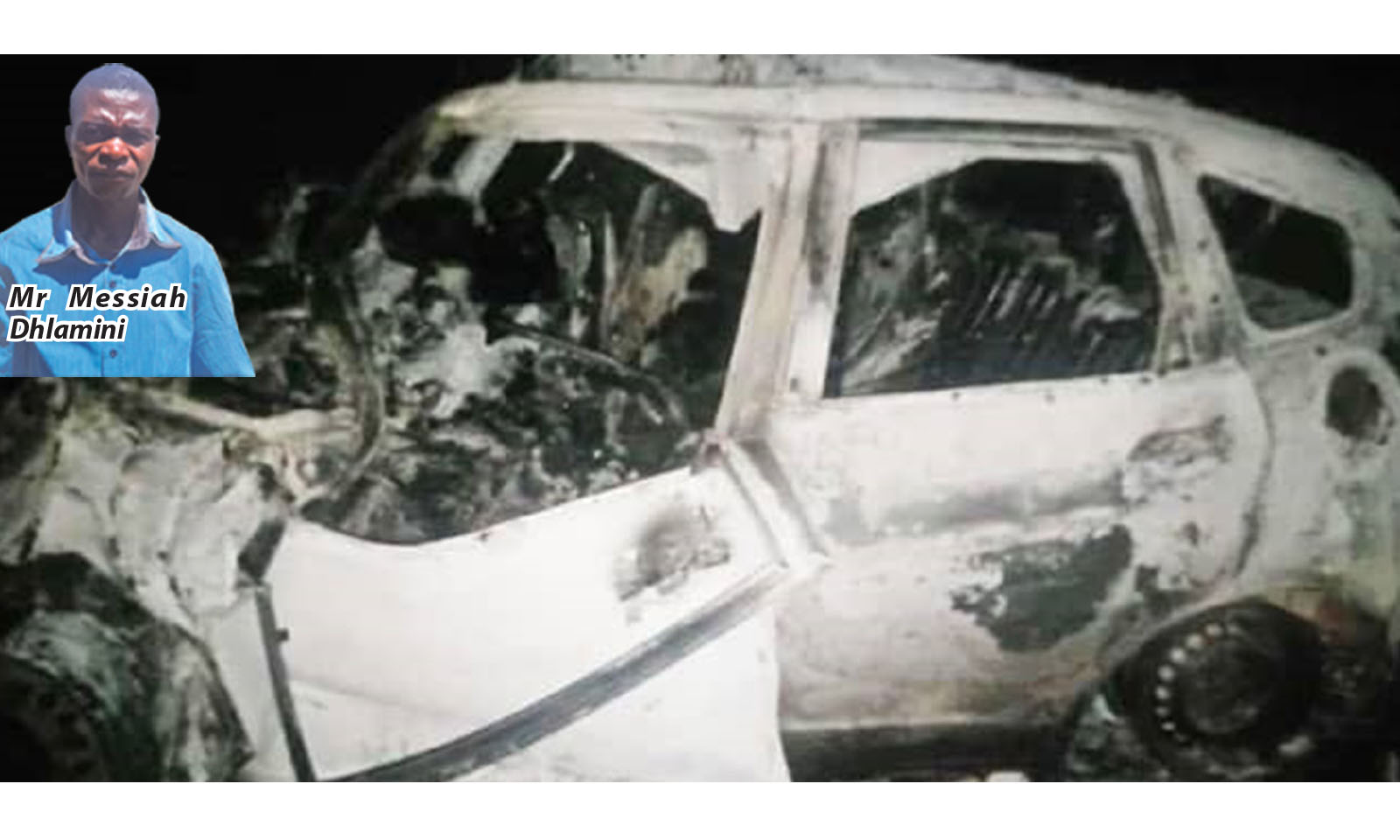
Conrad Mupesa
Mashonaland West Bureau
FOR two agonising years, Mr Messiah Dhlamini has been haunted by the searing memory of the day his only son, Nigel, perished in a burning car just metres away from where he stood — helpless.
The haunting images of the burning vehicle linger in his mind — a constant reminder of the pain that forever changed his life.
On that fateful night, exactly two years ago, Nigel, just 23 years old, and friends were caught in the horrific aftermath of a head-on collision with a truck.
While two of his friends miraculously escaped the wreckage moments before flames engulfed the car, Nigel and another friend were trapped inside and consumed by the inferno.
Tragically, the two who initially escaped later died from their injuries at Chinhoyi Provincial Hospital, leaving a trail of heartbroken family members.
Two months after the accident, the grief deepened when Mr Dhlamini received confirmation that his son’s remains, along with those of his friends, had been identified through free DNA testing conducted by the National University of Science and Technology (NUST).
It was a small measure of closure amid a sea of unbearable sorrow.
The impact of the crash had been catastrophic, transforming the Honda Fit into a blazing shell of metal.
Mr Dhlamini, a 47-year-old tobacco farmer from the Chitomborwizi area in Makonde, 20 kilometres north of Chinhoyi, was powerless to intervene — a helplessness that continues to weigh heavily on his heart.
Every moment since that fateful day has been steeped in grief. He can still smell the sickening blend of burning flesh and scorched metal. Driving home from the tobacco auction floors in Harare, he witnessed the unthinkable: the death of Nigel, his only son and pride of his life.
Mr Dhlamini, who became a father at 21, shared a deep bond with Nigel.
Their conversations overflowed with laughter, dreams and hope.
After a long stint as a commuter omnibus driver, Mr Dhlamini had taken pride in providing for his family, while Nigel was forging his own path in the mining industry.
The young men had been returning from a popular local hangout when tragedy struck on the Harare-Chirundu road.
That afternoon, around 4pm, he had spoken to Nigel — their last conversation.
“He called me to chat, as he often did,” said Mr Dhlamini.
“He was in good spirits, ready to enjoy a soccer match with friends at Jongwe Corner in Chinhoyi.”
During the call, Nigel shared some news — a woman had moved in with him.
Tragically, Mr Dhlamini would never meet the woman who might have become his daughter-in-law.
“I had promised to help him with the lobola money, but that promise did not materialise,” he said.
As he drove home along the Harare-Chirundu road, Mr Dhlamini, still buoyed by the good news, shared it with passengers in his car.
But just four kilometres from Chinhoyi, the atmosphere shifted in an instant.
The road was a scene of chaos — hazard lights flashing and fire trucks screaming past.
As he drew closer to the accident scene, a horrifying sight came into view.
It was a car engulfed in flames, spewing an acrid stench into the air.
“We pulled over, instinctively rushing to help, but we were frozen in place, helpless,” he recounted.
“The fire was so intense; there was little anyone could do.
“I never imagined my son was one of the three trapped inside that inferno.
“It wasn’t until I got closer and saw him that reality began to crush me.”
However, he could still not believe what he had witnessed.
Even as others moved away, something compelled Mr Dhlamini to stay.
He lingered at the scene, held there by a desperate, futile hope that he could somehow alter fate.
Then, a survivor approached him with devastating news.
“He confirmed to me that Nigel was in that car, sitting in the front passenger seat with over US$2 000 in his pocket,” Mr Dhlamini said.
“It hit me like a freight train.
“I felt a part of me drain away.”
Despite knowing his son was gone, Mr Dhlamini clung to hope, waiting through the long night for forensic experts to retrieve the charred remains.
“Most of what was left was unrecognisable, but I stayed there anyway, hoping — despite the gnawing doubt,” he said.
“I thought, perhaps, they could return enough of our boys for a proper burial.
“But that wasn’t to be.”
The next morning, then Local Government and Public Works Deputy Minister Marian Chombo arrived with more heart-breaking news: DNA testing would be required before the families could begin burial arrangements.
What followed was a two-month ordeal filled with uncertainty and anguish.
“Initially, our samples were sent to South Africa for testing, but they failed.
“Thankfully, the State covered the costs,” he explained.
“But when that didn’t work, NUST stepped in and utilised the scent of sweat from our clothes to successfully match the samples.”
Amid speculation surrounding the cause of the crash, Mr Dhlamini believes speeding — not alcohol — was to blame.
“I know for a fact my son and the driver weren’t drinking.
“Tragically, they can’t defend themselves now,” he lamented.
He recalled that the car, an unregistered vehicle, had been taken without permission by Mac, one of the friends.
“In his haste to cover the 20 kilometres quickly, he gave in to the temptation of speed, which led to the catastrophe,” he added.
“My advice to all drivers is simple: Speed may thrill you, but it also kills.
“There is no excuse for it.”
Now, as he tries to navigate the ruins of his life, Mr Dhlamini bears not only the pain of losing his son — who now rests in Chitomborwizi — but also a growing financial burden.
Since the burial, calls from Parirenyatwa Group of Hospitals have not stopped.
The mortuary bills from that nightmare remain outstanding.