Online Reporter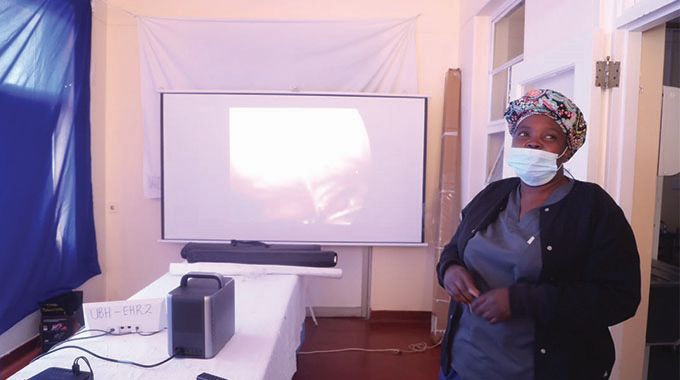
Robin Muchetu, Health and Gender Editor
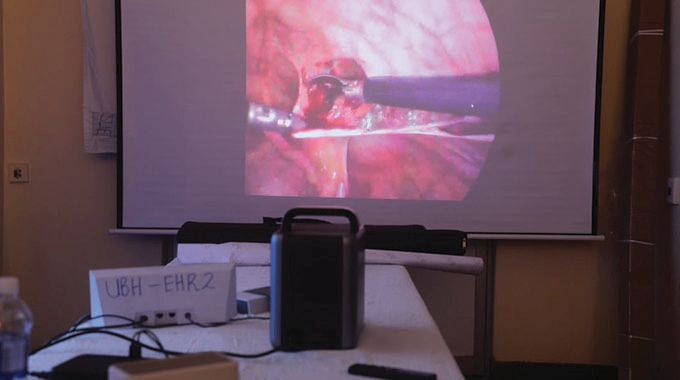
TWENTY Bulawayo surgeons recently completed advanced laparoscopic surgery training at the United Bulawayo Hospitals (UBH) which will enable them to do complex operations using modern equipment that is less invasive, reduces hospital stay for patients and leave small to no visible marks on the body.
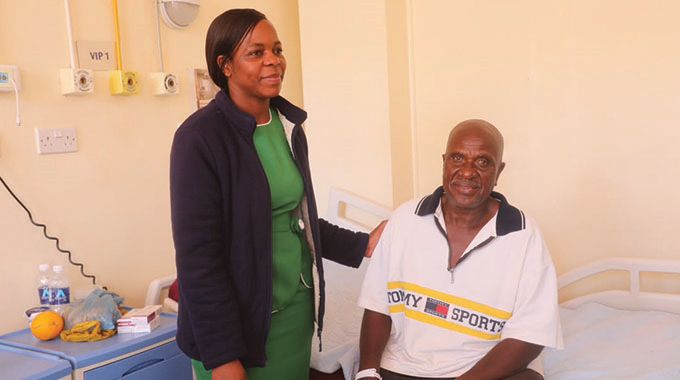
As part of putting into practice what they had learned, the doctors performed surgeries on about 15 patients that had been admitted for laparoscopic hernia surgery in an impressive show of the merits of skills transfer.
Minimal Access Surgery/keyhole surgery/laparoscopic surgery is where small incisions or holes are made on the abdomen of the patient instead of the big incisions or cuts. This has a bearing on recovery, less post-operative pain, early discharge and early return to work for those that are employed.
Dr Munyaradzi Magara Consultant Surgeon and Specialist at UBH said the training was critical and was performed by a seasoned professional.
“Dr Pardon Karidza is a specialist surgeon from Harare is a senior colleague and a friend of UBH as he has been here a few times to impart skills of minimal access surgery also known as laparoscopic surgery or keyhole surgery. He has pursued this area of minimal access surgery training at various centres outside the country, he has gone out there acquired skills, returned to Zimbabwe and trained others.
“We have him here for a laparoscopic hernia surgery camp which is a step up from the commonly performed minimal access surgeries which we have been doing as an institution. Now we want to go to the next step of complexity of operations,” said.
The training was targeted at central hospitals as they are the ones offering specialist treatment.
Dr Karidza said the camp served as a platform for skills transfer which is vital in ensuring more specialists perform advanced surgeries.
“We had this laparoscopic hernia camp and the aim is transferring skills to our fellow colleagues. I would like to thank our colleagues and the UBH community for giving us the opportunity to share our experiences with the team. The attendance has been phenomenal and we had doctors from UBH and Mpilo Hospitals. The skills transfer has been good and they exceeded our expectations and I attributed that to their enthusiasm and the fact that they have been doing laparoscopic conditions for other conditions,” said Dr Karidza.
He said there is a University of Zimbabwe International Centre for Surgical Simulation which was opened in 2023 which also offers training in minimal access surgery.
“A number of our junior colleagues have attended this college and we are beginning to see the positive results now,” he added.
He however said hospitals need to get the requisite tools to enable the surgeries to take place successfully.
“Going forward our recommendations is for the institutions to augment the laparoscopic equipment which is there at UBH and do the same for Mpilo Hospital because the manpower is there, they are keen and competent.
“I would also recommend that other institutions send their medical practitioners, especially surgeons to the simulation centre so that they will see us offer our patients world class services. This will widen our scope and we are prepared to return and do further advanced surgeries,” said Dr Karidza.
UBH said it needs newer generations of visual equipment such as cameras and monitors. The ones they are currently using were secured in 2010 and there have been advancements to these technologies.
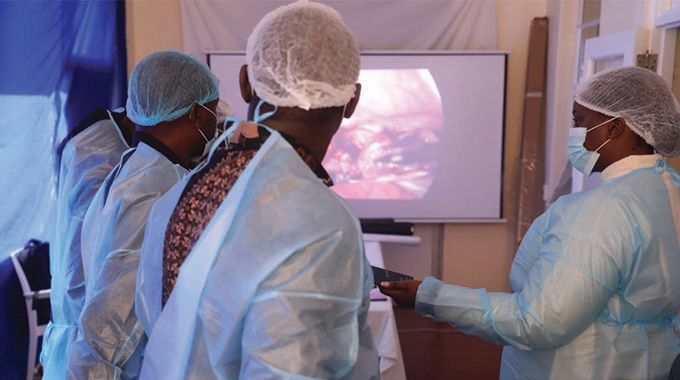
Other delicate instruments are also needed that will enter the area where the surgery will take place.
Furthermore, while laparoscopy is mainly about abdominal surgery, other disciplines also doing minimal access surgery including neurosurgeons, orthopedic surgeons, urologists and gynaecologists can use the same equipment.
Dr Magara said the advantage of the laparoscopic surgery is that the scars are barely visible.
“For cosmetics it is good, there are just small holes which you can hardly see when they are healed compared to the traditional surgery which leaves quite a visible scar,” he said.
UBH said they have been performing some keyhole surgeries including gall bladder operations, appendix removal, tubal ligations, repairing of perforated ulcers, investigative work to do with fertility and hysterectomies by key hole.
He said bigger operations can also be done using a similar method and at UBH said they are yet to get to that step; however, they are being carried out in Harare.
“These are the removal of cancerous colon problems, they make a small incision and remove the affected parts,” he said.
The training aims to equip local surgeons to perform bigger operations if the special and advanced equipment is available for the local intuitions.
Dr Trust Mushawarima the clinical director at UBH said the institution is honoured to host Dr Karidza with his expertise in laparoscopy following previous other camps held at the hospital.
“As a hospital it is our goal to ensure that we bring in experts so that our staff members gain skills from them. I am excited about Dr Karidza in that he is a Zimbabwean specialist who has taken his time to transfer skills to his colleagues, most of the time it is someone who is coming from outside the country. We are honoured to host him and the sacrifice he has taken,” he said.
He added that the hospital is taking the right direction as they are broadening specialist services that can be accessed by the community following the training received. — @NyembeziMu



 Bongani Ndlovu