Gibson Mhaka, Senior Political Reporter
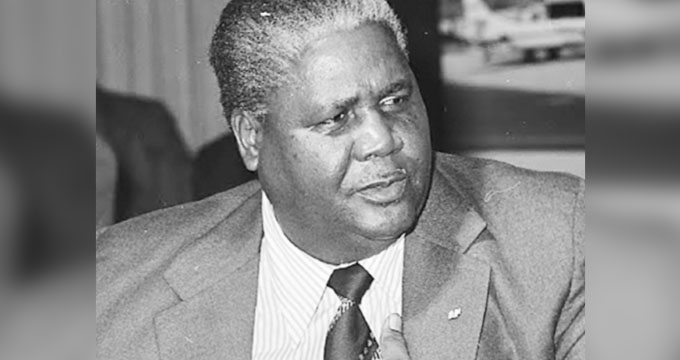
TWENTY-SEVEN years after the death of Vice-President Dr Joshua Mqabuko Nyongolo Nkomo, his family says the ideals that shaped his political journey, unity, reconciliation, peace and inclusive leadership, remain as relevant today as they were during the country’s liberation struggle.
Monikered Father Zimbabwe, Dr Nkomo died on July 1, 1999, at the age of 82 after a battle with prostate cancer.
The revered nationalist, who played a pivotal role in Zimbabwe’s liberation struggle and later championed national unity through the Unity Accord, was declared a national hero and was laid to rest at the National Heroes Acre in Harare, where thousands of Zimbabweans and regional leaders gathered to bid farewell to one of the country’s founding fathers.
The commemorations, spearheaded by the Joshua Nkomo National Foundation (JNNF) in partnership with the Nkomo family, will begin with an intimate prayer service at the late nationalist’s museum in
Bulawayo before unfolding into a series of activities throughout July aimed at preserving and promoting the legacy of the man widely regarded as one of the principal architects of Zimbabwe’s liberation struggle.
In an interview ahead of Wednesday’s anniversary, Dr Nkomo’s eldest daughter, Mrs Thandiwe Nkomo-Ibrahim, said while the 1 July commemorations would be reflective in nature, the family had lined up a broader programme to ensure the founding nationalist’s ideals continue inspiring future generations.
“The Joshua Nkomo National Foundation is going to hold a prayer session and church service, as we usually do every year, where close friends are invited. It will be a small gathering centred on prayer and remembrance,” she said.
“It is a day when people who knew him come together to remember him, share memories, socialise and tour the museum as they reflect on who he was and what he stood for.”
Mrs Nkomo-Ibrahim said the commemorations would extend beyond the anniversary itself, with a public lecture on 4 July expected to bring together political leaders, young people, academics and members of the family to reflect on Dr Nkomo’s contribution to nation-building.
“We plan to further celebrate on July 4 through a Joshua Nkomo Lecture Programme at the museum.
“The focus will be on youth in politics and leadership. We want young people to engage with the ideals that guided my father’s leadership and understand why those values remain important today,” she said.
She added that further activities, including a roadshow and public exhibitions, were being planned later in the month to enable more Zimbabweans to participate in commemorating the liberation icon. Beyond the commemorative events, Mrs Nkomo-Ibrahim said the family remained committed to ensuring that
Dr Nkomo’s philosophy of inclusive leadership continues to shape future generations.
Asked what message the family wished to convey to Zimbabweans, particularly young people who never met Father Zimbabwe, she said the values that guided his life remained as relevant today as they were during the liberation struggle.
“The values of Ubuntu, unity, freedom, justice and inclusive leadership are what defined him.
“He believed in bringing together all tribes, all races and all Zimbabweans regardless of background,” she said.
“Those values have to be maintained so that people continue to walk and live the vision of the old man. Zimbabwe’s future depends on leaders and citizens embracing those principles.”
Mrs Nkomo-Ibrahim said Dr Nkomo’s vision of national unity and reconciliation had become one of the defining pillars of Zimbabwe’s nationhood.
“He believed that a united Zimbabwe was stronger than a divided Zimbabwe.
“His vision was never about exclusion but about bringing everyone together to build one nation.”
To ensure that philosophy lives beyond his generation, the Joshua Nkomo National Foundation is pursuing several long-term projects designed to institutionalise his ideals.
Among the flagship initiatives is the establishment of a national leadership centre that will train future leaders in ethical, inclusive and developmental leadership inspired by Dr Nkomo’s principles.
“We want to build a lasting memorial — a leadership centre where the values of the old man will be taught.
“We are also looking at partnering with Lupane State University and other international universities so that his philosophy of leadership becomes part of academic learning,” she said.
“We have realised there is a need to train future leaders so that our country continues to be governed in a manner that benefits everyone and creates opportunities for young people.”
The family is also working with the Government on several heritage preservation initiatives, including the installation of a second statue of Dr Nkomo in Harare, expansion of museum facilities and the establishment of a vocational training centre in Matabeleland South.
“We are working in partnership with the Government on several projects, including opening a vocational training centre, establishing a centre of excellence and expanding the museum so that future generations fully appreciate his contribution to Zimbabwe.”
Mrs Nkomo-Ibrahim also revealed that the family hopes to see July 1 recognised as a national public holiday in honour of Father Zimbabwe’s immense contribution to the country’s liberation.
“As a Foundation, we would like to lobby for July 1 to become a national holiday because Dr Nkomo was a national leader whose contribution transcended politics,” she said.
“He single-handedly ignited political consciousness across the country, encouraging Zimbabweans to stand up for their rights, their dignity and their land.
“Across the country people continue asking how they can honour him, and we believe a national day of remembrance would be a fitting tribute.”
She also renewed the family’s appeal for the operationalisation of Ekusileni Medical Centre, one of Dr Nkomo’s most cherished developmental projects.
“My father wanted Zimbabweans to access specialised medical treatment at home rather than travelling abroad.
“It pained him to see people spending their final days in foreign countries, separated from their families because critical health services were unavailable locally,” she said.
“His dream was for centres of excellence like Ekusileni Hospital to ensure that Zimbabweans receive world-class healthcare in their own country, surrounded by their loved ones.”
Mrs Nkomo-Ibrahim expressed gratitude to President Mnangagwa and the Government for working closely with the family and the Joshua Nkomo National Foundation in preserving the legacy of one of Zimbabwe’s founding fathers.