Online Reporter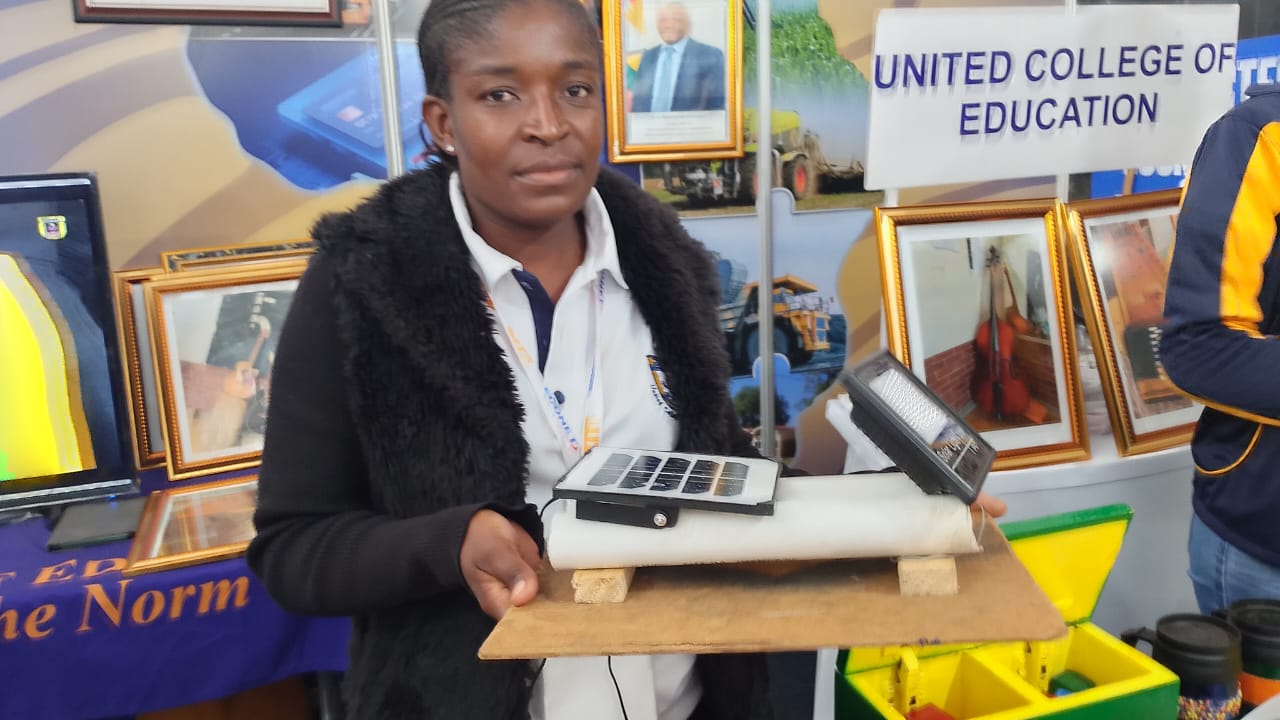
Sikhumbuzo Moyo, [email protected]
STUDENTS from United College of Education (UCE) have developed a prototype low-cost sewer line monitoring system aimed at addressing the city’s persistent pipe bursts and blockages by detecting faults before they occur.
The innovation, showcased at the Zimbabwe International Trade Fair in Bulawayo, is led by student Thubelihle Ncube and uses pressure-detecting sensors installed in sewer lines to monitor wastewater flow patterns and identify anomalies.
Ms Sandile Mpofu, who was manning the college’s stand, said the system automatically sends alerts once irregularities are detected.

“Once a deviation from normal flow is detected, the system automatically sends an alert message to a central monitoring facility, enabling rapid response teams to intervene before the situation escalates into a major infrastructure failure,” she said.
She added that each detector can cover approximately 600 metres of sewer line, making the system scalable and cost-effective for wider urban deployment.
“We identified a recurring problem of sewer bursts across the city and realised that most of the damage occurs because faults are only addressed after they happen. Our solution focuses on early detection, which allows authorities to act before a pipe collapses or overflows,” said Ms Mpofu.
The project is being developed in consultation with engineers from the Bulawayo City Council to ensure it meets municipal standards and can integrate into existing infrastructure.
Authorities have long struggled with ageing sewer systems, which have led to frequent overflows, posing environmental and public health risks.
If successfully implemented, the system could reduce maintenance costs, improve service delivery and minimise disruptions caused by sewer bursts.
The developers believe the innovation could be the first of its kind in Zimbabwe, with plans underway to refine the prototype for pilot implementation in selected areas.