Online Reporter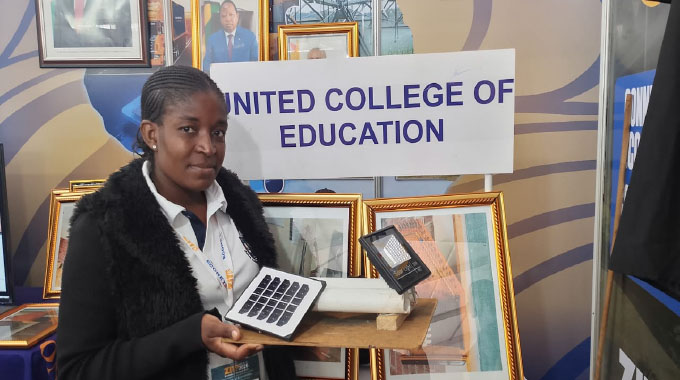
Sikhumbuzo Moyo, [email protected]
STUDENTS from the United College of Education (UCE) in Bulawayo have developed a prototype low-cost sewer line monitoring system that could help the city address its longstanding problem of pipe bursts and blockages by detecting faults before they escalate into major infrastructure failures.
The innovation, which was showcased at this year’s Zimbabwe International Trade Fair, is being led by Ms Thubelihle Ncube and is centred on the use of pressure-detecting sensors installed along sewer lines to continuously monitor wastewater flow patterns.
By analysing normal flow behaviour and identifying irregularities, the system is designed to provide early warning signs of potential choke points or impending bursts, enabling corrective action before serious damage occurs.
Speaking while manning the college’s exhibition stand, Ms Sandile Mpofu said the prototype is grounded in the principle of preventive maintenance, marking a shift from the predominantly reactive approach used, where faults are addressed only after failure.
“Once a deviation from normal flow is detected, the system automatically sends an alert message to a central monitoring facility, enabling rapid response teams to intervene before the situation escalates into a major infrastructure failure,” she said.
Ms Mpofu added that each detector is capable of monitoring approximately 600 metres of sewer line, making the system scalable and suitable for deployment across extensive parts of the city without requiring major structural modifications.
“We identified a recurring problem of sewer bursts across the city and realised that most of the damage occurs because faults are only addressed after they happen. Our solution focuses on early detection, which allows authorities to act before a pipe collapses or overflows,” said Ms Mpofu.
The students’ project is being developed in consultation with engineers from the Bulawayo City Council, who are providing technical advice to ensure the system adheres to municipal engineering standards and can be integrated into the existing sewer reticulation network.
City officials say innovations of this nature could be critical in modernising urban service delivery, particularly at a time when local authorities are grappling with ageing infrastructure and limited financial resources.
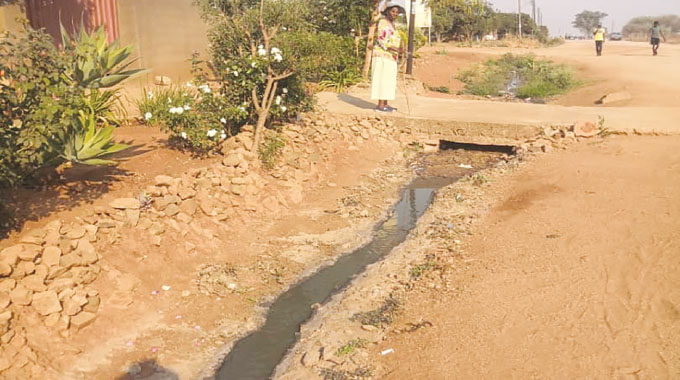
Bulawayo, like many urban centres in Zimbabwe, has been struggling with an ageing sewer system that is increasingly unable to meet rising demand. Frequent sewer bursts and overflows have become common in several suburbs, raising serious environmental and public health concerns, including contamination of water sources and the spread of water-borne diseases.
If fully refined and rolled out, the UCE monitoring system could significantly reduce maintenance costs by enabling targeted repairs, improve response times to faults, and minimise service disruptions caused by sewer failures. It could also strengthen planning through the provision of real-time data on the condition and performance of the sewer network.
The developers believe the innovation could be among the first locally developed smart sewer monitoring solutions in Zimbabwe and say work is already underway to further refine the prototype ahead of pilot implementation in selected parts of the city.
The emergence of the innovation comes at a time when pressure on Bulawayo’s sewer infrastructure continues to intensify.
At a Trade Effluent and Water Recycling Indaba held in the city in February this year, the Principal Engineer for water and sanitation, Mr Dumani Gwetu, revealed that the local authority receives between 80 and 110 sewer choke reports every day, underscoring the scale of the challenge.
However, due to limited resources, including shortages of vehicles and equipment, council teams are only able to attend to between 48 and 96 cases daily.
“The City of Bulawayo receives between 80 and 110 sewer chokes reports per day with our workers attending to between 48 and 96 of those reports per day depending on the number of vehicles available on the day and the season of the year,” said Eng Gwetu.
He explained that a sewer choke refers to a gradual restriction of wastewater flow caused by the accumulation of debris and foreign materials, where some seepage still occurs.
By contrast, a blockage is a total obstruction of the sewer line, preventing wastewater flow entirely and often resulting in overflows from manholes, posing immediate risks to nearby communities.
Bulawayo’s sewer reticulation system is designed to safely collect and convey wastewater to treatment plants and consists of several interlinked components.
These include sewer mains, which act as the primary conduits transporting wastewater across the city, and collector or branch mains that channel wastewater from smaller lines into the main network.
Other key components include manholes, which provide access for inspection, cleaning and maintenance, as well as pump stations that enable wastewater to be lifted from low-lying areas to higher elevations where gravity flow is not possible.
The city’s sewer network has expanded significantly over the years in tandem with urban growth and housing developments.
Under the 2012 wastewater master plan, the reticulation network covered approximately 1 465 kilometres, but expansion since 2013 has increased the network length to more than 1 700 kilometres.
This expansion has placed additional maintenance and operational pressure on the system.
Innovations such as the UCE prototype could complement ongoing municipal efforts by introducing smart monitoring tools that improve efficiency and reduce the risk of catastrophic infrastructure failures.
As Bulawayo continues to grow, the adoption of technology-driven solutions alongside traditional infrastructure management is increasingly being viewed as essential to achieving sustainable urban development and improved service delivery.