Chronicle Editor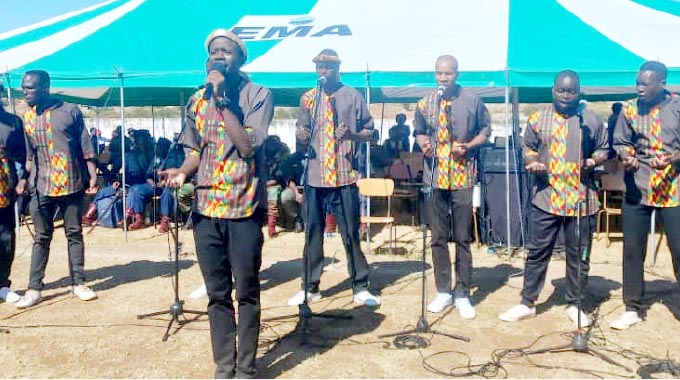
Sukulwenkosi Dube-Matutu, [email protected]
Rising Gwanda-based Imbube music group, Ufasimba The Home of Arts, are determined to promote their genre and see it dominate the music industry. Established in 2023, the group consists of eight members specialising in the Imbube genre. They were officially launched in August this year.
Inspired by renowned Imbube groups such as Black Umfolosi, Indosakusa Imbizo, and Godlwayo, they perform traditional and gospel songs at State functions, weddings, funerals, and churches. The group’s organiser and publicity secretary, Mthabisi Moyo, explained that the idea to form the group was born from a workshop by Thobela Arts Foundation, held in preparation for the Imbube Milestone Competition last year.
“I attended a workshop on the promotion of Imbube last year. In that meeting, as one of the artists with a passion for Imbube, we were encouraged to come together and form a group since there wasn’t one in Gwanda, so we could participate in the Imbube Milestone Competition. I followed up with people I knew who were into Imbube and engaged them to form our own group. Our first appearance was at the Imbube Milestone in September last year,” he said.
Moyo mentioned that they gradually started building their group, singing about life and social ills like drug and substance abuse, and gender-based violence, among other issues. As the founder of the group, Moyo’s love for Imbube dates back to his primary school days. He said they had attempted to form groups over the years, but they later collapsed. When he got together with his fellow group members, he learned that they all shared a common goal of becoming professional Imbube artistes.

He believes that for music to have an appeal, it must speak to the day-to-day experiences of people. “Our music is centred on daily living. We want to use music for edutainment, addressing issues faced by people, whether children, youths, or the elderly.
We want to be relevant, so in addition to our regular songs, we compose songs specifically for events we are hired to perform at, such as weddings, funerals, church events, parties, graduations, and State events, among others. We want our music to appeal to all age groups, hence we maintain the traditional Imbube style while incorporating contemporary music such as Amapiano and contemporary dance styles in our Imbube,” he said.
The Imbube genre is a form of African vocal music usually comprising male a cappella singers with voices in rhythmic unison, popularised by groups such as Black Mambazo, Black Umfolosi, Solomon Linda, and Indosakusa. Moyo emphasised the importance of more artists preserving traditional genres like Imbube, as such music is crucial in preserving African culture. He said traditional genres need to be pursued professionally, and these values should be instilled in youngsters to preserve this culture. Moyo expressed their desire to impart their knowledge and skills to youths.

Ufasimba Home of Arts composes their songs in different languages found in the rainbow province of Matabeleland South to appeal to a wide audience. Moyo said their future plans include touring the entire country and abroad, creating employment opportunities for the youth, and establishing their own studio to record their work.
“Ufasimba is a name derived from history, referring to Tshaka’s army. Ufasimba was the most tactical team in Tshaka’s army. When other teams in Tshaka’s army were defeated, Ufasimba would come in to finish the job. We chose this name because we are conquerors and believe we are here to conquer the music industry. We plan to reach great heights and overcome all obstacles.
We will take the Imbube genre to a whole different level. We want to rise to the level of renowned Imbube groups such as Black Umfolosi, among others. Imbube is a rich genre that needs more promotion, and we can use it to showcase African culture on an international platform,” he said.
Moyo added that the community of Matabeleland South has shown great appreciation for their music. He expressed their desire to receive financial assistance to record their music. – @DubeMatutu



 Online Reporter