Trust Freddy
Herald Correspondent
The United Kingdom has pledged an additional US$2 million to support humanitarian demining operations in the country as Government officials, diplomats, and private-sector partners unite to clear the final 3 percent of mine-contaminated land by 2030.
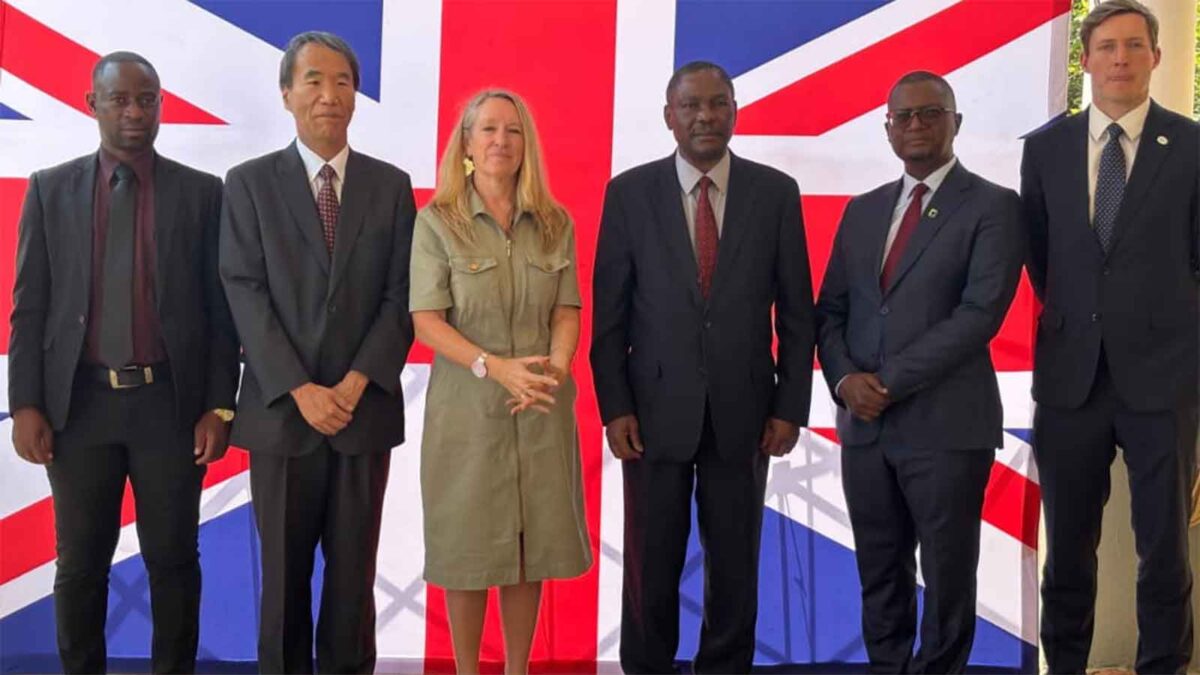
The announcement was made by British Ambassador Gill Lever during a high-level humanitarian demining event held at the British Ambassador’s Residence in Harare.
Co-hosted by the Zimbabwe Mine Action Centre (ZIMAC), the UK, the HALO Trust, and First Capital Bank, the gathering showcased Zimbabwe’s demining progress and sought to mobilise wider funding for the country’s remaining minefields.
Since independence, Zimbabwe has cleared 302,55 square kilometres of contaminated land, representing 97 percent of its total minefield area.
Only 8,1 square kilometers, equivalent to roughly 1 100 football pitches, remain to be cleared.
In a speech read on her behalf by Permanent Secretary for Defence Aaron Nhepera, Minister Oppah Muchinguri-Kashiri said concerted efforts by stakeholders have brought the country to the tail end of the exercise.
“Many of you will recall that our initial target was to complete mine clearance by December 2025. Although we missed this target largely due to fluctuations in funding, our mine action programme continues to receive accolades and support from the international community,” she said.
“We now have the date of December 2030 to complete the exercise although we are geared to do so even much earlier, subject of course, to us securing maximum support from all our stakeholders.”
The minister said Government mainly funds the Zimbabwe National Army National Mine Clearance Unit, while international operators HALO Trust, Mine Advisory Group and Norwegian People’s Aid are funded by the international donor community including the UK, USA and Japan.
She commended HALO Trust and First Capital Bank CEO Tapera Mushoriwa for the initiative, saying it marks the coming on board of the private sector.
“I am, however, confident that, with the coming on board of the private sector in Zimbabwe, and the support we continue to receive from the donor community, we will, together, be able to achieve this target,” she said.
Ambassador Lever said Zimbabwe’s progress reflects the courage and skill of its deminers.
“A mine-free Zimbabwe is within sight. But this is the moment to accelerate, not step back,” Ambassador Lever said.
“The UK is proud to provide US$2 million in further support: every mine removed protects lives, returns land to communities, restores livelihoods and creates opportunities, including for women and girls.
“With about eight square kilometres remaining, we encourage government, donor and private-sector partners to support Zimbabwe’s final push towards a mine-free future.”
ZIMAC Representative Major Patson Mandaba said: “Landmines have had a significant and detrimental impact in Zimbabwe, particularly in Northern, North-Eastern, Eastern and South-Eastern border areas.
“The presence of landmines poses serious risks to civilians, hindering access to land for agriculture, which is crucial for food security and livelihoods.
“Efforts to clear landmines have been ongoing, but challenges remain due to funding and the sheer scale of contamination.”
The HALO Trust Country Director Oliver Gerard-Pearse said mine clearance opens land, reconnects communities and creates the conditions in which agriculture, infrastructure, tourism, energy and other businesses can invest.
“Clearance shouldn’t be the end of the story for these communities. It should be the beginning of the next chapter. This is not one organisation’s effort,” he said.
“It is a collective effort between the Government of Zimbabwe, its international partners, mine action operators, foundations, businesses, private donors and, most importantly, the affected communities themselves. We’re close. Really close.”