admin
admin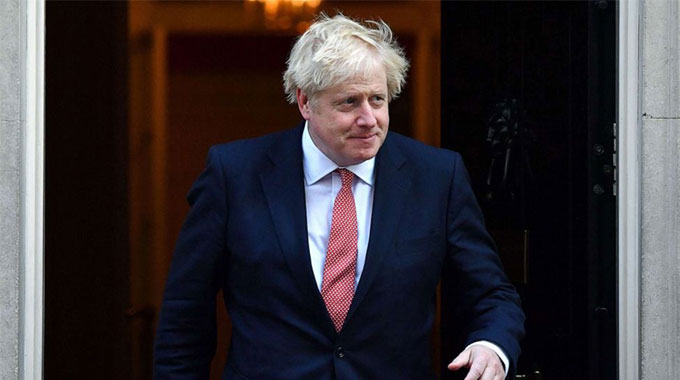
Prime Minister Boris Johnson acted unlawfully when he suspended the United Kingdom’s Parliament, the country’s highest court has ruled.
The suspension was “unlawful, void and of no effect”, the UK’s Supreme Court concluded yesterday. Parliament will reconvene its current session at 11:30am yesterday morning, House of Commons Speaker John Bercow announced.
Johnson said he “strongly disagrees” with the ruling, but that Parliament “will come back”. He hinted that he would seek another suspension.
The prime minister, who suffered a series of defeats when he lost his parliamentary majority and ability to govern through the legislature, suspended Parliament just weeks before the crucial October 31 deadline for the UK to leave the European Union.
Johnson said at the time that a five-week suspension – also known as “prorogation” – was necessary in order to present a new domestic legislative agenda, a ceremonial event which culminates in a speech made by the queen outlining the government’s plans.
But the UK’s Supreme Court ruled unanimously yesterday that the real motivation was to prevent MPs from scrutinising the government ahead of the divorce deadline.
“This was not a normal prorogation in the run-up to a Queen’s Speech,” said Lady Brenda Hale, president of the Supreme Court, while handing down the judgment.
“It prevented Parliament from carrying out its constitutional role for five out of the possible eight weeks between the end of the summer recess and exit day on 31st October.
“This prolonged suspension of Parliamentary democracy took place in quite exceptional circumstances: the fundamental change which was due to take place in the Constitution of the United Kingdom on 31st October.
Parliament, and in particular the House of Commons as the elected representatives of the people, has a right to a voice in how that change comes about. The effect upon the fundamentals of our democracy was extreme.”
The normal period to prepare a legislative agenda was four to six days, she added.
The suspension was “unlawful, void and of no effect”, she concluded.
“Parliament has not been prorogued. This is the unanimous judgment of this court.”
Jolyon Maugham, founder and director of the Good Law Project, was one of the driving figures behind the case.
“I’m delighted today the Supreme Court has protected the foundational principle of any democracy – the right of MPs to do the job for which they were elected,” he said outside the court.



 Online Reporter