admin
admin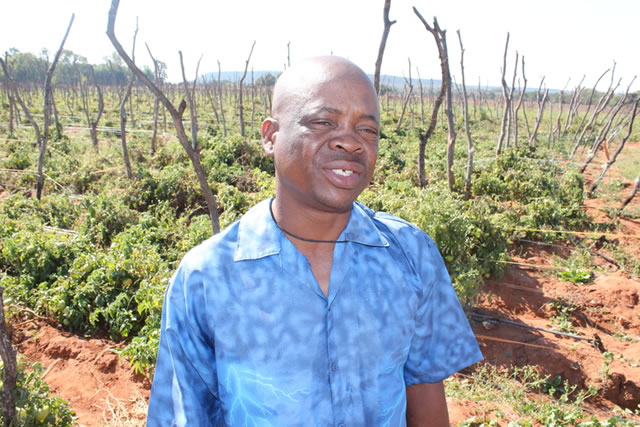

Mernat Mafirakurewa Business Editor
PANIC has gripped farmers dependant on Umguza River and nearby water sources after the Environmental Management Agency condemned the water bodies amid concerns the move runs against the government’s economic empowerment drive and will force farmers out of business.
EMA condemned the water from the river as unsuitable for drinking, irrigation and agricultural purposes.
Close to 100 farmers will be affected by the ban if implemented.
A visit by Business Chronicle to the area that offers employment to thousands of people on the outskirts of Bulawayo yesterday told of an uncertain future following EMA’s disclosures, although it was business as usual.
Farmers in Umguza supply their fresh produce — tomatoes, cabbages, carrots, lettuce, beetroot, and onions to Bulawayo, Victoria Falls, Hwange and as far as Beitbridge.
Dumisani Ncube, a successful farmer in the area, said while EMA could be raising valid concerns about the levels of water pollution in the river, there should be other ways of dealing with the matter as banning water usage would have catastrophic consequences.
“This area has become a key source of livelihood for many families more so as there are no jobs in industries. I had water tests conducted at the National University of Science and Technology which showed that the water was indeed contaminated but the contamination levels were within those prescribed by the World Health Organisation guidelines,” said Ncube.
“What will happen to all the new farmers that were allocated land? Personally I had moved onto drip irrigation but what about those that cannot afford given that it is a costly exercise.
“This is against the spirit of empowerment. The white farmers were growing horticultural products since 1953 . . . so what has changed now.”
What should happen, Ncube said, was that companies that were polluting the river should be made to purchase chemicals that would be used to treat the water.
Last month, the Bulawayo City Council wrote to the government seeking borrowing powers to raise $13,3 million to purify rivers that are spilling raw sewage and hazardous effluent into the Umguza catchment area.
A recent report prepared by the Cabinet taskforce on the pollution of Umguza River and its tributaries exposed an environmental disaster that is unfolding in the affected areas.
Companies fingered in the report of the Cabinet Committee taskforce include Delta Beverages, Schweppes, Ingwebu Breweries, Colcom, CSC, Treger, Kango and United Refineries.
An employee at one of the farms, Israel Mguni, said the area barely has alternative sources of water except from the river hence their future looked bleak without the water.
“This is the water we have used all these years and we have not heard people coming to complain about diseases. With no alternative sources of water this area will soon become a white elephant.
“We can’t all produce maize and wheat as suggested by EMA. Who will then produce the vegetables,” said Mguni.
Another employee, Bhekinkosi Ndlovu, said the move would leave many jobless and without sources of income.
He said this would not affect those employed at the farms alone but many downstream industries, the Bulawayo fresh produce market and many supermarkets that rely on them.
“What this means is that there could be a shortage soon. People will be left with no option but to import. This issue should be looked at critically before rushed decisions are made,” he said.
EMA’s Matabeleland North provincial manager Chipo Zuze-Mpofu told our sister paper — Sunday News — at the weekend that the pollution of the river had led to health hazards which were confirmed by recent laboratory tests.
“Pollution of the river has been going on for years since pre-independence but now the situation is out of hand and we fear for the residents of the area especially for those that are close to the river as we don’t know yet what other chemicals are in the water,” she said.
According to the EMA report, Khami River bridge near Thorn Valley Farm has the highest Chromium-6 with 0,17, Umguza river at the weir has 0,14, Spring Area well had 0,13, a Mr Ncube’s well had 0,15, Kloof Farm borehole 0,09 and Corn Comb Farm compound borehole that is used by 20 families had 0,09 of which the water is used for both irrigation and domestic purposes.
The chemical is said to be most present in carrots and sugar cane from the farms where tests were conducted.



 Online Reporter