


 Vusumuzi Dube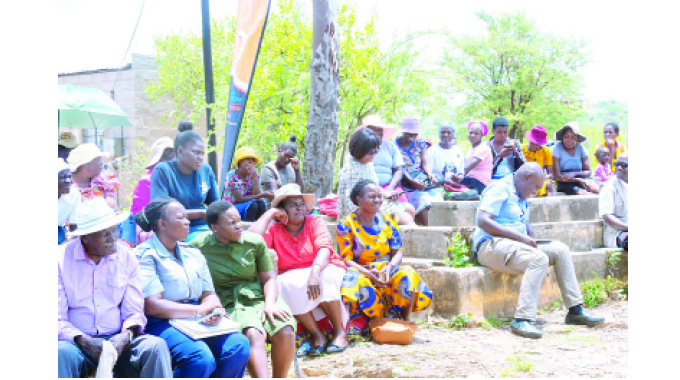
Sifelani Tsiko recently in Umzingwane
For young poor girls here at Ezinkondweni Village in Ward 3 of Umzingwane District in the southern part of Zimbabwe, the allure of sex for pads and small luxury items is irresistible.
Some parents are just too poor to provide basic hygiene requirements such as clean clothes, goodies, water, soap and sanitary pads for young girls.

And, the consequences are dire for the poor girls including young women who are being preyed on by older men with spare cash or illegal gold miners, omakorokoza that dangle gold money.
“Omakorokoza are enticing our girls by using money to abuse them. Whenever they get huge sums of money after selling their gold, they come to our girls and buy them goodies and pads.
“This doesn’t end there. They then demand sex. The results are teen pregnancies and abuse of our children. It’s humiliating for your child to be impregnated for pads, something that costs US$1 or so,” said Mr Julius Nyoni of Vukuzenzele 1.
All this emerged during a dialogue platform organised by UN Women in partnership with Zimbabwe Women Lawyers Association (ZWLA) under the Spotlight Initiative at Bambanani Business Centre at Ezinkondweni in Umzingwane District.
This rural public campaign sought to raise awareness and end sexual and gender-based violence (SGBV) in public spaces.
“Our young girls and young women love ‘amakhumukhumu’ (goodies or nice things) and they end up being abused by ogweja. As parents, we are too poor and we are to blame as we push them to elicit money for little things as pads from omakorokoza.
“It’s so painful to see our young girls getting abused and impregnated for sanitary pads. The Government should give sanitary pads to our girls in school. We always hear that donations are being given to other schools in the country and we need pads too for our girls,” said Ms Sithabiso Nkala.
The poverty of parents has left the girls at the mercy of otsheketsha — who dangle gold money for goodies and sanitary pads.
“Omakorokoza harass and abuse young girls. Many fall pregnant and are dumped. As mothers, we carry the burden of looking after the girls and babies. Omakorokoza are a problem here.
“Apart from this, young girls are abused at water points, at business centres and in the bush. When omakorokoza get drunk, they make noise all night, abuse young girls and the results are — teen pregnancies such as that one we have heard of a 9-year-old Tsholotsho girl and another one in Bindura.
This problem is also here,” said Ms Mellina Makanda.
Some men at this dialogue platform said sometimes sex was in exchange for as little as US$1 or $3 for ‘amajiggies or amazepe’ (snacks) which are sold at a nearby business centre.
Omakorokoza use the love for such small luxuries as a trap to demand sex. Illegal miners operating in and around the gold rich Umzingwane District are allegedly coercing local girls as young as 10 years or 13 years into sex – inflicting violence and disease on them.
“Most of the illegal miners are enticing teenage girls and women here in our communities. There are 11-, 12- and 13-year-old girls being bribed to engage in sex just for pads and ‘ámajiggies,’ says Ms Talent Moyo, a Spotlight Initiative youth activist at Ezinkondweni.
“They offer money for pads, clothes and small luxuries such as ‘amajiggies’ in exchange for sex. Parents are poor and most of the time are not aware of this until the girls fall pregnant.”
Ezinkondweni is not alone. Most other communities in Irisvale, Mawabeni, Esigodini and other parts of Umzingwane District are all affected and are dealing with sexual violence, rape and sexual infections.
“Our district is going through its hardest times since the emergence of omakorokoza,” said Councillor Jabulani Makhala of Irisvale, in Ward 13 of Umzingwane.
“Omakorokoza abuse our young girls and women. There’s little awareness of gender based violence issues and the institutions that can offer help to the victims. I’m grateful that UN Women, ZWLA and the Spotlight Initiative are raising awareness among our people about the rights of girls and women and the pathways they can get assistance.”
To address problems related to early child sexual abuses and child marriages in Umzingwane District, a consortia comprising the Government, ZWLA and other NGOs are spearheading programmes to raise awareness on the impact of GBV on young women, girls and boys.
The programmes running under the Spotlight Initiative supported through a partnership between the European Union (EU) and United Nations Women are aimed at ending violence against women and girls and harmful practices.
Zimbabwe is among the 20 countries in Africa, Latin America, Asia-Pacific and the Caribbean which are participating in the four-year programme which started in 2019 and ends next year for the first phase.
The country was supported by the EU to the tune of US$30 million for the first phase to help Zimbabwe meet some of its Sustainable Development Goals (SDG 3 and 5) on empowering women and girls to realise their full potential in a violence free, gender-responsive and inclusive environment.
There is a worrying trend of teenage rape and sexual abuse in the country.
About 220 Zimbabwean minors were raped between January and September 2022 out of a total of 435 reported rape cases in the country, according to the Ministry of Women Affairs, Community, Small and Medium Enterprises Development.
In addition, a total of 959 sexual violence cases and 1 038 domestic violence cases were reported during the same period.
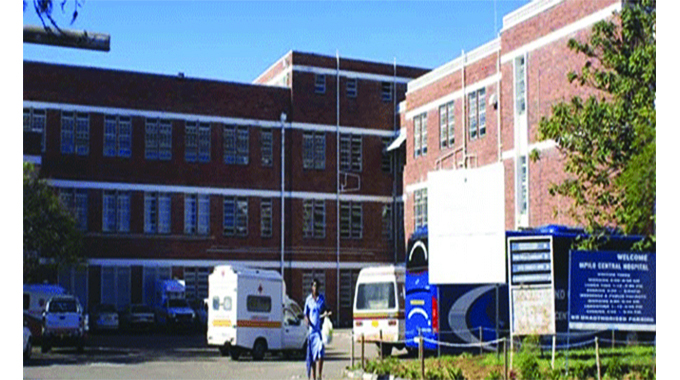
Recently, a nine-year-old Tsholotsho girl was raped and fell pregnant. The girl was assisted to deliver her baby at the United Bulawayo Hospitals.
In other cases, a Norton girl and another — Annah Machaya died while giving birth. Apart from this, there is a case before the courts of a couple who have been sexually abusing their two children aged 9 and 11.
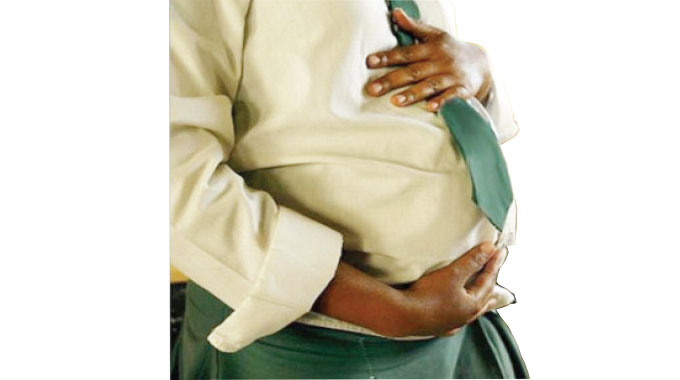
Reports also abound that at Esikhoveni Secondary School in Umzingwane, about 30 girls aged between 13 and 16 fall pregnant every year.
“The police try their best to investigate the cases and apprehend the perpetrators. I know you complain a lot about the granting of bail to these perpetrators. Everyone has a right to get bail and to seek legal advice,” said Sgt Fatuma Phiri, of the Victim Friendly Unit at Esigodini Police Station.
“When you see them walking freely here, it doesn’t mean we have let them go. The cases are still open and going. The wheels of justice turn slowly and when there’s sufficient evidence, these perpetrators will be jailed.
“The only problem we have is that people don’t want to come and testify at the courts. This kills most cases as our courts require evidence to convict these criminals.”
Ms Juliet Mukoki, a programmes officer of the Zimbabwe Women Lawyers Association (ZWLA) and co-ordinator for the Spotlight Initiative said poverty, substance abuse, excessive use of sexual enhancements, lack of awareness and other factors were creating a crisis of teenage pregnancies in the district.
“We should report cases of abuse of our young girls. We have Spotlight Initiative activists here who can help you to report the cases and take you to the one-stop centre for counselling, health service support and for legal advice. Let’s take advantage of these people and let’s work together to end GBV cases here.”
Ms Alice Dube of Ezinkondweni suggested that it was important to have suggestion boxes where locals could drop reports of sexual abuse.
“We need suggestion boxes here at our business centre so that we can report these cases without being known. It’s dangerous at times to be known that you have made a report of a perpetrator of sexual abuse,” she said.
Other people said community watch groups should be created to help locals handle sexual abuse cases.
Holding drama and community awareness campaigns was also suggested as a solution.
Mr Innocent Katsande, UN Women communications specialist said empowerment of local communities to find their own solutions was critical.
“Women should not be left to fight alone,” he said. “In our social discourse, there should never be room for women to be taken advantage of, especially based on their economic status.
“Authorities should always send a clear message that perpetrators of GBV will be prosecuted. The empowerment of women and girls should be holistic and sustainable.”
And, despite the teenage pregnancy turmoil, young school boys in Umzingwane are a redemption song.
“We have a crisis of teenage pregnancies here in Umzingwane. We have to teach men about this and how they can play their part to end GBV. Despite all these problems I’m happy to tell you that children at our local primary school raised money through their own savings to buy pads for girls at their school,” said Councillor Elijah Nkala of Mawabeni.

“Encouraging young boys at primary school to raise money to buy pads for school girls is a local solution to fighting teenage pregnancies in a way. Boys are then also conscious of the challenges facing girls.”



 Bongani Ndlovu
 Online Reporter