admin
admin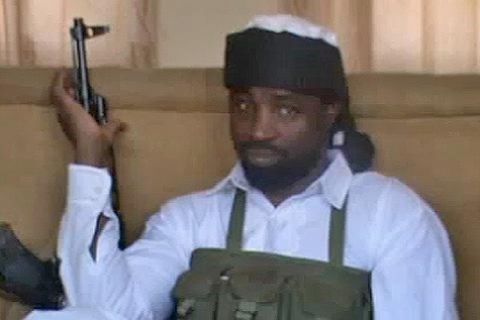
New York — The United Nations Security Council sanctioned the leader of Nigeria’s Boko Haram and a splinter group on Wednesday, the first individual and entity to be designated by the world body since the Islamist militant group was blacklisted, diplomats said.Leader Abubakar Shekau and Boko Haram faction Ansaru will be banned from international travel and their assets frozen under the UN al-Qaeda sanctions list.
Russia placed a “technical hold” on the designations two weeks ago because it needed more time to review the listings, but diplomats said they lifted the hold on Wednesday, allowing the sanctions to come into force.
Last month, the Security Council al-Qaeda sanctions committee blacklisted Boko Haram at the request of Nigeria, following global outrage when the group kidnapped more than 250 girls from a school in remote north-eastern Nigeria on April 14.
The Islamist militant group was described in the UN listing as an affiliate of al-Qaeda and the Organisation of al-Qaeda in the Islamic Maghreb (Aqim). It is subjected to a travel ban, an asset freeze and an arms embargo. Boko Haram faction Ansaru, blamed for the killing of several Western hostages, is Aqim’s bona fide affiliate in Nigeria, and called itself “al-Qaeda in the Land Beyond the Sahara” in a video with a British and Italian hostage in 2011.
Ansaru broke off from Boko Haram in protest at its killing 186 mostly Muslim civilians in the medieval Islamic city of Kano in early 2012. Shekau is the purported leader of Boko Haram.
A year ago, US Secretary of State John Kerry authorised a reward of up to $7m for information leading to his location.
Boko Haram’s five-year-old insurgency is aimed at reviving a medieval Islamic caliphate in modern Nigeria, whose 170 million people are split about evenly between Christians and Muslims. The group is becoming, by far, the biggest security threat to Africa’s top oil producer.
Boko Haram, which in the Hausa language broadly means “Western education is sinful”, is loosely modelled on the Taliban movement in Afghanistan.
Meanwhile, an explosion has hit a crowded shopping centre in Nigeria’s capital Abuja, killing at least 21 people and wounding dozens of others, officials said.
Wednesday’s blast hit Emab Plaza just as people were getting ready to watch Nigeria play Argentina in the World Cup on the many TV sets for sale inside.
Witnesses said they saw body parts scattered around the entrance of the mall. Parts of the building and many cars parked outside were completely destroyed by the impact of the explosion.
It was not clear what caused the blast but suspicion fell on the armed group Boko Haram, which has attacked Abuja twice in the last 10 weeks. A car bombing in April killed 75 people at the Nyanya bus terminal on the city’s outskirts, and a similar bombing at the same spot on May 1 left 19 people dead.
Al Jazeera’s Yvonne Ndege, reporting from Abuja, said an investigation had been launched into the cause of the latest explosion and that security was being beefed up across the capital.
“Nigeria’s security services insist they are winning the war against Boko Haram. But say these kinds of attacks are difficult to stop,” she said.
Wednesday’s explosion came just two days after police blamed Boko Haram for a blast that struck a medical college in the northern Nigerian city of Kano, killing at least eight people.
Boko Haram, which aims to create a state in northern Nigeria ruled by Islamic law, did not immediately claim responsibility but the school matched its target of Western education.
The group, which has attracted international condemnation since April when it kidnapped more than 200 schoolgirls who remain captive, has also been blamed for abducting 60 girls and women and 31 boys from villages in northeast Nigeria over a three-day period — Thursday, Friday and Saturday.
On Saturday, scores of Boko Haram fighters attacked four other villages close to Chibok, in Borno state, near the Cameroon border, from where hundreds of girls were kidnapped in April. — Sapa


 Online Reporter