admin
admin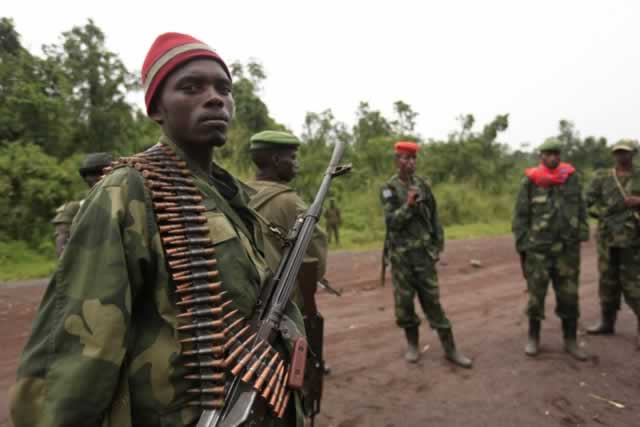
KINSHASA. – The Democratic Republic of Congo needs a plan to disarm, demobilise and reintegrate ex-rebels, the United Nations said yesterday, a week after helping the army defeat the 18-month-old M23 insurgency.
The UN Secretary-General’s deputy special representative to the DRC, Abdallah Wafi, told reporters such a plan – dubbed “DDR” – was key to ensuring peace in the country’s troubled east.
“I would like to emphasise the need for the DRC authorities to have a DDR plan . . . that benefits all the components of armed groups. Long-term peace and security cannot be guaranteed in the Kivus (eastern provinces) without it,” he said.
The M23 rebellion announced on November 5 it was laying down its arms after a bruising offensive by the Congolese army and a special UN intervention brigade.
Some M23 fighters surrendered to the regular army and the UN mission, others had defected to Rwanda in April and hundreds more found refuge in Uganda when the fighting wound up.
But many more remain at large and several other armed groups still roam the mineral-rich region, especially in the North Kivu province where the M23 was active and in neighbouring South Kivu.
Kinshasa has vowed to build on its most significant military victory in half a century by going after the FDLR, a Kivu-based Rwandan group that includes the remnants of Hutu militia who carried out the 1994 genocide in Rwanda.
So-called DDR programmes are designed to disband ex-rebel groups, strip them of their weapons and find ways of reintegrating them into civilian life.
DRC’s UN-backed forces made short work of the M23 in the offensive launched late last month, and both sides had been expected to sign a peace deal on Monday.
The process collapsed at the last minute, however, with the government rejecting the idea of signing a binding agreement with a defeated group.
The fate of the ex-rebels was also contentious, with the proposed deal rejecting any amnesty for around 100 commanders and officers suspected of war crimes.
Speaking by video link from North Kivu, the head of the UN peacekeeping mission in DRC, Monusco, warned his troops would disarm the M23 forcefully if the group failed to do so voluntarily.
“We are determined to fight them. We would prefer the peaceful way, but we have seen the last of Monusco’s cohabitation with armed groups,” Martin Kobler said.
Uganda says that 1 400 M23 fighters have sought refuge on its soil, but Kobler did not confirm the figure.
“The numbers aren’t very clear. Right now we will prepare DDR camps . . . for 1 400 but we need to have a sorting process,” he said, warning there could be refugees among them.
DR Congo’s DDR chief Roger Musombo told AFP during a visit to Bogota last week that he was looking to draw from Colombia’s experience in reintegrating ex-rebel fighters.
Most M23 members were former members of another rebel group, the CNDP, who had joined the regular army after a 2009 deal with Kinshasa. They mutinied in April 2012, charging the government had not kept its end of the bargain. – AFP.


 Online Reporter