admin
admin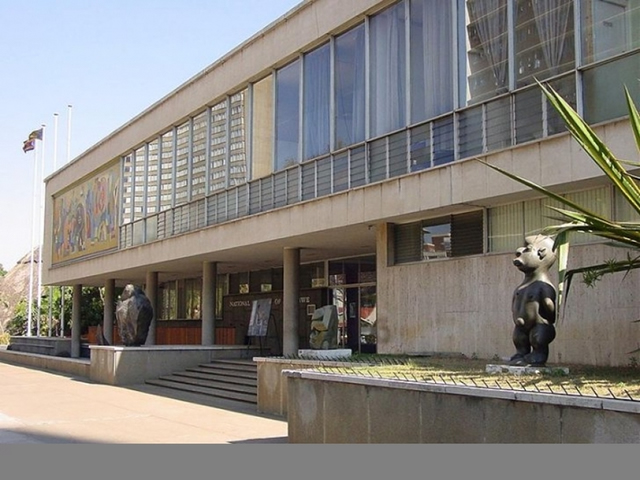
National Gallery of Zimbabwe
On March 8, the United Nations in Zimbabwe commemorated International Women’s Day at the National Gallery of Zimbabwe. International Women’s day is celebrated worldwide to recognise women’s achievements without regard to divisions, whether national, ethnic, linguistic, cultural, economic or political.
Running under the theme “Advancing Gender Equality and Women in Zimbabwe”, the conversation attracted several women from different organisations that advocate for women’s rights. Leading the proceedings was United Nations Women Country Representative in Zimbabwe Ms Delphine Serumaga. Interesting issues were discussed among the panellist and the audience.
The panellists comprised Florence Mudzingwa, Priscilla Misihairabwi, Jonathan Chindiwerere and Virginia Muwanikwa. To start off the discussion was the question, “Is Gender Equality celebrated in Zimbabwe?” The Constitution espouses the values and principles of gender equality. In fact, from a gender perspective it stands out as one of the most progressive constitutions in the world. It came out that in Zimbabwe the issue of gender equality is celebrated in terms of the Constitution but not in practice.
Several other issues also came out. Statistics show that 52 percent of the Zimbabwean population are women and the remainder are men. Whilst women are the majority of the population translating into them being the majority of Zimbabwean voters.
In spite of them constituting the bulk of the population women still do not occupy influential positions in Parliament and Government.
The public and private sector seeks profit as its main objective hence casting a blind eye on the Constitution.
According to research in the newsroom, one in 10 editors is female and the remaining nine are male. There is need to readdress the gender issue in our corporate sector as it is just on paper and not in practice.
Women living with disabilities are also victims as they are not recognised and fully represented because of lack of empowerment. There is need for society to reach to women living with disabilities particularly to those in rural areas. Globally, rural women ensure food security for their communities, build climate resilience and strengthen economies.
Yet gender inequalities such as discriminatory laws and social norms, combine with a fast changing economic, technological and environmental landscape restrict their full potential, leaving them far behind men and their urban counterparts.
Agriculture is the most important employment sector for women in developing countries and rural areas.
In Zimbabwe, according to a research conducted in 2017 by UN Women, 70 percent of farmers are women, making agriculture a woman-dominated industry but they do not own the means of production.
Their access to land is hampered by male power and control. There is need to redress the issue of gender equality in Zimbabwe as in all sectors of life women are marginalised.
There is need to redefine socialisation for children. Girls and boys are conditioned, through socialising agents such as the church and the family, to believe the male sex is superior to the female counterpart.
Boys are allocated challenging roles whereas women are only confined to arguably easier tasks. There is need to redefine socialisation.
Moreso, religion is a major socialising agent that has cast a blind eye to female issues as the majority of the prophets, pastors and church leaders are men.
At church women are made to submit to their husbands ignoring that husbands are to love their wives. These issues need to be readdressed.
In the arts sector women are also being victimised as a lot is expected of the female artiste. This is with regards to physical body, type of music, even the dressing. In her own world the girl child is not being recognised.
There is an urgent need to redress the issue of gender equality in Zimbabwe as according to data collected in 2015 only 39 percent of agricultural landholders are women, they are given less income, have less decision-making power in households and in communities they suffer inability to access credit to start a business.
With regards to gender equality these outrages need to be readdressed.


 Online Reporter