Online Reporter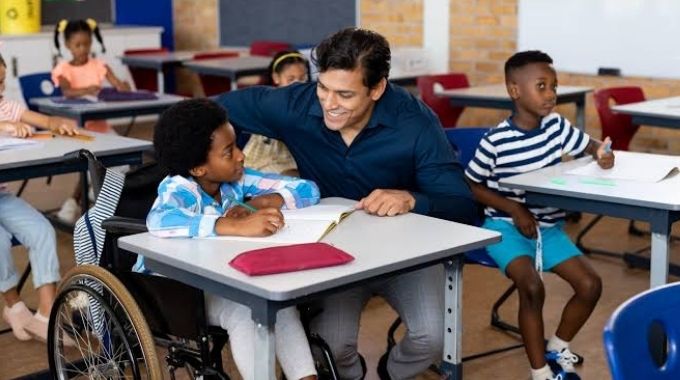
EDUCATION is a fundamental right for every child, regardless of their abilities or challenges. In every classroom, there are learners who may require additional support because of disabilities, learning difficulties or behavioural challenges.
Understanding these needs is important for teachers, parents, fellow students and the wider community because different does not mean less.
One of the common forms of special educational needs is visual impairment. Some learners may have difficulty seeing clearly, while others may have very limited vision. Such learners may require large-print materials, appropriate seating, audio resources or other forms of assistance. Teachers should ensure that these learners are not excluded from classroom activities simply because of their visual challenges.
Hearing impairment is another area that requires attention. A learner with hearing difficulties may struggle to follow oral instructions or classroom discussions. Teachers can assist by facing learners when speaking, using clear communication, providing written instructions and making effective use of visual teaching materials.
Learners with physical disabilities may experience difficulties with movement, writing or participating in certain physical activities. However, physical disability does not mean intellectual inability. Schools should provide an accessible environment and make reasonable adjustments to enable these learners to participate fully in school life.
There are also learners with intellectual disabilities, who may require more time to understand, process and remember information. Teachers can support them by breaking lessons into smaller steps, using practical activities, repeating important concepts and providing clear and simple instructions. Patience is essential because a learner who takes longer to understand something should never automatically be labelled as incapable.
Autism is another special educational need that teachers and communities need to understand better. Learners with autism may experience differences in communication, social interaction, behaviour and sensory processing. Some may be particularly sensitive to noise, light or changes in routine. A structured, predictable and supportive classroom can help such learners participate more effectively.
Dyslexia and other specific learning difficulties can also affect learners’ educational progress. A learner may struggle with reading, spelling, writing or processing written information while demonstrating strong abilities in other areas. Such learners need appropriate teaching strategies, encouragement and opportunities to demonstrate their abilities in different ways.
Some learners experience speech and language difficulties. They may have problems pronouncing words, understanding language or expressing themselves. Teachers and fellow learners should exercise patience and avoid laughing at or embarrassing students because of the way they communicate. A supportive environment can help build their confidence.
Another area is attention and behavioural difficulties. Some learners may find it difficult to concentrate, remain focused, control impulses or manage their behaviour. Instead of immediately describing such learners as “lazy”, “naughty” or “stubborn”, teachers should seek to understand their needs and consider appropriate classroom strategies.
The role of the teacher is particularly important. Effective teaching requires teachers to recognise that learners do not all learn at the same pace or in the same way. Differentiated teaching, practical activities, visual materials, repetition, clear instructions and positive reinforcement can help accommodate different learning needs.
Parents also have an important role to play. They should avoid comparing children with their siblings or classmates and should celebrate their individual strengths and progress. Where concerns arise, parents should work together with teachers and appropriate professionals to identify the support the child needs.
Fellow students also have a responsibility. Bullying, teasing and discrimination can seriously affect the confidence of learners with special educational needs. Students should learn to respect differences, offer assistance where appropriate and ensure that everyone feels included.
Ultimately, special educational needs should not be viewed only in terms of limitations. Every learner has strengths, talents and potential. The challenge for education systems is to create an
environment where those abilities can be identified and developed.
Every learner may not learn in the same way, at the same speed or through the same method, but every learner deserves the opportunity to learn, participate and succeed.
Dr Manners Msongelwa is an author, teacher and youth coach. He can be contacted on +263 77 101 9392