Chronicle Editor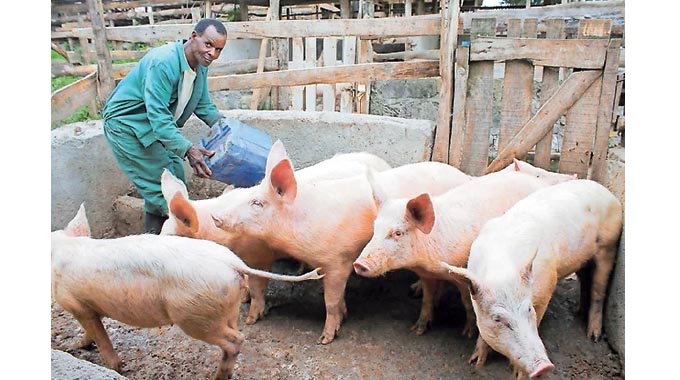
ONE of the enduring livestock value chains in some communities of Matabeleland North districts, is that of pig production. It is a common occurrence to meet free ranging pigs scavenging around dumpsites for feed.
Most pigs in these communal areas are kept under a free range system which means they are left to wander around in search of food in one form or another, including human excreta especially in communities that do not have or use toilets for human waste disposal.
One of the major cost drivers in pig production is feed hence the general tendency by most communal producers to let the pig scavenge around.
It is a huge cost to keep the pigs under an intensive system where they are provided with feed while penned.
While the free ranging may significantly reduce production costs for pig producers, it has a serious impact on the quality and the general performance of the value chain.
There are a number of gastrointestinal parasites that affect pigs in one form or another leading to the general poor performance of the pigs.
These parasites include the roundworm (Ascaris suum), whipworm (Trichuris suis), Oesophagostomum, Strongyloides and others.
The internal parasites affect pigs in different organs and also different ways. Swine performance is influenced by internal parasites, mostly significantly in young, growing pigs.
Parasites reside in the stomach and intestinal tract of the pig causing irritation, impaction, indigestion and lack of appetite.
Parasites cause loss of nutrients from feed consumed by competing with the host and causing poor digestion, gut ulceration and even blood loss.
Presence of Ascaris suum can depress feed intake and daily gain.
The migration of the ascaris larvae through the liver causes haemorrhages, fibrosis and accumulation of lymphocytes seen as white spots under a capsule, which leads to condemnation of the liver at slaughter.
Some worm parasites may be found in the lungs, where they interfere with respiration resulting in pneumonia.
In general terms prevalence of gastrointestinal nematodes limit the potential of pig production with direct losses being registered through acute illness which results in mortality, premature slaughter and condemnation of carcasses during slaughter.
The indirect losses brought about by internal parasites in pig production include decreased growth rate, weight loss and reduction in litter sizes.
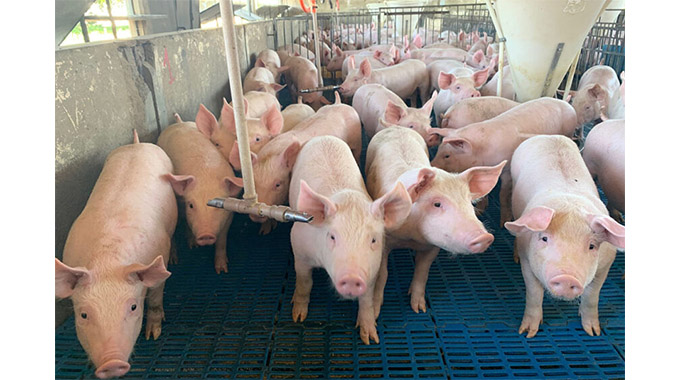
While letting your pigs survive entirely on free ranging may be cheaper in terms of production costs, in final analysis there are other losses which are incurred due to missed potential.
My extension message to communal pig producers, is to find the middle ground between pure free ranging extensive system and a hundred percent intensive system.
A semi-intensive system which allows for your pigs to have time to search around for feed but also being penned and provided feed to supplement what is obtained from the rangeland can be the answer.
This will have to be supported by strong sanitation system which eliminates most of the parasites from the environment.
Sanitation is an important aspect of pig production as most of the internal parasites originate from poor sanitary environments. Also, proper nutrition in pigs help in making sure that pigs develop adequate immunity to fight most of the infections.
It is paramount to have proper and adequate nutrition for your pigs so that they remain healthy enough to fight their own battles!
However, what we see in most communal set ups where these pigs are produced, will make you think twice before you buy pork.
You will meet a vagabond pig that is so dirty and thin, you will not like pork chops henceforth! It is also important to mention that in addition to good nutrition and sanitation, use of appropriate and effective anthelmintics to control internal parasites is a good management practice.
Proper extension support for communal pig producers can also go a long way in bridging the knowledge gap in farmers and improve their production. the fact that this value chain seem to thrive in some districts means farmers realise its potential but they need that extra guidance to tap its full potential.
UyabongaumntakaMaKhumalo. Mhlupheki Dube is a livestock specialist and farmer. He writes in his own capacity. Feedback [email protected]/ cell 0772851275



 Online Reporter