Thupeyo Muleya, Beitbridge Bureau
The United Nations Development Programme (UNDP) has called for increased public and private investment in the country’s rural infrastructure, saying smart villages and growth points are key to achieving Vision 2030.
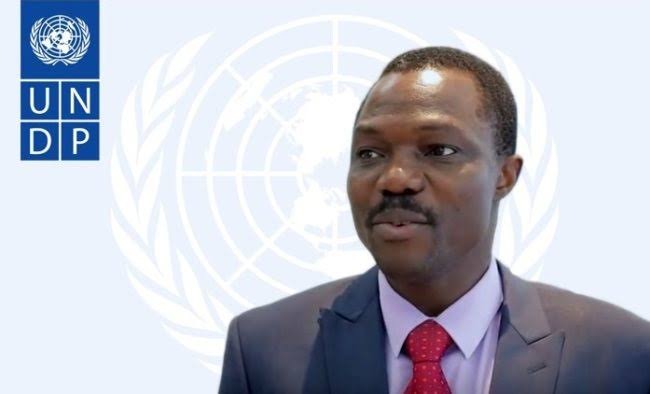
In a statement, UNDP Zimbabwe Resident Representative Dr Ayodele Odusola said that while smart cities are important, rural areas must not be left behind.
He said evidence from UNDP-supported projects with Government and development partners shows that reliable energy, water and connectivity can expand businesses, strengthen essential services and generate income for rural communities.
Dr Odusola said major projects so far include the 200-kilowatt solar mini-grid in Hakwata, Chipinge, built under the Climate Adaptation, Water and Energy Programme (CAWEP) with Government support and funding from the United Kingdom, costing about US$614 000.
“The mini-grid is supplying 85 homes, 18 businesses, a school, a clinic and three community boreholes,” he said.
“UNDP-supported investments with the Government of Zimbabwe and development partners are demonstrating the potential of this approach. Results highlighted in the article include a 200-kilowatt solar mini-grid in Hakwata, Chipinge, supplying 85 homes, 18 businesses, a school, a clinic, and three community boreholes.
“In the health sector, a total of 1 263 health facilities have been solarised since 2016 through the Ministry of Health and Child Care, the Global Fund and UNDP, representing about 70 percent of the national total and over 11 megawatts of combined capacity. The system at NatPharm’s Harare warehouse alone is projected to save around US$150 000 annually”.
In agriculture, Dr Odusola said more than 68 tonnes have been harvested across three production cycles by 72 families at Gororo Irrigation Scheme, generating over US$64 000 in revenue and reaching three export markets.
“The question is no longer whether these investments work. It is how to finance them at scale,” he said.
Dr Odusola said to address financing, UNDP and the Zimbabwe Investment and Development Agency (ZIDA), with technical support from CrossBoundary Advisory, developed Zimbabwe’s SDG Impact Investment Map and an assessment of the investment enabling environment.
He said the Map identified 98 opportunities across agriculture, renewable energy, financial services, manufacturing, infrastructure and housing.
These, he added, had combined financing needs of approximately US$923 million.
“Of these, 31 were prioritised, requiring about US$535 million. It also mapped 85 investors whose mandates fit Zimbabwe’s opportunities, including 35 already active in the country,” said Dr Odusola.
He said a mismatch remains between smaller rural projects and the scale sought by institutional investors.
Dr Odusola said preparing businesses with sound governance, financial documentation and impact measurement, and bundling smaller projects into larger portfolios could help unlock more investment for rural Zimbabwe.