Sundaymail Editor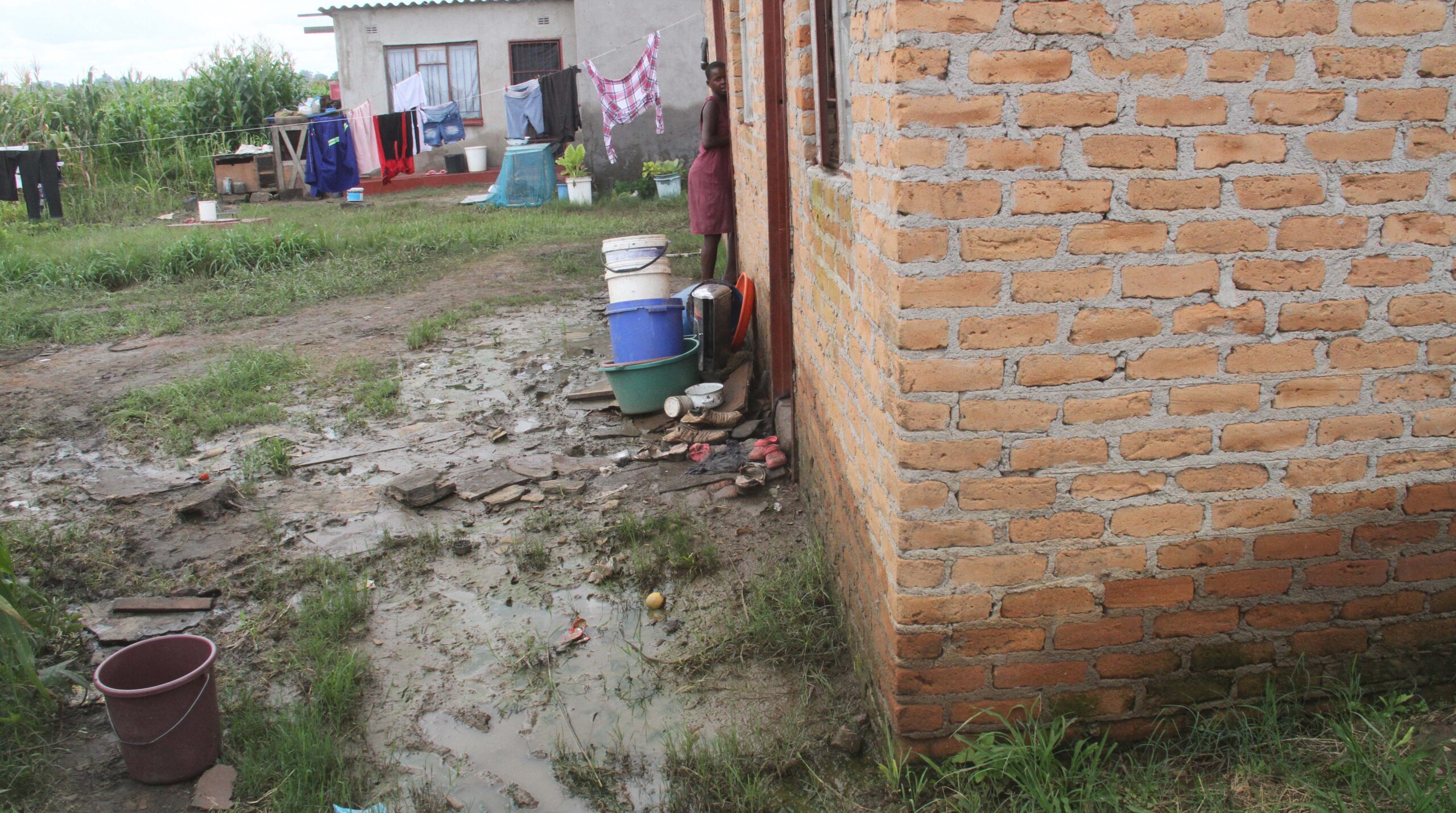
Tanyaradzwa Rusike
The rainy season is universally considered and welcomed as a blessing.
For many, rains symbolise a season of transformation and abundance.
However, for people like Mrs Susan Dzapasi, a resident of Budiriro 5B, the summer rains come with trepidation and angst.
For the past five years, Mrs Dzapasi and her fellow neighbours’ property has been damaged by rising water from flash floods.
However, she considers the day her daughter broke the news that they would be moving to a new home that was built on a piece of land bought through a housing co-operative as one of the proudest moments of her life.
But when summer came, it rained on their parade.
Their entire house was submerged.
In Budiriro 5B, even a minor downpour can mean flooding.
“I have been staying here for almost five years,” she told The Sunday Mail last week.
“Every rainy season, this area is a disaster.
“The area will be flooded and sometimes the water gets into our homes.
“When there are heavy rains, those with cars will leave them near the main road, which is tarred.”
Pleas for city authorities to regularise the small community and put both onsite and offsite infrastructure have fallen on deaf ears.
“We were once called to the council offices some time ago, they took our details and we thought they were going to address our problem, but up to now nothing has been done,” she said.
Duped
The settlement was illegally developed on a wetland just over a decade-and-half ago when corrupt housing co-operatives partitioned council land before selling it as residential stands to home-seekers.
An official commission of inquiry into the illegal sale of State land set up by President Mnangagwa in 2018 concluded that land barons connived with corrupt city council officials to subdivide the open space between Budiriro 3 and 5.
Overall, State land worth over US$3 billion was illicitly sold by housing co-operatives, land developers and politically connected people countrywide since 2005.
In Budiriro, the report said, hundreds of desperate home-seekers were duped into buying housing stands on a wetland through the co-operatives.
Although those who purported to lead the co-operatives pocketed a fortune, they neglected to service the area by providing basic amenities such as tarred roads and proper storm drainage systems.
In addition to flooding and its associated hazards, residents here have to contend with other dangers.
Last week, they captured and killed a crocodile that had terrorised the suburb over the last few months.
In 2018, a woman was killed by a crocodile while attempting to cross a flooded stream in the area. For most Budiriro 5B families, the dream of owning a house has fast turned into a living nightmare.
Another resident, Mrs Mildred Mudzi, blamed land barons for their predicament.
“When we bought these stands, they promised to regularise the suburb first by putting sewer and drainage systems, but as it stands, nothing has been done,” she said.
Last year, dozens of houses were demolished by council, leaving hundreds of people homeless.
Regularisation
Council insists that Budiriro 5B will not be regularised and the residents will eventually have to leave.
The city’s acting spokesperson, Mr Innocent Ruwende, said Harare will only regularise suburbs with approved layout designs, sewer and water, including road designs.
“Council will not regularise stands built on institutional sites reserved for schools, clinics and libraries,” said Mr Ruwende.
“Those found to have been built on wetlands will not be regularised.
“We will be working with the Environmental Management Agency (EMA) during the exercise and council will decide what to do with the houses which cannot be regularised.”
Last year, the Government came up with a comprehensive plan to reorganise housing development.
Therefore, the Zimbabwe National Human Settlements Policy (ZNHSP) was developed with a view of standardising housing development.
It also proposes to resettle those on wetlands.
Authorities will also fund the reclamation of wetlands that have been damaged by such settlements.
“Those settled in undesignated areas such as wetlands, institutional stands such as schools, health, recreational facilities and roads servitudes will be relocated to suitable land.
“Bold decisions will be made to restore these areas to their original form,” reads the plan in part.
“Land will be identified for construction of flats to decant those settled on undesignated land and address the challenge of double allocation or multiple ownership.
“Where necessary, compensation will only be made for one stand per family in the event that one family has more than one stand in one locality.”
Permanent Secretary for Provincial Affairs and Devolution for Harare Metropolitan province Mr Tafadzwa Muguti said Budiriro 5B was developed before EMA undertook an environmental impact assessment (EIA) on the land.
“As it is currently, people staying in Budiriro have council papers but there was no EIA in the first place. That is why you find that in Budiriro and other wetlands, whenever it rains, there are floods. The terrain there does not allow for the construction of roads, to lay sewer or foundations because it is a swamp,” said Mr Muguti.
However, Harare City Council continues to receive rate payments from offending homeowners.
“They pay rates for refuse collection, but there is no refuse truck which goes there.
“They pay for sewer, but they are using blair toilets.
“They pay all the service charges, including for road development, but they actually have to go through the mud to get to their houses.”
Efforts by authorities to relocate the community, he added, have been met with stiff resistance.
The Government has since concluded that the area is not fit for human settlement.
Hazards loom large
EMA education and publicity manager Mr Steady Kangata said wetlands are fragile ecosystems.
According to the Environmental Management Act, a wetland is defined as an area of “marsh, fen, peatland or water, whether natural or artificial, permanent or temporary, with water that is static or flowing, fresh, brackish or salt, including riparian land adjacent to the wetland”.
“Rivers and streams get water from wetlands and if we do activities that are not compatible, we damage them,” he said.
“There is this saying: ‘water has memory’.
“Surely, it will flow from where it used to flow. So, you find that those who have built on wetlands will find it difficult to co-exist in these places especially during the rainy season.”
The cost of purifying the city’s water continues to rise because of housing development on wetlands, he said.
“We have turned these areas into concrete jungles and this means our water will not be filtered naturally. Since we have built on these wetlands, it means water will just flow directly to Lake Chivero without undergoing natural filtration. That is why you see that water we use in Harare is 70 percent purified with chemicals, all because we have destroyed these areas,” he said.



 Online Reporter