admin
adminfunding request by the Harare Polytechnic’s mass communication department.
The funds will be used to buy modern media equipment to improve the capacities of the department.
The secretary-general of the National Commission of Unesco, Ministry of Higher and Tertiary Education, head office Mr Josiah Mhlanga said the funds could be made available soon following the granting of the approval.
“The department made an earlier request for funding to the organisation, which has been approved by the Unesco headquarters in Paris.
“The funds will be used to capacitate journalism training at the institution’s school of journalism, especially in respect of practical work through the acquisition of up-to-date media equipment.
“The enhancement of training capacities is a focus area for Unesco because of its multiplier effect on the profession at large,” said Mr Mhlanga.
One of the critical challenges facing new entrants into the journalism profession is the issue of shifting dynamics.
For instance, the emergence of multi-media platforms and new forms of journalism such as blogs are opening novel avenues for mass communication.
Meanwhile, Unesco (Harare) is supporting a capacity-building workshop for journalism trainers from various institutions including the Harare Polytechnic, the National University of Science and Technology and the Midlands State University, which has been running from April 11 to 15.
The programme has been sponsored to the tune of US$7 000. The workshop is premised on the Unesco Model Curricula for journalism education, which was developed in collaboration with member states largely drawn from developing countries.
Addressing participants at the launch of the programme recently, Unesco representative Mr Chimbidzikai Mapfumo said the workshop is meant to capacitate trainers with knowhow on how to impart critical thinking to their students.
“The quality of journalistic work is increasingly under threat as it moves from a journalism of verification to a journalism of assertion.
“The model curricula aim at enhancing the ability of students to think critically, incorporating skills in comprehension, analysis and synthesis.
“They foster a more widespread approach to journalism education in order to enable students to report on increasingly complex issues,” he said.
Harare Polytechnic principal Engineer Stephen Raza thanked Unesco for its continued support of training programmes at the institution.
Unesco has particular interests in strengthening institutional training capacities of mass communication in developing countries to the extent that the media is considered one of the prerequisites for social and economic development.
This stems from historical advocacy by the body for equity in global mass communication flow, which has come to be known as the New World Information and Communication Order debate.


Online Reporter
- Chronicle
- July 31, 2026
- 6 views
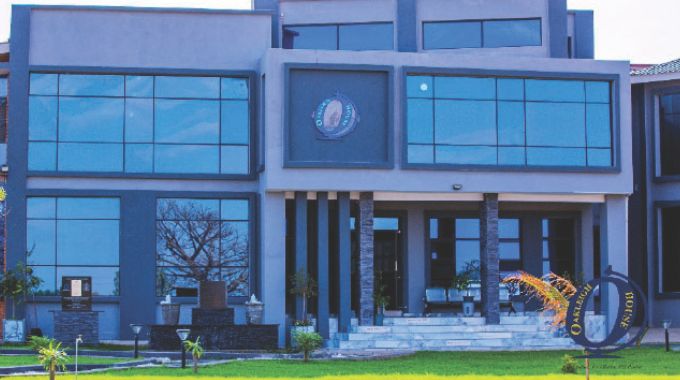
Beitbridge to host Matabeleland South PASSAF festival
Muvhuso Chibi, [email protected] Beitbridge District will host this year’s Provincial Annual Science, Sport and Arts Festival (PASSAF) from 3 to 4 August 2026 at Oakleigh House Trust School, with learners…