

 Online Reporter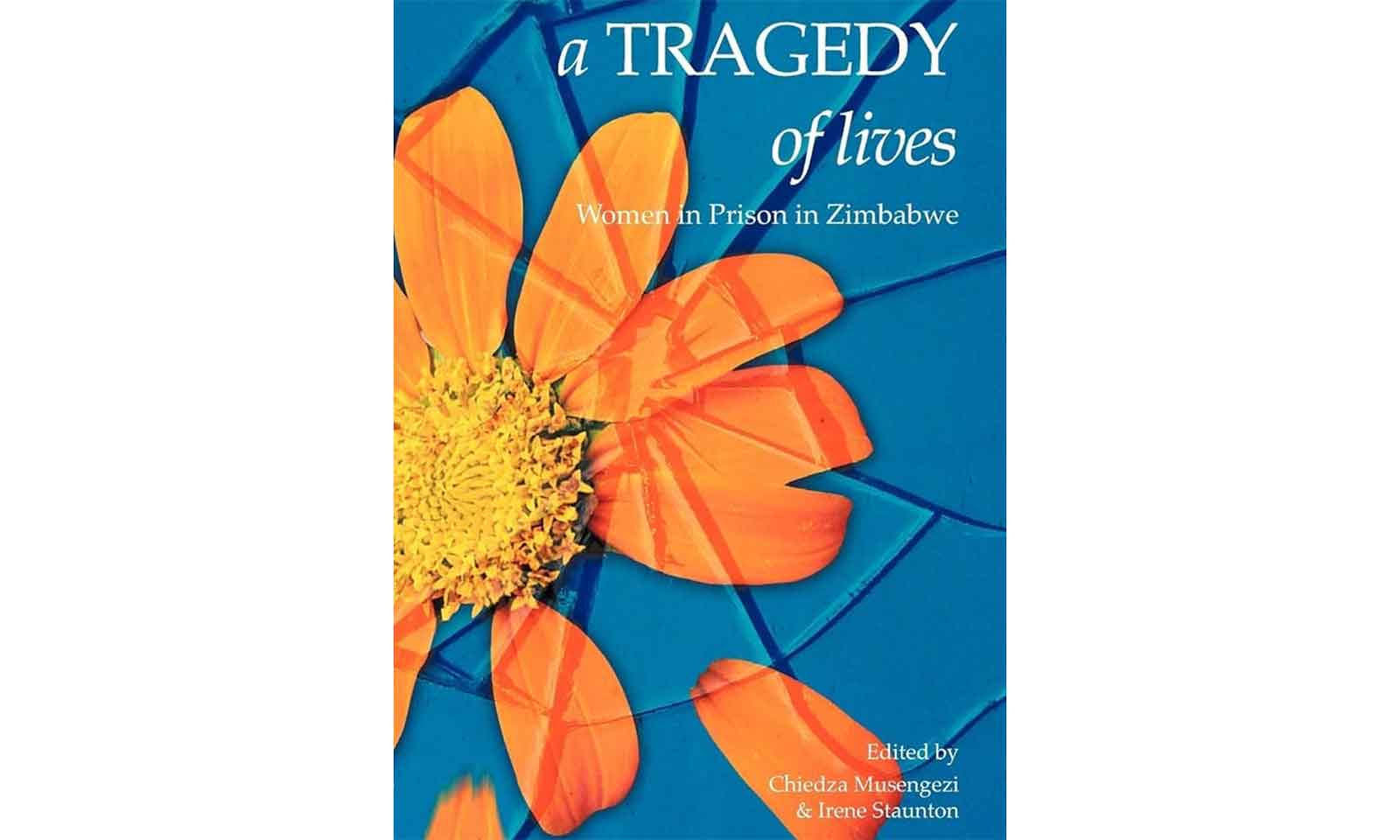
Elliot Ziwira
At the Bookstore
THE tragic nature of life is not losing it, but living it through the whims of others.
Like a snail, which will never stick out its head when it presumes the presence of adversity, or a millipede that coils into a ball at the slightest hint of danger, the human mind is often imprisoned not by fear itself but by the knowledge of its existence.
“Cowards die many times before their deaths, but the valiant taste of death but once,” declares Julius Caesar in Shakespeare’s “Julius Caesar”, boasting, “danger knows that I am more dangerous than he.”
Though such bravado may appear arrogant, it nevertheless gestures to a sobering truth: once fear assumes control of one’s better judgment, it becomes claustrophobic, leaving the individual in a state of perpetual imprisonment.
It is against this background that the recent amnesty by President Mnangagwa freeing 223 women from Zimbabwe’s prisons inevitably draws the mind back to the haunting narratives captured in “A Tragedy of Lives: Women in Prison in Zimbabwe”, edited by Chiedza Musengezi and Irene Staunton.
The President proclaimed Clemency Order No. 1 of 2026 after exercising his Executive Prerogative of Mercy in terms of Section 112 (1)(a) and (d) of the Constitution of Zimbabwe.
For many, freedom from the prison walls does not necessarily mean release from the invisible prisons of lack, gender expectations and ignorance that often propelled them there in the first place.
The collection brings together testimonies of prisoners and former prisoners who relive their experiences before, during and after incarceration.
Through interviews rendered in plain and unpretentious language, Musengezi and Staunton open a window into the complex nature of imprisonment; not merely as physical confinement behind high prison walls, but as a layered social and psychological phenomenon.
Divided into sections that explore issues such as reproductive health, domestic conflicts, fraud, prostitution, shoplifting, and dangerous drugs, the book exposes the vulnerability of women as they struggle to navigate lives hemmed in by poverty, ignorance and limited opportunity.
The women speak in their own voices, recounting journeys punctuated by anguish, desperation and fleeting hope.
Through these stories the reader is taken on a whirlwind voyage of deprivation and despair, where womanhood itself appears vulnerable to abuse and domination, yet remains buoyant and responsible.
What emerges strongly from the narratives is the disturbing realisation that imprisonment often begins long before the prison gates clang shut.
In many instances, the characters are already incarcerated by circumstances — by lack, expectations of motherhood, and the rigid patriarchal structures that regulate their lives.
Curiously, womanhood becomes a form of imprisonment.
Burdened with the responsibility of nurturing children in a world that is often indifferent to their plight, many women live in constant anxiety.
Memory recalls how her mother laboured tirelessly to send her to school.
“My mother worked hard in the fields and raised enough money to buy me school uniform and books,” she informs the reader.
Another woman, Martha, explains the desperation that pushed her into prostitution, despite the looming threat of disease: “I think to myself; what disease could be worse than starving my children to death?”
Motherhood, in such contexts, becomes both a sacred duty and an inescapable burden. Women find themselves psychologically imprisoned by their responsibility to provide for their families.
Rhoda’s tragic story illustrates this painful reality.
After her husband abandons her for a younger woman, she raises 12 children single-handedly. In old age, she is forced to care for troublesome grandchildren. In a moment of confusion and anger, she accidentally throws one of them into a fire; an act that leads to her imprisonment.
Such stories reveal how the walls of prison often rise from the soil of deprivation. In “A Tragedy of Lives”, it emerges as a suffocating force that strips people of dignity and choice.
Mashingaidze Gomo captures this harsh reality in his prose poem “Show Me an Honourable Destitute” from “A Fine Madness”.
Gomo writes:
“Poverty has cold feet
Poverty is gullible
Poverty is the big sell-out . . .
Poverty wears out the moral fabric of a society
To a threadbare see-through clock . . .
Liable to exploitation.”
Indeed, poverty erodes the moral fibre of society, forcing individuals into choices they would otherwise never contemplate.
For many women in the collection, survival becomes the only priority. Seeking refuge from hunger and insecurity, they turn to marriage, relationships or prostitution, often mistaking these for escape routes.
Memory admits: “I ran away from home to live with my boyfriend… he gave me money to buy food and pocket money.”
Elizabeth echoes the same desperation: “I married young because I was running away from poverty.”
However, marriage often turns out to be another prison.
Many of the women describe marriages governed by rigid cultural rules and male dominance.
Maureen’s account is particularly chilling. Married into a family that dictates strict rules, she is forced to remain in the rural home while her husband works in the city.
“My in-laws gave me a piece of land to farm,” she explains. “But when the crops were harvested, I had to wait for my husband to come and cash the cheques.”
When she later discovers that her husband spends most of the money on a girlfriend in town, resentment and despair push her towards a tragic crime that eventually leads to prison.
Maria and Beti tell similar stories of domestic conflict escalating into violence. Maria, unable to endure constant abuse, strikes her husband with a pole in a moment of rage. Beti pours boiling cooking oil into her husband’s ear during a quarrel. Both incidents end in death and imprisonment.
These crimes of passion are disturbing, not only because of their brutality, but because they reveal how individuals already trapped in emotional and social prisons can be pushed into fatal acts.
Society itself contributes to these invisible prisons.
Rhoda, convinced that witchcraft was responsible for the death of her son, lashed out with a machete in blind fury. When the frenzy subsided, two innocent people lay dead — a six-year-old nephew and his father.
Now serving a life sentence, Rhoda’s story demonstrates how fear, superstition and grief can combine to destroy rational judgment.
Also, cultural expectations dictate that a “proper” wife must bear children and remain submissive regardless of privation. As Elizabeth observes: “A proper wife should have children and make her husband a father.”
Unable to meet these expectations, Elizabeth eventually steals a baby, a desperate act born of societal pressure rather than criminal inclination.
Such expectations exert enormous psychological pressure on women. When marriages collapse or childlessness becomes an issue, women are often blamed, ostracised and pushed further to the margins of society.
Ignorance plays a significant role too.
The majority of the women did not progress beyond Form Three at school.
Their limited educational opportunities, combined with economic challenges, trap them in narrow corridors of survival.
Only Mercy, who holds a university degree, and Lillian, a trained teacher, have tertiary education, and even they end up entangled in fraud cases.
Limited education means limited awareness of legal rights, reproductive health and economic opportunities. It reinforces the cycle of dependency and vulnerability.
Consequently, metaphorical imprisonment, including poverty, ignorance, cultural expectations and gender inequality, frequently culminates in literal incarceration.
The book also exposes how deprivation intersects with crime, especially where structural inequalities are rife. Regional magistrate Ollyn Rudo Nzuma observes that many offences committed by women are petty acts of survival: shoplifting, stealing maize from fields or minor fraud.
“Most petty theft is committed because of starvation,” she notes. “Most women depend on the husband and often the husbands are neglecting them.”
Even the law can deepen injustice. When fines are imposed instead of prison sentences, those who can afford to pay escape incarceration while the underprivileged serve time behind bars.
Inside prison, the misery continues.
Emotionally, women grapple with the anguish of separation from their children and families.
They worry endlessly about what their children will eat or whether their husbands will remain faithful.
Physically, the prison environment itself is ill-equipped to accommodate the specific needs of women.
Psychologically, upon release, they confront yet another form of imprisonment: stigma, which lingers on long after release. Society often refuses to forgive or forget, leaving former prisoners struggling to rebuild their lives.
Many women return home to find their marriages shattered, their reputations destroyed and their hopes reduced to fragile illusions.
Seen in this light, the amnesty by President Mnangagwa that recently released 4 305 prisoners, 223 of whom being women, is more than a gesture of mercy.
It is an opportunity for society to reflect on the deeper forces that push vulnerable women toward crime in the first place.
While the opening of prison gates may free bodies, the more difficult task is dismantling the invisible prisons society creates, including ignorance and social inequality that continue to trap many women long before they encounter the law.
Musengezi and Staunton’s “A Tragedy of Lives: Women in Prison in Zimbabwe” (2003), therefore, remains painfully relevant. The book highlights that behind every prison statistic lies a human story, a life shaped by forces often beyond the individual’s control.
As the freed women attempt to reclaim their lives beyond the prison walls, the book challenges readers to ask a difficult question, particularly during this Women’s Month: have we truly dismantled the prisons that society builds around its most vulnerable?
Until those invisible walls crumble, the tragedy of female prisoners will remain an unfinished story.
- For an immersive reading experience, visit the Typocrafters (DigiHub) retail shop at Herald House, corner George Silundika Avenue and Sam Nujoma Street in Harare.



