admin
admin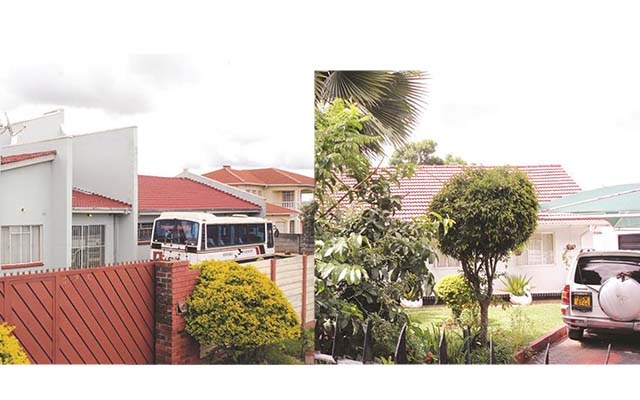
Felex Share Senior Reporter
Civil servants’ leaders own houses in medium and low density suburbs around the country, but are denying their membership an opportunity to possess residential stands, it has emerged.
Some of them long retired from teaching and now run schools and businesses.
This comes as the unions’ leaders are under fire from their members for rejecting a proposal by Government to offer civil servants stands as payment for their 2016 annual bonuses.
Most civil servants are tenants and see the offer as an opportunity to become house owners. The stands are coming at zero deposit.
Union leaders want cash for their bonuses and have threatened to stage a demonstration against Government on Monday, a development observers said may be tied to selfishness on the part of union leaders who want to deduct what members maybe owing.
Educationists yesterday said union leaders of the day had nothing to do with the interests of the workers, but the rich-pickings they get from the workers’ monthly subscriptions.
Most unions deduct $10 from their members. Those interested in other projects pay more.
Investigations by The Herald yesterday revealed that the union leaders owned expensive houses.
Progressive Teachers Union of Zimbabwe (PTUZ) secretary- general Mr Raymond Majongwe owns a house in Barbour Road, Cranborne while former Teachers Union of Zimbabwe (TUZ) chief executive Mr Manuel Nyawo has a house in Good Hope, Harare (addresses withheld).
Zimbabwe Teachers Association (ZIMTA) chief executive Mr Sifiso Ndlovu, who used to stay in a flat in town, owns a house in Mt Pleasant.
TUZ president Mr Timon Tandi, with just above a year as a leader, is constructing a beautiful house in Tynwald.
The rejection of the stands-for-bonus offer by the union leaders has forced Government to conduct a survey to elicit the views of those workers outside the unions.
Results of the survey, expected this week, will inform Finance and Economic Development Minister Patrick Chinamasa on the decision to take.
Asked why they were denying their members an opportunity to own stands while they had houses, Mr Majongwe said their lifestyle had nothing to do with their demands.
“It would be naïve for anyone to go around looking at my lifestyle, the way I live,” he said.
“All we want is conclusion of the dialogue we started with Government. We want land, but we also want our bonuses and the two must not be mixed.”
Mr Ndlovu weighed in: “When you speak for beneficiaries you don’t have to necessarily bring in your emotions and own status into it. It has nothing to do with that.
“That is a simplistic evaluation of the situation, our situation is much deeper than that.”
Mr Nyawo, who now heads the Zimbabwe National Teachers Union (Zinatu), said their houses were not anywhere near mansions.
“Mansions are found in Borrowdale,” he said.
“We actually wish we were staying in those mansions, but we cannot afford. We are simply the voice of the people in need of their cash. Some have stands already and hence the need for bonus in cash to build those stands.”
Educationists said most unions were now driven by greedy.
“Unions are mushrooming and it might be because of the nature of problems encountered or lack of consensus, but politics and money are also contributing,” said Dr Peter Kwaira.
“People are forming these unions to make money which can be accounted to being greedy, sometimes it cannot be for the common good.”
Educationist Dr Caiphas Nziramasanga said politics was now central in most unions.
“Politics has had a major effect on the unions. People are looking for money and they look for organisations to become popular. People seem to have money today in all kinds of unions and they want it. But you also have to note that regulations in the colonial era were restrictive and removed teachers’ freedom of speech. Now all workers have got freedom of speech.”
Most civil servants, despite their contributions, get a T-shirt each, calendar and diary in return once every year.
Unions in other countries invest subscriptions in money markets and listed companies.
They use the money to improve housing and healthcare for their members.



 Online Reporter