Online Reporter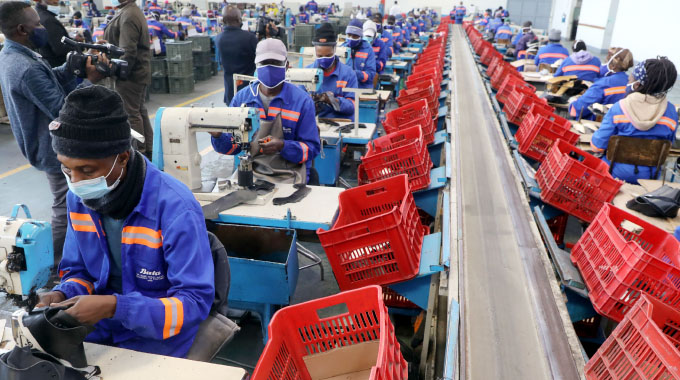
Sikhulekelani Moyo, [email protected]
NATIONAL trade development and promotion agency, ZimTrade, has partnered with Bata Shoe Company to unlock new markets for locally manufactured footwear and positioning the country competitively on the global village.
The leather sector is one of the priority value chains viewed as a long-hanging fruit for exports.
A recent survey by the Confederation of Zimbabwe Industries (CZI) has revealed that Zimbabwe imported close to US$4 million worth of leather products from 2021 to 2023, which represents a significant market opportunity for local companies.
Bata is already exporting its products into the region but is facing some challenges being imposed by cheap imports, which has reduced its capacity over the years.

ZimTrade recently visited the company premises in Gweru and discussed potential partnerships aimed at helping reposition the country’s leather sector.
“We recently had the privilege of visiting Bata, Zimbabwe’s leading footwear manufacturer, known for its diverse and high-quality products,” said ZimTrade in the latest update.
“As a key exporter, Bata is already making waves across Africa, from Malawi to Zambia and supporting an extensive international franchise network.
“Through ZimTrade’s new strategy, we’re proud to partner with Bata to unlock new market opportunities, expand exports and strengthen its presence in Central Africa and beyond.
“Together, we’re committed to accelerating Bata’s growth and positioning Zimbabwean footwear competitively on the global stage.”
In 2022, Bata Shoe Company invested over US$5 million in new plant and machinery in sheer demonstration of confidence in the economy.
 The company installed a polyurethane pouring plant, which produces safety shoes that the company has been importing in the past.
Bata management could not readily comment on the outcome of their meeting with ZimTrade as they were engaged in meetings yesterday.
The launch of the Zimbabwe Leather Sector Strategy (2021-2030) has also expressed the Government’s strong desire to transform the leather sector from a producer of primary products to value-added goods for domestic and export markets.
This has seen ZimTrade working closely with the leather cluster under what is known as the “Zimbabwe Leather Collective (ZLC)”, an initiative meant to steer collective marketing efforts of leather and leather products

The overall goal of the Zimbabwe Leather Sector Strategy (2021-2030), launched in 2020, is to improve the competitiveness of the leather value chain by building stakeholders’ production capacities and improving their access to regional and international markets.
The objectives of the strategy are to increase the capacity utilisation of value-added products from 30 to 75 percent by the end of 2030 and enhance the application of sustainable production technologies by manufacturing companies from the current 10 percent to 60 percent by 2030. — @SikhulekelaniM1.