dyton mupawaenda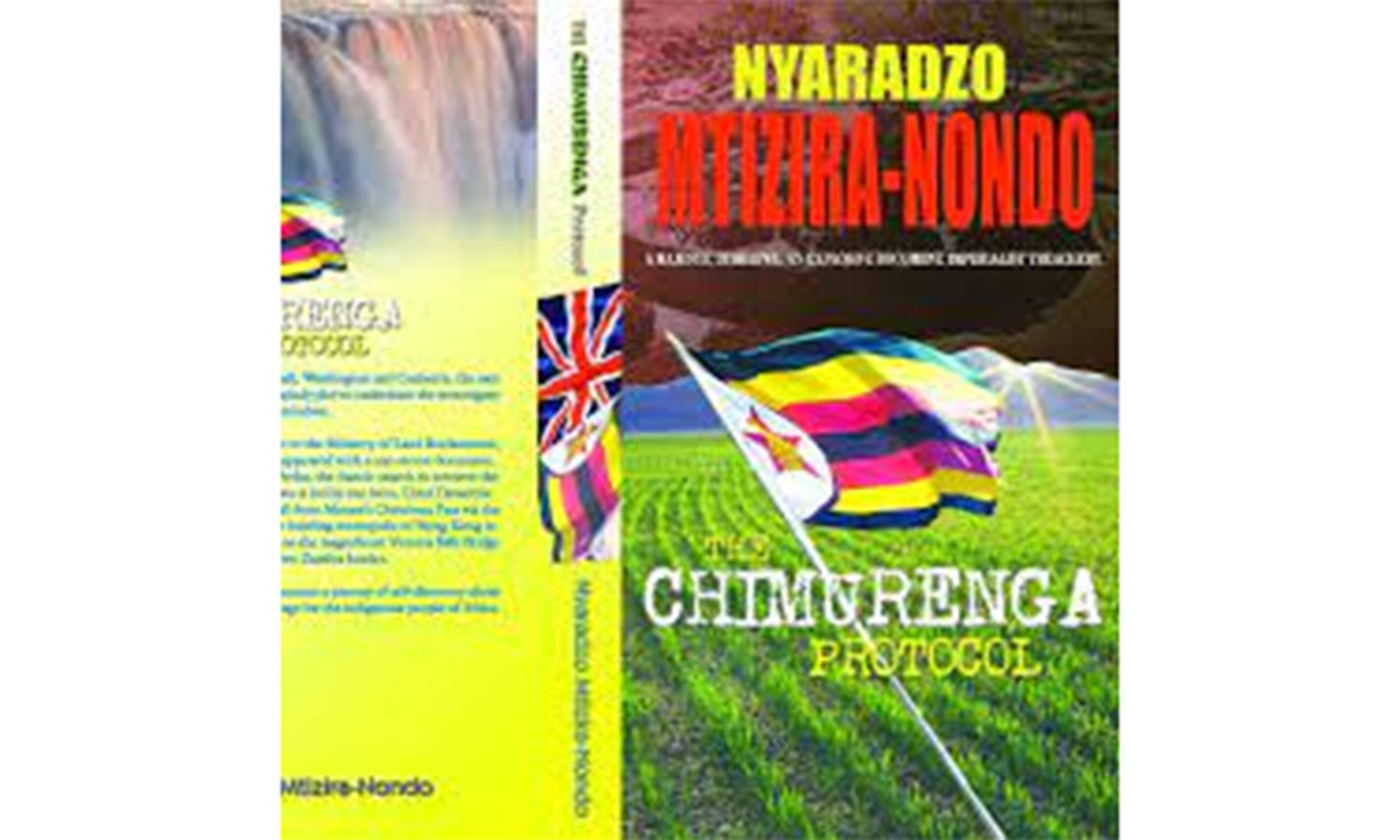
Elliot Ziwira-At the Bookstore
The land issue in Zimbabwe is deeply rooted in the country’s history, with disputes dating back to the 1890s and 1970s.
The finite nature of land has made it a contentious issue, with various stakeholders vying for control and ownership. The Fast Track Land Reform Programme, initiated in the early 2000s, has been a major point of contention, with critics questioning its legality and impact on the country’s economy and social fabric.
In African culture, land is not just a commodity but a heritage that holds spiritual, emotional, and economic significance. The concept of land as a communal resource, rather than individual property, is deeply ingrained in African societies.
The loss of land through colonialism has had a profound impact on the livelihoods and identities of African people, making land reform a critical issue.
However, the viewpoint that the struggle was about the soil, rather than just land, holds sway. Soil, as a component of land, is defined as the upper layer of earth that supports life.
The contestation of heritage since 1890 reflects on the tangibles and intangibles pertaining to land as an ancestral birthright.
The physical, spiritual, and psychological dispossession of Africans couldn’t have been an issue had it not been for the soil. The creation of Reserves and Tribal Trust Lands through the Land Apportionment Act of 1931, which allocated white settlers more than 80 percent of the land, despite being in the minority, was more of a soil issue than a land one.
The Act did not define what land is but outlined what it comprises and what it is capable of doing.
Soil is a critical component of land, and its composition determines its ability to sustain life. The four crucial functions of soil are as a medium for plant growth, means of water storage, supply and purification, modifier of earth’s atmosphere, and a habitat for organisms.
White settlers took the richer parts of the land, determined by the composition of the soil, and condemned blacks to arid, dry, and barren areas.
The contestation of heritage is on the basis of the quality of the soil and not the land per se. Heritage is a complex and multifaceted concept that encompasses tangible and intangible aspects, including material possessions, personal values, and cultural traditions.
In the context of land reform, heritage is closely tied to identity, with different stakeholders having competing claims and interests. On that basis, the issue of heritage requires careful examination and discernment to avoid disintegration and conflict.
Certainly, the soil will be able to cater for the tangible gains associated with the land.
However, if it so happens that the area or areas with good soils have shrines and gravesites with spiritual connection to the indigenous people, then the intangibles are also affected.
Hence, the idea of legacy and psychological dispossession cannot be fully understood in the absence of the soil.
In Nyaradzo Mtizira’s novel “The Chimurenga Protocol” (2008), the issue of soil is aptly captured through the character of Mason, an emissary of Cecil John Rhodes.
Mtizira writes: “Getting off his horse, Mason scooped up a handful of the soil. The texture was loamy and it weighed lightly in his hand. His eye approvingly noted the dark red colour of the soil as it glistened in the sunshine.”
“He granted in satisfaction. Casting his eye over the distant plain, he marvelled at the richness of the green vegetation. The fertility of this soil will feed and enrich the descendants of my settlers, he thought proudly.”
Mason’s assessment of the soil reveals four key aspects: its loamy texture, dark red colour, lush green vegetation, and fertility. These characteristics lead him to conclude that the soil will support the settlers and their descendants.
The contestation of heritage in this context centres on the quality of the soil, rather than the land itself. The soil’s ability to provide tangible benefits, such as fertile land for farming, is vital.
Additionally, the presence of shrines and gravesites with spiritual significance to indigenous people adds an intangible layer to the contestation.
Mason’s evaluation of the soil highlights its potential for mineral wealth, accentuating the settlers’ interest in the land. The soil’s ability to sustain livelihoods is paramount, and its quality determines its value. If the soil is unproductive, it is deemed worthless.
The absence of consideration for the soil’s significance would render the concept of legacy and psychological dispossession incomplete. The soil’s importance extends beyond its economic value, encompassing cultural and spiritual connections to the land and its inhabitants.
Mason makes inquiries about the concerns of the indigenous people from Cummins, the administrator in Mashonaland. Cummins responds that the people’s primary concern is the deprivation of fertile land to grow food for their communities.
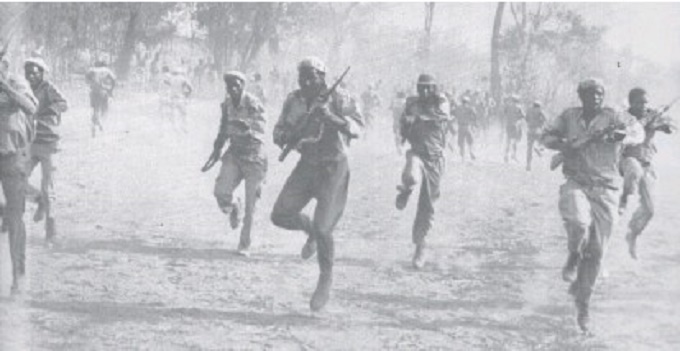
This issue of fertile land is central to the contestation between the settlers and the indigenous people. The settlers’ claims to the good land, based on the quality of the soil, led to the First Chimurenga and, seven decades later, the Second Chimurenga.
The issue of fertile land remains a contentious point in post-2000 Zimbabwe.
To contextualise the historical contestations over the soil, reference can be made to De Vere Stent, a journalist, who captures an exchange between Cecil John Rhodes and a young Ndebele chief during an indaba towards the end of the 1896 Chimurenga.
As captured by Julie Frederikse in “None But Ourselves” (1990), the young chief asks Rhodes where they will live once the conflict is over, given that the white man has claimed all the land. Rhodes responds by offering to provide settlements and land for the indigenous people.
The young chief is aware of the irony of the situation, where Africans are being offered land by settlers, rather than being the ones to distribute it.
The good soils have been taken over by colonisers, who justify their claims through legality and a desire to pass on a heritage to their descendants.
Rhodes attempts to persuade the young Ndebele chief, mwana wevhu (son of the soil), to disarm, but he refuses. The chief asserts that carrying a rifle gives him a voice, and without it, he is powerless and treated like a dog.
This statement spotlights the need for violence as a means to fight colonialism.
The young chief, like the young freedom fighter in Mtizira’s “The Chimurenga Protocol”, recognises that decolonisation is a violent process, just like colonisation. This understanding finds base in the idea that the language of struggle is the only one that can effectively counter the oppressive forces of colonialism.
Mtizira’s use of the term “Chimurenga” reflects the existential struggle between colonialism and the aspirations of the indigenous people. Setting his story in Bulawayo, he portrays the city as both the site of colonial robbery and the birthplace of resistance.
The spirit of defiance and resistance embodied by the young Ndebele chief is revived in the novel. This revival serves to redeem Bulawayo and Lobengula, while laying the groundwork for patriotic nationalism.
Since it sustains livelihoods, then, logically, the issue has always been about the soil. If the soil cannot produce anything, then it is not worth having.
Yet critics of the post-2000 Fast Track Land Reform Programme question its legality.
True, the law plays a critical role in shaping land reform policies and outcomes. However, the concept of justice is often contested, with different players having competing notions of what is just and fair.
Even though the land reform programme has been disparaged for its perceived illegality, particularly by those with vested interests in the same, the question of law and justice is complex, involving issues of historical injustice, colonialism, and the rights of indigenous peoples.
When justice wears many faces, then the question of law becomes invalid, especially where land, an ancestral heritage is involved. The law falters. There is no social justice in the law, for it is crafted by mortal legislators— but the land has a life of its own—providing livelihood trajectories to the indigenes.
Therefore, as we celebrate Independence Day on April 18, it is crucial that we recognise that the contestation of heritage in Zimbabwe is deeply rooted in the history of land dispossession and the struggle for control over the soil.
For an immersive reading experience, visit Typocrafters Book Shop at Herald House, corner George Silundika Avenue and Sam Nujoma Street in Harare.
Contact: Mercy—0771537929, Rose—0776131480, or Leon—0733100191.



 Online Reporter