Online Reporter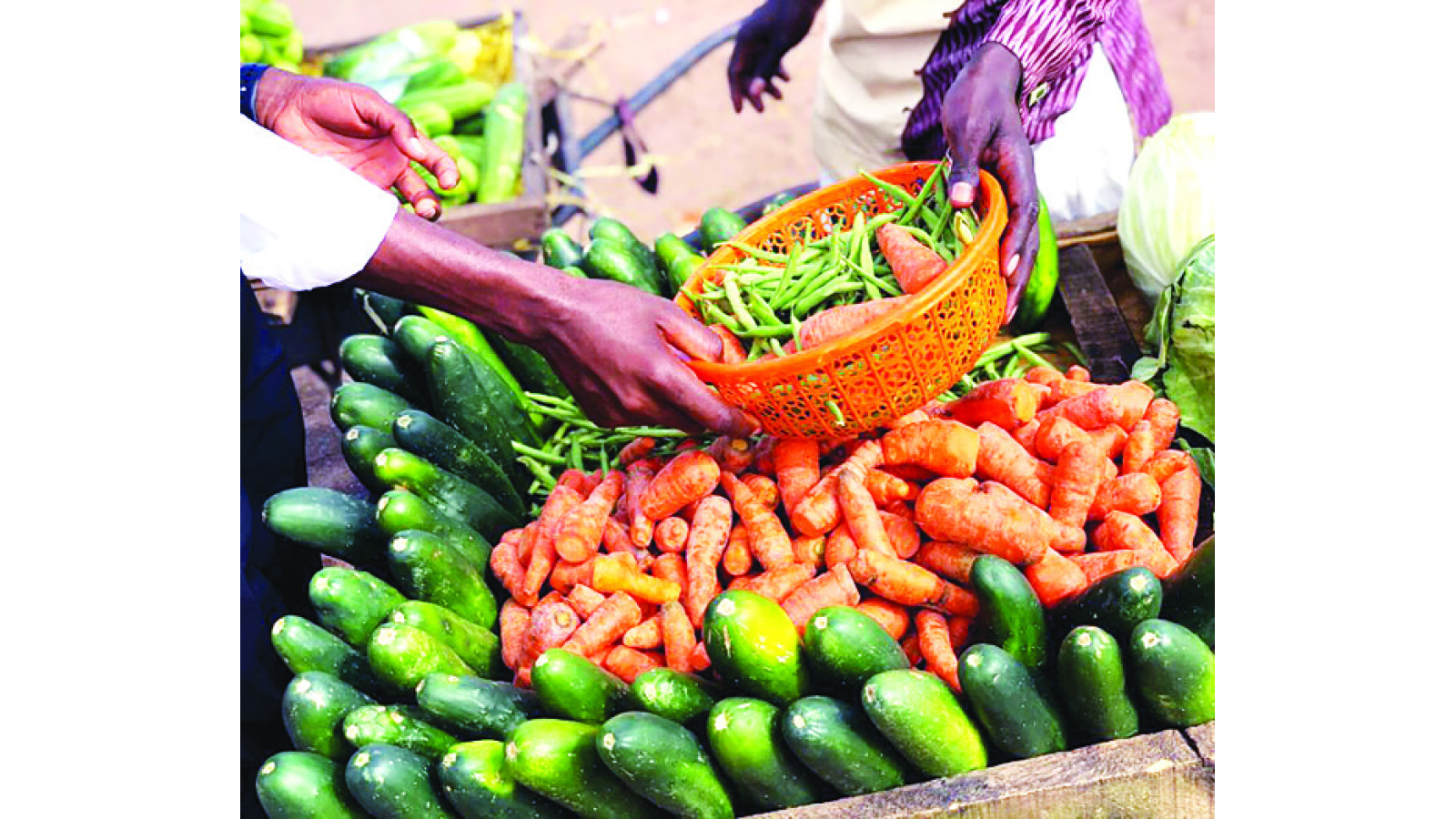
Charles Dhewa-Correspondent
One of the most persistent challenges for African governments and development agencies has been how to spread good practices by scaling what is working in one community to several communities.
Several well-meaning pilot interventions have remained isolated islands of success. The way African territorial markets harness horizontal knowledge exchange between actors could provide useful practical lessons for scaling out good practices.
In African territorial markets, everyone is an expert. All actors use the market as a platform for demonstrating their expertise.
There is something significant about how African territorial markets have learnt to grow without banks.
However, their growth is not recorded because it has a social investment element embedded in households. Many traders in territorial markets have become adept at using education about recipes in building food businesses that persuade consumers from western food to indigenous cuisine.
If ordinary traders have survived competition from well-funded corporations also favoured by government policies, they can survive any economic shocks.
Solutions from territorial markets to mainstream economy
While policymakers may see individual food vendors, what they do not see are systems and rituals that have enabled traders to co-create practical frameworks for strengthening their bonds and shared identity.
Carefully studying territorial markets with sufficient humility can enable policymakers to use these markets to scale most large-scale food security programmes in ways that also equitably distribute the benefits of economic growth.
For instance, when rolling out input distribution systems Government can make use of local agricultural dealers, transporters and millers, who are already silently playing an important role as part of the local socio-economic fabric.
That is how interventions can become more resilient tapping into existing knowledge and systems critical in scaling new ideas.
Having survived on their own for many years, territorial markets have developed their own embedded financial models, such as rounds and village savings and loan associations.
Formal banks that have tried jumping into territorial markets without understanding the complex ecosystem have learnt the hard way. Rather than introducing top-down financial models, new interventions should strive to build on how traders, women and youths are already pooling money; collectively aggregating commodities, building trusted relationships with farmers, lending to each other either in cash or commodities, and supporting one another through economic ups and downs.
With tentacles stretching along diverse supply chains, financial models embedded within territorial markets are quietly helping millions of people to access financial resources, especially in rural communities where banks are not willing to go.
Territorial markets as reliable social infrastructure
By training traders and other actors to save, borrow, and build a future for themselves, territorial markets have quietly built the collective power of market actors to meet their financial needs without formal systems.
When recognised and supported, this socio-economic dynamic can become an efficient delivery mechanism for bigger public programmes. These can be cash transfers, input distribution currently handled exclusively by parastatals as well as health and nutrition programmes conveyed through formal channels like hospitals and clinics.
Governments just need to create an enabling environment, which allows public systems to recognise the territorial market model’s value and adapt it. That way, it becomes possible for the government to scale good practices developed by territorial markets over many years through public systems uniquely positioned to take a good practice further.
For instance, governments have the infrastructure, policy tools, and staying power that non-governmental organisations do not.
Territorial markets offer a unique entry point for governments committed to addressing challenges for all classes of farmers, and closing the financial inclusion gap.
Being locally led, these markets already present trusted delivering mechanisms for traders, women, youths and other vulnerable groups, such as the differently abled. Governments can shape the scale and sustainability of these grassroots models through providing policy and institutional support.
That will lend these models legitimacy and long-term backing. Such a step includes integrating the markets and savings groups into financial inclusion, poverty reduction, and social protection strategies.
In addition to establishing regulatory frameworks that protect informal models while enabling voluntary pathways to formal services, governments can also create financial mechanisms, like entrepreneurship funds for farmers and market traders dealing in particular commodities, so that they are linked to wider markets, including exports.
Observing the market in action
Besides institutionalising monitoring and evaluating by equipping public officials with shared tools to track performance and strengthen accountability, government departments responsible for agriculture and food systems can create opportunities for policymakers to directly observe territorial markets in action.
That can build trust more efficiently than reading policy briefs. Direct encounters in the market play an important role in shifting perceptions from viewing market traders as disorganised risks to recognising them as ready-made infrastructure for inclusion in agriculture-driven economic development.
Through territorial markets, traders and farmers have built something that works. Every African government should see these markets not as a competing model, but as a strategic partner in reaching marginalised farmers and meeting the needs of diverse consumers toward building a strong home-grown economy.
Feedback: [email protected]
Mobile: 0772 137 717/ 0774 430 309/ 0712 737 430.