

 admin
admin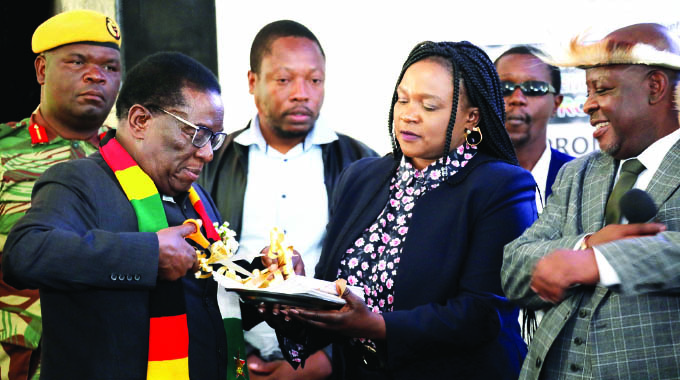
Nick Mangwana
Government Up Close
President Mnangagwa is a big advocate of national unity in our country. His logic is based on the interconnectedness between unity and development.
Once we add peace to the matrix, then we have the essential ingredients that are critical for human progress and growth.
In our Zimbabwean context, these ingredients could not all fall in place without resolving outstanding legacies of the Gukurahundi conflict.
This dark chapter in our history had remained a taboo subject in our country, not publicly debated and not a subject of any public discourse until President Mnangagwa declared that we should all openly discuss it, and not allow it to linger ad infinitum.
The year was 2019 and the month was April.
The occasion was an interview to herald Zimbabwe’s 39th Independence celebrations.
This was the beginning of the journey to confront this painful past, acknowledge the suffering, and work towards reconciliation and unity as well as deal with any long-standing legacies from it.
Without a shadow of doubt, the issue is quite sensitive and needed delicate statesmanship to stir. And in the President, it found such a leader.
The President was so clear on what needed to be done but he resisted any urges to prescribe solutions. Recognising that the affected people were mainly in rural communities and each of Zimbabwe’s countryside community has a traditional leader. After a number of meetings, consultations and engagements, the natural conclusion was arrived at.
This was that, our esteemed traditional leaders should lead the process. Further consultations were made culminating in the production of two handbooks whose contents we will unpack later in this piece. At this point there was a lot of momentum.
All that pace was slowed down by the disruptions that came from the Covid-19 pandemic lockdowns. But you cannot lock down a noble programme and the President’s tenacious determination to see through this programme culminated in the historical events of Sunday July 14, 2024, when the President gave the command to the chiefs in Matabeleland North and South to go and commence the community engagement meetings.
They would be guided by a number of principles which have been immortalised in two books. One is the handbook and the other the manual.
We will try to summarise the contents of these books for the reader to have an understanding of how the programmes will run.
Community meetings will be held in different areas of the two provinces led by the local chief.
These communities are comprised of people that know each other and have lived together for time immemorial.
They know what happened to who. They know who was affected and how they were affected.
They know whose husband disappeared, who was killed and they held a funeral for, who was arrested, and who experienced gender-based violations or which person was born out of a sexual crime and who could not obtain registration documents because of circumstances that had obtained as a result of that conflict.
This is information that does not have to come from someone in Harare or elsewhere unless they were a witness in the area in the days of Gukurakundi.
These people and their traditional leaders know their culture, they know what is anathema and what is a taboo and what can or cannot be said liberally in the local traditions and customs. They know the circumstances under which certain rituals should be performed and have capacity to do the needful.
So, this programme will be run chaired by a chief assisted by a local panel.
The panel is comprised of other local traditional leaders such as headmen, village heads, members of the Secretariat, local religious leaders selected by the chief, counsellors, women’s representatives, traditional healers in some cases and other chosen traditional elders who include elders in the chief’s court.
All these people have identified roles in the programme.
For example, the village heads are responsible for identifying victims and the major hotspots and the religious leadership is there to give spiritual guidance where they are needed.
This programme was so meticulously designed to a level where even the dressing by the panel was explored and the conclusion was that people should wear sensitive attire.
No political regalia or politically provocative dressing can be worn by the members of the panel.
They can wear culture specific clothes or simply dress formally.
The chief is obligated to make a statement, which among other things, has to assure members to participate fully and freely. The decorum of an open debate has to be applied such as no heckling, respecting everyone’s views and their right to freely express those without any emotional of psychological bullying. This is a local programme and the use of the local language is encouraged for the sake of everyone.
The way the meetings will be conducted will reflect the local context.
The Secretariat will capture all relevant information on the meeting.
This is a platform for people to say what is in their hearts on the Gukurahundi issue and they will be given the space to achieve that end. Generally, submissions will be done publicly except in special cases where sensitivities are indicated. The principle of leaving no one behind will underpin this process.
If a known victim fails to appear, efforts will be deployed to facilitate their appearance.
There will be no coercion, but relatives who hold sway with the person may be asked to intercede and support such a reluctant person to appear and the requisite assurances will be given.
As a safeguard against fabrications and creative testimonies from some mischief-makers emanating from outside the local communities, only people who can be identified locally can give their accounts at local community outreach hearings. People in rural communities know each other at that level. Of course, there will be situations where some people have moved out certain areas to say, resettlement areas, these will be accorded their exceptions so they can be heard locally. Our national identity document has clear indicators of where a person originates from as well.
The issue of confidentiality and the respect of privacy is fundamental to this programme.
No one testifies so that their trauma can be turned into a soap opera for the entertainment or amusement of others, or so that someone can make money out of their victimhood by selling their testimonies.
Most will be doing this for catharsis, that is why counsellors are at hand to provide the necessary psychological support and help avoid re-victimisation.
This psychological support is also made available to those who will be conducting these interviews and are at risk of being vicariously traumatised by what they see or hear.
It is with this in mind that no information shall be shared with third parties and that any sharing (where absolutely necessary) should be on a need-to-know basis.
Some may be interested to know whether photos may be taken. Yes, but only with fully informed consent from the victim, both photographs and videos will be taken and if any documents are being submitted these will also be verified and collected in exceptional circumstances.
The consent must be specific. The chiefs have made it a point that the interviews should be gender sensitive. Those that prefer to speak privately will have their wishes fully respected and this will be facilitated.
The issue of documentation is of paramount importance and the handling of these including the chain of custody, storage and security will not be underplayed.
All information will be organised in a way that makes it quite easy to retrieve.
In unpacking this process, we need to make the reader understand that this is a victim centred process. It is not meant to give the media content. It is not meant to deal with political agendas, but it is for the victim. So while the quest for content by members of the media is perfectly understandable, let us not lose sight of who is meant to benefit from this programme; the victim. It is not meant to feed a media frenzy which is content hungry or some grisly appetite for the macabre. It is meant to bring closure to those who have been suffering in silence over the years from different results of that sad patch in our history as a nation.
As he launched this programme in Bulawayo, President Mnangagwa said, “Within our history, there is a chapter that cannot be ignored, the Post-independence conflict in the Matabeleland region. This chapter serves as a stark reminder of the fragility of unity and the devastating consequences of disunity”.
He further said that the Gukurahundi Outreach Programme provides a platform for the people to come together, to share burdens of the past and collectively chart a course for a brighter future.
From this exercise that was born out of his courageous leadership, should emerge the cleansing of the soul, the drying of tears, the healing and the coming together of the nation and purging of resentment, and distrust.
The traditional leaders are our community leaders, they are custodians of our customs and cultural values, and those are the things that make us a people.
Together, with other elders in our communities, they are the embodiment of wisdom. It is this that make them the correct enablers of healing, the fosterers of unity who palliate our pains, soothe our scars and assuage our trauma as we hug each other and come together as a nation under the national leadership of our President and Head of State as the principal of this noble programme. Let us stand behind this programme and support this national healing.
Nick Mangwana is the Permanent Secretary for Information, Publicity and Broadcasting Services.



 Online Reporter