Online Reporter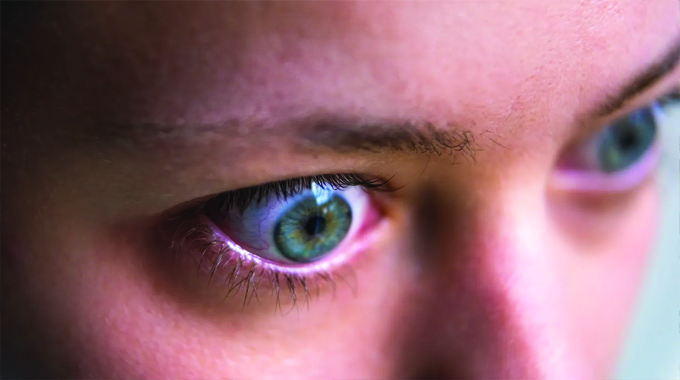
Dorothy Nyika
MAY 25 is celebrated globally as World Thyroid Day, a date I now hold close to my heart.
But for years, before I understood the “butterfly” at the base of my neck, my life was a bewildering storm.
My forthcoming book, When my butterfly wouldn’t fly: My Journey with Graves’ Disease, tells a story that is deeply personal.
It is a raw account of how a tiny gland can unravel a life, and how, with understanding and support, it can be pieced back together.
This is not just an article — it is my lived experience, a plea for awareness from the frontlines of a silent battle.
Whisper that became a roar: My thyroid’s betrayal
It came subtly, a whisper of changes I could not quite grasp. Then, the whisper became a roar.
My heart raced relentlessly, as if I would run a marathon even while sitting still. Sleep became a distant memory, replaced by a constant, gnawing anxiety that clung to me like a shadow. My hands trembled so violently that I could barely hold a cup of tea.
I lost weight, not in a healthy way, but as if my body was consuming itself from the inside out. My eyes began to change — bulging — a physical manifestation of the chaos within.
This was Graves’ disease, a form of hyperthyroidism, where my immune system, in a cruel twist, attacked my thyroid, forcing it into overdrive.
But before the diagnosis, before the medical terms made sense, there was only confusion, fear, and a profound sense of losing myself.
The relentless racing heart, the anxiety that coiled in my stomach, the insomnia that left me perpetually drained; these were the obvious signs. But there were so many other ways my body betrayed me.
The heat, oh, the unbearable heat! I would be sweating profusely while others felt comfortable, an internal furnace raging out of sync with the world around me.
My skin became a battleground, dry, itchy, sometimes with strange breakouts. Certain foods, like anything with lactose, seemed to trigger discomfort, adding another layer of restriction to my already struggling system. My muscles felt weak and shaky, making even simple tasks exhausting. Memory loss became a frightening reality, words and names slipping away like sand through my fingers.
Then there was the cruel and visible manifestation of thyroid eye disease. My eyes became gritty, sensitive to light, and the bulging was a constant, unwanted reminder of the turmoil within. My once vibrant hair started to thin and fall out; hair loss that felt like another piece of my identity being stripped away.
The abyss: My brush with thyroid storm
The culmination of this internal chaos was the terrifying experience of a thyroid storm.
It felt like my body was on fire, my heart pounding so violently that I thought it would burst. The fever raged, I was delirious, and the world around me became a blur of panic.
It was a stark confrontation with the life-threatening potential of this seemingly “small” gland. I remember the fear, the feeling of being utterly out of control, teetering on the edge. It was a stark reminder of how serious and devastating untreated thyroid disorders can be.
Beyond this critical episode, the daily struggles continued. Despite the weight loss, I experienced severe, insatiable hunger, a cruel irony of a body wasting away while craving more. And, the severe urinary frequency was disruptive and exhausting. Every aspect of my physical being seemed to be malfunctioning.
The steep price of an unseen illness
The impact was catastrophic.
My once sharp mind became foggy, unable to concentrate. The constant fatigue and anxiety made attending classes impossible. I was a bright learner, but the illness stole my ability to learn, forcing me to drop out of school.
This was not just a setback. It felt like the end of my future, a door slammed shut on my aspirations. The dreams I had for my education, for a career, seemed to vanish overnight.
Beyond school, the very fabric of my life began to fray. My energy levels plummeted, making it impossible to hold down a job, leading to a devastating loss of production and livelihood. I could not contribute, I could not provide for myself, and the financial strain added another layer of stress to an already overwhelming situation. My ability to live independently, to be a productive member of society, was stripped away.
Perhaps one of the most painful blows was the fear of loss of reproduction. The hormonal imbalance wreaked havoc on my body, and the thought of not being able to have children, of losing that fundamental aspect of womanhood, was heartbreaking.
It is a silent grief many thyroid patients carry — a fear that often goes unacknowledged.
And then, there were the conflicts. My erratic moods, the irritability, and the uncharacteristic outbursts, strained relationships with family and friends. They didn’t understand why I was so different, why I was always tired, or why I would lash out.
The illness created a chasm between me and those I loved, leading to misunderstandings and painful arguments.
The shadow of superstition: When illness becomes accusation
The challenges didn’t stop there.
In our communities, where medical knowledge can sometimes be scarce, unexplained illnesses often fall under the shadow of superstition. My physical changes — the weight loss, the trembling, and the changes in my eyes — combined with my altered behaviour, led to whispers.
Whispers that quickly turned into accusations.
“She has been bewitched! “It is witchcraft! She is a witch”.
The very symptoms of my disease, the visible signs of my suffering, were misinterpreted as evidence of dark forces. I was not just sick. I was labelled a witch.
This perception was devastating, isolating me further. It created a profound sense of shame and fear, making it even harder to seek help.
How do you explain a complex hormonal imbalance to someone who believes you have been cursed?
This stigma is a cruel reality for many, adding an unbearable burden to an already heavy load.
More than just physical: The erosion of self
These were not just isolated symptoms. They wove together to create a tapestry of suffering that impacted every facet of my life.
The fatigue made it impossible to engage fully with the world. The anxiety stole my peace. The physical changes altered my appearance, impacting my self-esteem. The cognitive issues clouded my mind. It felt like my very essence was being eroded by this unseen enemy.
My journey, detailed in When my Butterfly Wouldn’t Fly, does not only testify to the resilience of the human spirit, but it also underscores the urgent need for greater awareness and understanding of thyroid disorders.
We need to recognise the multifaceted impact these conditions have on individuals not just the physical, but the emotional, social, and economic as well.
This International Thyroid Awareness Week (ITAW), running from 25 to 31 May, let us open our eyes to the silent struggles of millions. Let us learn about the butterfly within, and the havoc it can wreak when it malfunctions.
Let us offer support, understanding, and break down the stigma that often surrounds these conditions.
Slow creep of chaos: Childhood in the heat, an internal fire ignited
This disease was not a sudden thunderclap.
It was a slow and stealthy intruder, creeping into the corners of my young life. Growing up in the lower veld of Chiredzi, the heat was an ever-present companion. I remember my deep, almost primal attraction to water.
I loved being in the pool, the cool embrace, a welcome respite. As a child, I simply thought I preferred the water because of the hot weather. Looking back now, with the clarity of diagnosis, I understand those early years differently.
The temperature irregularities were always there. I always felt hot internally, a simmering discomfort that I unknowingly tried to soothe with water. It was not just the Chiredzi sun; it was the internal fire of a condition silently brewing within me.
I had no idea that this seemingly innocuous preference for water was an early whisper of the storm to come.
Connect for support
If you recognise any part of my story, or if you are navigating your own thyroid journey, please know you are not alone.
While thyroid disorders can be profoundly challenging, with awareness, timely diagnosis, and compassionate support, individuals cannot only recover, but reclaim their lives, too. We can turn the tide against misinformation and ensure that every butterfly has a chance to fly freely again.
Let us turn awareness into action and ensure that no one has to face this storm in silence.
What are your experiences or questions about thyroid health?
Share your story and help in illuminating this often-invisible illness.
Why World Thyroid Day is critical
Educate: To explain what the thyroid gland is, how it works, and the myriad ways its dysfunction can manifest.
Empathise: To understand that the fatigue, the anxiety, the physical changes are not weaknesses or character flaws, but symptoms of a treatable condition.
Eradicate stigma: To challenge harmful perceptions and ensure that no one is labelled or ostracised for an illness they cannot control.
Support network
If you or a loved one are struggling with a thyroid disorder, or if you simply need a safe space to share your experiences, please know you are not alone. Reach out for support. Let us build a community where understanding replaces judgment, and healing replaces despair.
We should use this year’s International Thyroid Awareness Week (ITAW), to ask questions, offer support, and flutter into a future where thyroid health is a greater priority, and no one suffers in silence or fear.
Understanding the thyroid gland
The thyroid gland is a small, butterfly-shaped gland located at the base of the neck, just below the Adam’s apple. Despite its size, it plays a crucial role in regulating many bodily functions by producing hormones, primarily thyroxine (T4) and triiodothyronine (T3). These hormones affect the body’s metabolism, which is how the body uses energy. Metabolism influences your heart rate, body temperature, energy levels, and even mood.
When the thyroid gland produces too much hormone (hyperthyroidism, as in Graves’ disease) or too little hormone (hypothyroidism), it can lead to a wide-range of symptoms affecting nearly every system in the body (Brent, 2022).
Disclaimer
Please note that I am not a medical professional. The information provided here is for general knowledge and informational purposes only, and does not constitute medical advice. It is essential to consult with a qualified healthcare provider for any health concerns or before making any decisions related to your health or treatment.
Feedback: +263773295730



 Colletta Dube