

 admin
admin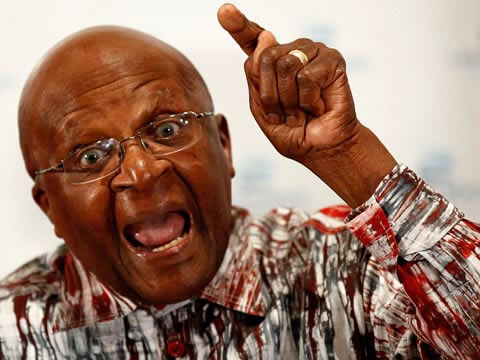

Lovemore Ranga Mataire
Some analysts have dismissed as an exercise in futility the African Union’s decision to send an SOS to the International Criminal Court of Justice regarding its selective application of justice targeting mainly African leaders. While this view is prevalent within the corridors of Western-sponsored non-governmental organisation and opposition parties in Africa, it is not the same with a large section of people around the world who have long campaigned for the withdrawal of African states membership citing the ICC’s plaid history.
There are certain apparent truths that certain pedestrian pseudo-African opinion leaders would always want to skirt around in order to mask the devious nature of the ICC as an undemocratic and an obtrusively subjective body.
One of the things that these so-called African opinion leaders in the mould of South Africa’s Desmond Tutu would dare not tell us how the ICC came into being and whether its membership in terms of global appeal mandates it to play a global surveillance watchdog on issues of crime and justice.
Tutu and his cohorts would dare not tell us why the United States of America is still not part of the Rome statutes that gave birth to the ICC and why the same country has enacted a law to protect its citizens from prosecution for any crimes against humanity anywhere in the world.
These are the same people who in their cauldron of rented comfort constantly rant about the need to disregard history in our analysis of the present.
But history does matter for it has been said that he who controls the past controls the future. Indeed, our view of history shapes the way we view the present and in turn dictates what answers we offer for existing problems.
It is this conscious sense of history that has informed African leaders to take a stand against the ICC’s selective application of justice targeting mainly African leaders while completely ignoring the brutality of leaders of European decent.
So what are the glaring inconsistencies of the ICC that has led Africans to say enough is enough?
What are the issues that must have informed African leaders for the ICC not to prosecute sitting Heads of States in line with international conventions?
The issues that must have informed the Heads of States in Ethiopia include how the ICC was born; the number of countries in terms of population that signed and ratified its existence, why America has refused to ratify the treaty and why all inductees are Africans.
First, what constitutes international law, its relevance and application to individual states or individuals?
According to Daniel S. Papp, Professor of International Affairs at Georgia Institute of Technology who is also the author of Contemporary International Relations: “International law may best be described as a system of agreements between international actors, usually states, that define how relations between and among them are conducted.”
If we take Papp’s definition, then it entails that some kind of consensus must be established before anything can be termed as international law binding various states.
However, a casual look at the ICC clearly reveals the apparent absence of a consensus or majority endorsement rendering it partisan and obtrusively undemocratic.
The ICC came into being on March 11, 2003 as a permanent tribunal to prosecute individuals for genocide, crimes against humanity, war crimes, and the crime of aggression.
It derives its origins from the International Military Tribunal at Nuremberg that tried Nazi war criminals after World War II.
The trials led to UN proposals for a permanent successor court but the proposal was stalled in the 1950s partly because of the cold war.
Trinidad and Tobago re-presented the proposal at the 44th session of the United Nations General Assembly.
The presentation by Trinidad and Tobago resulted in the United Nations General Assembly convening the United Nations Diplomatic Conference of Plenipotentiaries on the establishment of an International Criminal Court held in Rome in 1998.
It was this conference that drafted the treaty for the ICC, which received a vote of 120 to 7, with 21 countries abstaining while seven voted against the treaty.
The seven included Iraq, Israel, Libya, China, Qatar, USA and Yemen.
Some critics point to the fact that the treaty was hushed forward by non-governmental organisation activists who “bundled the key elements of the court into a package that became a take-it-or-leave it proposal, but subject in the end to further compromise.”
Writing in the March issue of the New African magazine, Dr David Hoile says another tactic used at the conference was to replace the consensus-based approach of customary international law with a straight vote of nations.
“Further, such a process takes no account of geographic representation, population base, or strategic considerations, but simply relies upon a one-nation-one-vote approach. The statute went into effect with fewer than half the nations of the world ratifying it, representing considerably less than half the population of the world. Strategic powers, including not only the US, but China, India, Japan and Russia were all absent while the total ratification number was padded with small states that traditionally play little part in international affairs.”
Demographically, if the USA, China, India, Japan and Russia are not signatories then it logically follows that more than 70 percent of the world’s population is not part to this charade. It evidently follows that the ICC is a minority project which must be discarded with the contempt it deserves.
Why did the United States, a self-proclaimed champion of human rights not ratify a treaty that makes it plausible to try all alleged human rights abusers?
This is a pertinent question that all Africans must wrestle with and realise the duplicity of the Americans when they talk about democracy, the rule of law and human rights issues.
Interestingly, the United States has even moved further from just objecting to ratify the ICC treaty to passing the American Service Members Protection Act whose main thrust is to immunise any prosecution of US citizens from being put before The Hague.
Ironically and distastefully, Americans managed to cajole some ICC member countries into entering bilateral agreements to exempt US citizens from being surrendered to international tribunals or the ICC. If the countries expressed reservations they were threatened with aid withdrawal.
Therefore, one does not need one to be a rocket scientist to decipher America’s hostility to ICC.
Throughout history, America’s imperial military interventions in various parts of the world have led to massive loss of lives especially civilians and yet the ICC has never raised an issue about it.
It boggles the mind as to how America has continued to support ICC efforts to arrest among others Omar al-Bashir of Sudan given its hostility to the same organisation. The Americans either think the world is blind or stupid or both.
In opposing the treaty, India cited the legal flaw at the centre of the ICC when it states: “The power to bind non-states parties to any international treaty is not a power given to the UN Security Council by the UN Charter. Under the Law of Treaties, no state can be forced to accede to a treaty or be bound by the provisions of a treaty it has not accepted.”
India further objected to the ICC in that its statutes violates the fundamental principle of international law by conferring on the Security Council a power which it does not have under the Charter, and which it cannot and should not be given by any other instrument.
Another flaw of the ICC is that it does not list the use of any weapon of mass destruction as constituting a war crime.
Also critical is the ICC’s relationship with NGO’s which makes it prone to manipulation.
There is also a strong perception that the ICC was set to deal with “errant” Africans whose existence threatened the hegemonic influence of the superpowers in their scramble for African resources.
This perception is added credence by the fact that so far the ICC has indicted among others Joseph Kony, Vincent Otti, Raska Lukwiya, Okot Odhiambo, Dominic Ongwen (all from Uganda): Thomas Lubanga, Germain Katanga, Mathieu Ngudjolo Chui, Bosco Ntaganda, Jean-Perre Bemba (all from the DRC) ex-President Laurent Gbagbo (Cote d’lvoire) and President Omar al-Bashir of Sudan.
It may not be disputed that the said individuals could have committed some crime but is Africa so bereft of any decorum of a justice system strong enough to try these alleged perpetrators?
The saddest and most dehumanising aspect of the ICC is that the African continent has been a convenient experimental place to test concepts which have not been applied to other parts of the world.
All conflicts investigated by the ICC have been in Africa. What about crimes committed in Iraq, Libya, Syria, Gaza, Chechnya and recently Afghanistan where in one incident an American soldier opened fire to more than 16 civilians including women and children.
Africans must not be flattered by the recent appointment of Fatou Bensouda of Gambia as chief prosecutor.
This is nothing but some kind of appeasement to Africa but the truth is that there is no way that the ICC will attempt to seriously investigate any crimes committed anywhere outside Africa.
In the same way that the African Union refused to recognise the arrest warrant issued for Sudanese President al-Bashir, the African continent must refuse to recognise such a kangaroo court whose agenda is simply to dehumanise Africans in the same manner that slavery did to our fore fathers.
The most plausible way forward is for the African Union to actualise its African court as stipulated in its Constitutive Act.
Indeed, African problems need African solutions.
In the final analysis and again in the words of Dr Hoile, there is a clear lesson for Africa that they should not refer their countries to the ICC.
“The ICC does not have Africa’s welfare at heart but only itself and its bureaucratic imperative- to exist, to employ more Europeans and North Americans, and where possible increase its budget.”



 Online Reporter