Online Reporter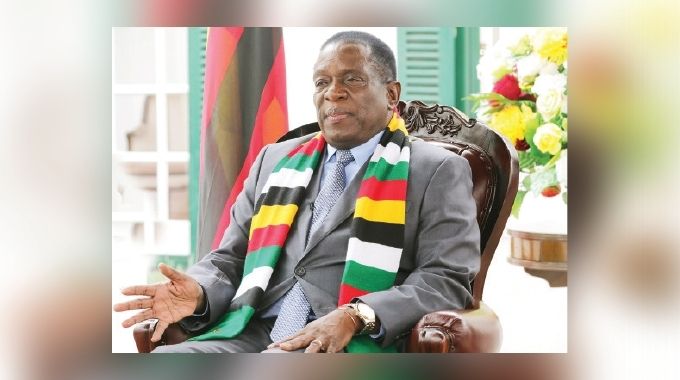
Gibson Mhaka
ZIMBABWE’S election to the United Nations Security Council as a non-permanent member for the 2027-2028 term marks a defining diplomatic breakthrough for the Second Republic and offers compelling evidence that President Mnangagwa’s engagement and re-engagement policy is yielding tangible results on the international stage.
The overwhelming support secured by Zimbabwe at the United Nations headquarters in New York, where the country garnered 182 votes out of a possible 190, is not merely a routine electoral outcome.
It is a powerful endorsement by the international community of Zimbabwe’s renewed foreign policy trajectory and growing influence in global affairs.
For a nation that for years endured diplomatic isolation, strained relations with Western countries and persistent efforts by detractors to portray it as a pariah State, the election represents a remarkable transformation in international perceptions.
The significance of the victory lies not only in the seat itself, but also in what the vote symbolises.
It demonstrates growing confidence among nations in Zimbabwe’s leadership, its commitment to multilateralism and its readiness to contribute to global peace and security.
Since assuming office in November 2017, President Mnangagwa has consistently pursued a foreign policy anchored on engagement, dialogue and cooperation.
Central to this policy has been the principle that Zimbabwe should be a “friend to all and enemy to none”.
At a time when international relations are increasingly characterised by geopolitical tensions, Zimbabwe has sought to position itself as a constructive and dependable partner to all nations regardless of ideological differences.
The UNSC victory appears to validate that approach.
President Mnangagwa himself described the election as a significant diplomatic milestone for the country.
“This resounding victory underscores the effectiveness of our engagement and re-engagement agenda, demonstrating the global community’s confidence in Zimbabwe’s leadership and commitment to international peace,” he said.
The President’s remarks capture the essence of what this achievement means.
For nearly a decade, Zimbabwe has invested considerable diplomatic effort in rebuilding relationships, strengthening bilateral cooperation and actively participating in regional and international forums.
The country has intensified engagement through organisations such as the African Union, the Southern African
Development Community (Sadc), the Common Market for Eastern and Southern Africa (Comesa) and the United Nations.
These efforts have gradually reshaped international perceptions and increased Zimbabwe’s visibility as a responsible member of the global community.
The UNSC election result suggests that these diplomatic investments are now bearing fruit.
Importantly, the support extended to Zimbabwe came from countries across different political, ideological and geographical divides.
Securing 182 votes reflects broad international consensus and demonstrates that Zimbabwe’s message is resonating beyond traditional allies.
It also dispels narratives that Zimbabwe remains isolated on the world stage.
Indeed, few diplomatic endorsements can be more convincing than a secret ballot election conducted among UN member states.
The result effectively amounts to a global vote of confidence.
Foreign Affairs and International Trade Minister, Professor Amon Murwira, was unequivocal in linking the victory to President Mnangagwa’s foreign policy doctrine.
“It’s a very humbling result. 182 countries voted for Zimbabwe, which was the highest of all the votes that we counted today.
“And it’s a big endorsement of Zimbabwe’s policy of being a friend to all and an enemy to none.
“So, I want to congratulate His Excellency, the President, Dr Mnangagwa, for leading this campaign and making sure that Zimbabwe got the record vote that we got.
“We are really humbled and we take this responsibility very seriously,” said Prof Murwira.
His observations are significant because they place the election within the broader context of Zimbabwe’s foreign policy evolution.
The “friend to all and enemy to none” doctrine has sought to move Zimbabwe beyond confrontational diplomacy towards constructive engagement.
Rather than defining relationships through historical grievances or geopolitical rivalries, the policy emphasises mutual respect, sovereign equality and cooperation for shared development.
The UNSC vote suggests that many nations have embraced this approach. Prof Murwira also highlighted the responsibility that accompanies the achievement.
“This is a time for celebration, but it’s actually a time for responsibility. We are looking forward to working very well with all members of the Security Council and representing 8,3 billion people in this world, who are expecting peace, tranquillity and living together in harmony and making sure that the whole world trusts the decisions that we make, which must be considerate and according to the UN Charter.”
His remarks reflect Zimbabwe’s intention to be an active and constructive participant in international peace and security discussions.
The country enters the Security Council at a time when the world faces multiple challenges, including armed conflicts, terrorism, climate-related security threats and growing geopolitical competition.
Zimbabwe’s election, therefore, presents an opportunity to contribute African perspectives to global decision-making processes.
Equally noteworthy is the positive reaction from the United Kingdom, following Zimbabwe’s win.
After a farewell meeting with President Mnangagwa at State House, British Ambassador to Zimbabwe, Mr Pete Vowles congratulated Zimbabwe on securing the UNSC seat and expressed London’s willingness to work closely with Harare.
“We spoke about the UN Security Council and our congratulations as the British Government to Zimbabwe for securing a seat as a non-permanent member of the Security Council.”
The willingness of the UK, one of the five permanent members of the Security Council with veto powers, to work closely with Zimbabwe on key global issues illustrates the extent to which diplomatic bridges have been rebuilt.