


 Online Reporter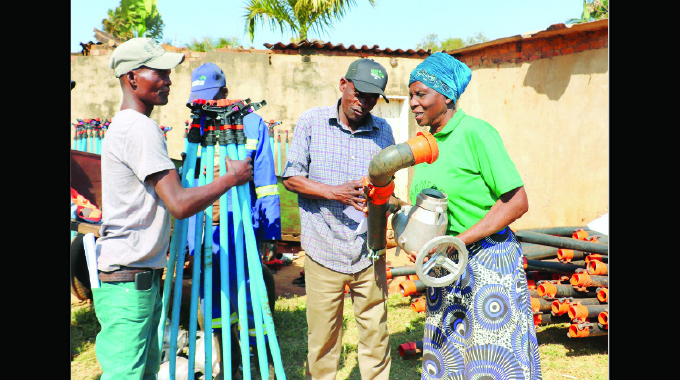
Theseus Shambare in MAZOWE
“CRAIGENGOWER BASE, Craigengower Pump, be advised – load shedding scheduled at 3pm. Do you copy? Over!” crackled the voice of Tatenda Chiromudzimu through a handheld VHF radio at Craigengower Farm in Mazowe on Thursday.
“Copy that, Pump. Pipeline flow steady, sprinklers at full pressure. Standing by. Over!” replied his colleague, Hallington Tanaka Chatima, who was five kilometres away, as he inspected the irrigation line carrying water from Murodzi Dam to fields of winter wheat.
For decades, such coordination was unthinkable. Farm workers once relied on whistles, runners or long walks to pass messages across vast fields.
Mobile phones, where coverage existed, were unreliable.
Today, however, workers at Craigengower communicate like seasoned radio operators, which highlights the transformation taking root in the agriculture sector.
Craigengower Farm sits at the confluence of Murodzi, John Lorry, Jumbo and Mwenje dams. Yet, despite the abundance of water, only 44 hectares (ha) of wheat out of the 864 ha were under irrigation during the current winter season due to dilapidated infrastructure and lack of investment.
This is just but a microcosm of the challenges being experienced in some parts of the country. While Zimbabwe has over 10 600 dams with a capacity to irrigate nearly two million hectares, only 222 000ha are presently irrigated, less than half the 2030 target of 496 000ha.
“The water is there, the land is there, but without investment in pipes, pumps and power, it remains potential, not production,” said Mr Silas Mubhemi, chairperson of the Craigengower Irrigation Scheme.
A new deal
That reality began to shift last week when President Mnangagwa headlined the issuance of tenure documents under the Presidential Title Deeds Programme at Craigengower and rolled out the Presidential Productivity Booster Kit Programme.
Under the initiative, more than 1 000 farmers received title deeds, while 92 were immediately equipped with booster kits valued at up to US$6 000 each.
The kits include sprinklers, pipes, risers and hydrants, covering at least one hectare per farmer. Repayment terms are flexible and spread over five years. Craigengower itself also received two 125-horsepower pumps and a two-kilometre underground mainline extension.
The existing worn-out mainline was replaced with a modern one designed to last decades, ensuring sustainable water delivery across the farm.
“I never thought I would hold a document that says this land is truly mine,” said 76-year-old Mrs Maybe Mapira, proudly displaying both her tenure certificate and new sprinklers.
“This paper means my children can continue farming after me. The kit means I can still farm when rains fail.”
For Mrs Ester Makwara, the programme is equally transformative.
The kit programme has flexible terms, with a repayment period of up to five years.
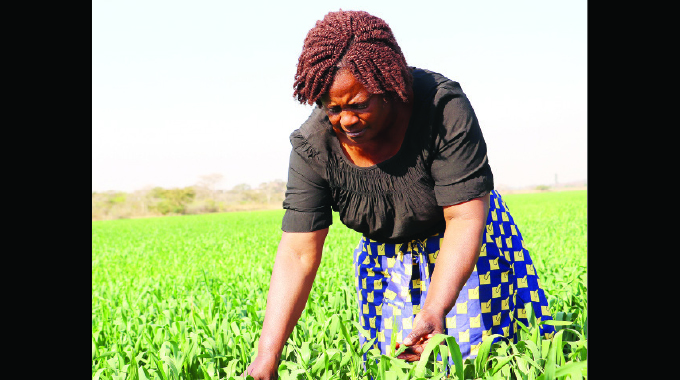
“As women, many of us had land but could not prove it in banks or to investors. Now, with these documents and irrigation kits, I can grow crops all year round and also supply markets in town. It restores our dignity as farmers.”
Behind this transformation are not just the farmers but also the technical partners rebuilding Zimbabwe’s irrigation infrastructure. Maka Irrigation Company, contracted to roll out the booster kits, has rehabilitated more than 20 000ha countrywide since 2017.
“Families that once struggled to make ends meet are now producing consistently and earning a dignified living from their land. To date, Maka Irrigation has successfully rehabilitated more than 20 000ha across the country,” said Engineer Simbarashe Gosha, the company’s general manager.
“The model we are implementing is not just about infrastructure — it is about empowering communities.
“For example, the Craigengower booster kits we have deployed come with a one-year warranty, ensuring farmers have the confidence that their systems will deliver reliable service.
“This is how we build trust with farmers and ensure sustainability of production.”
Tenure
For over two decades, most A1 and A2 farmers held land through offer letters or 99-year leases. Banks believed they could not be collaterised as they were not transferable.
However, the new tenure documents, standardised by the Land Tenure Implementation Committee (LTIC), changed that.
They are legally binding deeds of transfer registered with the Deeds Office, making them bankable and transferable.
“They were designed with banks in the room. That is why this time they will unlock real financing,” said development economist Mr Edwin Zvavahera.
For farmers, this means stability, bargaining power and the confidence to invest in long-term projects like irrigation and mechanisation.
The devastating 2023/2024 El Niño-induced drought, one of the worst in four decades, left over seven million Zimbabweans food-insecure. It underscored that rain-fed agriculture is no longer reliable.
“We cannot keep relying on the sky,” said Mrs Sosca Chinogureyi.
“With this kit, I can irrigate my hectare. Even if the rains fail, my children will eat. I am happy that the programme left no one behind.”
Permanent Secretary in the Ministry of Lands, Agriculture, Fisheries, Water and Rural Development Professor Obert Jiri said secure tenure and irrigation are central to resilience.
“Secure tenure, irrigation development and mechanisation must go hand in hand. What we are seeing here is not just about boosting production — it is about embedding climate adaptation into our agriculture and ensuring farmers can produce even under drought conditions.”
Package
The productivity booster kit is part of a broader package that includes access to credit backed by tenure documents, provincial technical service centres offering tillage and mechanisation and bank-monitored evaluation hubs.
“You cannot just give equipment and walk away,” said youth farmer Mr Lloyd Chitate.
“This programme comes with training, service support and bank backing. This is the smartest way of agriculture we want as young people.”
If scaled up, the programme could be transformative.
Early estimates suggest A farmers could produce up to 10 million tonnes of cereal annually, contributing US$6,1 billion to agricultural gross domestic product (GDP) and adding US$1,5 billion in rural household income.
This would not only support rural industrialisation but also advance Vision 2030’s goal of an upper middle-income economy.
“Land reform gave us land,” said farmer Mr Petros Mhembere.
“Tenure gives us security. Irrigation gives us power. For the first time, we are farming with dignity.”
For workers like Tatenda and Tanaka, who now coordinate wheat irrigation with radios instead of whistles, the change is both practical and profound.
“Before, we just had land and hope,” said Tatenda.
“Now, we have land, water and the tools to make it productive.”



 Bongani Ndlovu