Online Reporter
Sanda Ojiambo
THE Global Africa Business Initiative (GABI) was established five years ago with a bold ambition: to place Africans and African interests at the centre of every conversation about the continent’s future. The response has been remarkable.
Five years ago, the Global Africa Business Initiative (GABI) set out to reshape the narrative about Africa. For decades, discussions about building the continent’s economies and businesses often took place without key stakeholders sharing the same platform. Business leaders, governments, policymakers and investors were rarely in the same room, while conversations about Africa were frequently driven by outsiders rather than those creating jobs, driving investment and powering economic growth on the continent.
GABI, together with its flagship convening platform, Unstoppable Africa, was created to change that reality. The concept was straightforward: bring Africa’s business leaders, heads of state, policymakers, entrepreneurs, development financiers and international partners together around one table, allowing Africa’s agenda to be shaped by what the continent is building rather than by what others assume it needs.
The name Unstoppable Africa was deliberately chosen to reflect the momentum already evident across the continent, driven by thriving businesses, innovative entrepreneurs and a young, dynamic population poised to shape the future.
Five years later, that vision has proved truly unstoppable. The figures tell the story. To date, Unstoppable Africa has brought together more than 6 000 participants, 106 speakers and nearly 1 000 companies across 17 sessions covering energy, finance, trade, health, digital transformation and sport. Backed by 18 funding partners and more than a dozen media partners, the platform has significantly elevated Africa’s economic narrative on the global stage.
One of its landmark achievements was the inaugural African Union-United Nations Top Table, co-chaired by UN Secretary-General António Guterres and AU Commission Chairperson H.E. Mahmoud Ali Youssouf. The gathering brought together leaders from 16 countries, who reaffirmed their commitment to the Sustainable Development Goals (SDGs) and Agenda 2063.
At last year’s Unstoppable Africa, several major announcements and initiatives emerged across key sectors. In energy, Mission 300 mobilised more than US$50 billion in affordable financing aimed at expanding electricity access, with 32 countries preparing to sign agreements under the initiative.
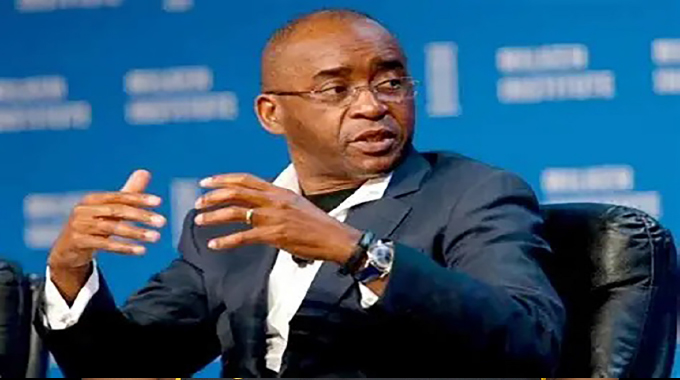
In the digital transformation space, Cassava Technologies founder and executive chairman Strive Masiyiwa announced a US$720 million partnership with Nvidia to establish Africa’s first network of AI factories, a landmark investment that underscores the continent’s growing capacity for innovation and technological leadership.
Trade also featured prominently through Angolan President João Lourenço’s Lobito Corridor initiative, a major transcontinental trade and logistics project designed to connect the Atlantic and Indian Oceans while attracting private investment into production and export sectors.
Sport delivered equally significant social and economic commitments. WNBA All-Star Chiney Ogwumike launched her foundation to expand opportunities for women and girls, while NBA Africa selected Festival Coins through its Startup Accelerator programme, which provides mentorship and funding to strengthen both Africa’s sporting and entrepreneurial ecosystems.
The shift from discussion to implementation is perhaps most clearly demonstrated through GABI’s Action Pathways. Introduced at last year’s Unstoppable Africa, the Digital Transformation and Health Action Pathways were created to coordinate partnerships and accelerate delivery, transforming commitments made on stage into tangible action.
Earlier this year, the initiative took another significant step forward. On the sidelines of the Africa CEO Forum in Kigali, the GABI Solutions Lab brought together business leaders, investors and government officials to examine the conditions required to make development projects bankable.
Using digital infrastructure as a case study, participants explored a broader challenge: how to mobilise private capital towards large-scale projects that serve the public interest.
New Era of Sovereignty
As GABI has evolved, so too has the global landscape. Yet Africa’s position within that landscape has changed even more profoundly. While some credit-rating agencies continue to classify the continent as high risk, Africa is no longer viewed simply as a perpetually emerging market.
The continent is increasingly asserting its sovereignty by taking ownership of its narrative, priorities and partnerships. Its strengths are clear: a youthful population, vast mineral resources critical to the global energy transition, and a vibrant entrepreneurial ecosystem driving innovation in sectors such as fintech, agritech and the creative economy.
This progress does not diminish the challenges Africa continues to face. Trade preferences have expired, tariff regimes have become less predictable, and reductions in aid and health assistance have exposed countries that relied heavily on these support mechanisms.
Yet these disruptions are not unique to Africa. Around the world, supply chains are being reshaped, concerns about mineral security are intensifying and conflict in the Middle East continues to disrupt global energy markets and shipping routes.
At the same time, these shifts have opened new opportunities for African economies. Refiners and exporters, including those in Nigeria, are increasingly accessing markets that were once heavily dependent on supplies from the Gulf and Europe. For many African countries, this represents a moment of strategic advantage.
Turning that leverage into lasting progress will require building on the foundations of collaboration already in place. The private sector, working alongside governments and multilateral institutions, must play an even greater role in ensuring Africa’s competitive advantages are translated into sustainable growth, stronger sovereignty and long-term value creation.
Sound policymaking, regulatory stability, regional integration and robust frameworks that safeguard African interests remain essential. One of GABI’s greatest strengths is its recognition that meaningful progress depends on both the public and private sectors, creating a platform where stakeholders can identify common priorities and pursue shared opportunities.
Maintaining Momentum
Five years is an important milestone worthy of recognition and celebration. Yet sustaining momentum is often more challenging than creating it.
This year’s theme, “Powering Business, Scaling Economies, Shaping the Future”, captures the ambition required for the next phase of Africa’s development journey. It calls for stronger business leadership, deeper investment and a renewed focus on opportunities that deliver measurable outcomes.
The path forward is clear. The African Continental Free Trade Area will realise its full promise only if intra-African trade is supported by harmonised regulations, efficient logistics and adequate infrastructure.
Energy access remains a critical priority, but it must be pursued sustainably. At the same time, sectors such as the creative industries and sport are emerging as powerful economic drivers and increasingly influential forces in shaping Africa’s global identity.
Above all, success will depend on discipline and execution. It requires moving beyond promises towards delivery, transforming agreements into factories, policy commitments into regulatory action, and panel discussions into enduring partnerships rooted in African sovereignty.
Only then can the continent’s unstoppable rise be fully realised. The task for the next five years is clear: move from promise to delivery, from commitment to measurable impact, and from aspiration to meaningful action.
*Sanda Ojiambo is Assistant Secretary-General and CEO of the United Nations Global Compact.