Chronicle Editor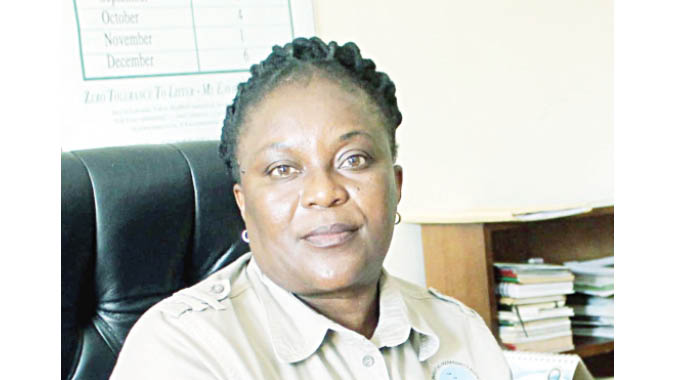
Thupeyo Muleya, Beitbridge Bureau
LOCAL authorities are discharging about 366 million litres of raw sewage into the environment daily, the Environmental Management Agency (EMA) has said.
The discharge is increasing pollution of ground and surface water sources, giving rise to diseases like cholera, typhoid and dysentery.
Thirteen people have died of typhoid over the past few weeks in Bulawayo after a suspected sewer pipe burst allegedly contaminated their drinking water.
Continued contamination is destroying more water bodies and rendering them unusable in the face of growing populations that need increasing amounts of fresh water.
An environmental health technician who asked not to be named said filthy water provides a breeding ground for disease-carrying parasites like rodents and mosquitoes and when a large number of people fall sick, it strains the country’s health system.
Crop and livestock production is affected downstream as polluted water causes diseases that can be transmitted to humans.
The cost of rehabilitating the water bodies may soon be beyond the reach of local authorities and local government.
EMA has attributed the surge in pollution to ageing sewer treatment infrastructure in most town councils, which is being overwhelmed by increasing waste generation that has surpassed systems’ capacity.
EMA’s manager responsible for education and environment, Ms Amkela Sidange yesterday said the agency has since conducted an assessment on most local authorities’ sewage plants to ascertain the state of affairs. “An assessment conducted by EMA revealed that an estimated 366 mega litres of raw and partially treated sewage is being discharged daily into the environment, particularly from urban local authorities,” she said.
“Out of the identified 70 Sewage Treatment Plants in the 32 urban local authorities with a combined design capacity to receive and fully treat 579.38 mega litres per day, 21 percent are currently down and non-operational. Additionally, ambient water quality monitoring results show high phosphate levels in rivers passing through the main cities and towns; and this is largely contributed to non-functional sewage treatment facilities.”
She said water contamination remains a major challenge in the country as more water bodies are reduced to dead streams and lakes with associated huge rehabilitation costs, exposing communities to recurring diseases.
“This impacts on the provision of quality water to the larger population of the country, especially in urban areas. Polluted water systems were now affecting crop and livestock production,” said Ms Sidange.
She said the state of affairs especially downstream has resulted in communities being denied access to clean and safe water as required by the Constitution of Zimbabwe.
Ms Sidange said EMA was on the ground enforcing compliance within local authorities in line with the provisions of Strategic Development Goal 6.
“We recently took Norton and Kadoma town councils to court on charges of polluting the environment, where Norton was fined $25 000 for two offences, and was among other things ordered to rehabilitate, repair and upgrade their water and sewer treatment plants and pipes to EMA’s satisfaction within three months.
“Currently there are four cases before the High Court and about six more local authorities to be taken to court for the same offences of polluting the environment,” she said.
The official said besides noting an increase in environment pollution mostly from human waste, they were also concerned with the trend in urban wetland degradation mostly from infrastructural development.
Ms Sidange said Chitungwiza Town Council has been fined a total of $24 000 for issuing commercial stands in a wetland without a wetland utilisation permit and an environment impact assessment certificate. In addition, she said the local authority was ordered to stop all construction and submit a prospectus and failure to do that will result in the opening of a docket.
“To date over 200 development projects in urban areas, mostly housing developments, have been rejected by the agency on site suitability, as development was proposed on wetlands. We encourage local authorities to desist from allocating land on wetland areas and appreciate that land is a finite resource and they should not attempt to find extra land by parcelling out wetland areas for development purposes,” she said. — @tupeyo



 Online Reporter