Vusumuzi Dube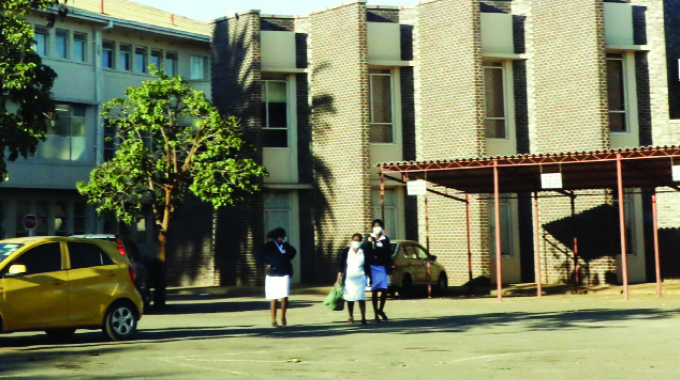
Robin Muchetu, Senior Reporter
FOR Tanaka Mabhiza, falling pregnant at 17 was a nightmare as she had to drop out of school to sit at home and nurse her growing belly.
Money to go through the ordeal was not available as her mother, a vegetable vendor in Pumula suburb was unable to cater for the pregnancy.
The father of the baby had skipped the border to South Africa after impregnating her.
However, a caring neighbour advised her on the Urban Voucher system for pregnant women that was available for the urban poor after which she quickly visited a health institution to learn more.
The Results Based Funding (RBF) Urban Voucher Programme is a financing mechanism that protects poor pregnant women from financial catastrophe in accessing health services.
It is aligned to the National Health Strategy and Policy to enhance equity in access to health services. The voucher allows a pregnant woman four Antenatal Clinic visits, delivery and related complications (Including Caesarean section), Postnatal Care (PNC) up to the sixth postnatal week, ambulance services, family planning services, Vitamin A supplementation and Sexual Gender-Based Violence Post Exposure Prophylaxis. Community health workers identify pregnant women and enrolment into the programme is done through administration of a poverty assessment tool which determines eligibility.
This is done by the Department of Housing and Community Services’ social workers. The poverty assessment tool assesses one’s dwellings and disposable income to establish the level of poverty. Once eligible, the voucher is sold to the individual for 20 ZWL (less than USD0,10).
The nominal fee is just to build a sense of ownership over the voucher. After they have the voucher, they can access all services on it.
“I was really down and had no means to take care of my pregnancy. My mother makes just enough to feed me, my three siblings and herself so there was no other means of me getting money to pay for the costs of having a baby. So, I was assessed for the RBF programme and I was very fortunate to be considered. I delivered a healthy baby in July,” said Tanaka.
She said she managed to visit the hospital and used the voucher to access free services while she was pregnant.
United Bulawayo Hospitals (UBH) acting chief executive officer Dr Harrison Rambanapasi spoke on the RBF system and how it has changed the face of maternal health at the institution while also acknowledging a rise in institutional births.
“The RBF system that we have here at UBH and other central hospitals is focusing on maternal and neonatal health. They identify those women who are ordinarily unable to pay for maternal health and they are given a voucher that they will bring to the hospital. UBH was co-opted into the RBF system in January 2022 and we have witnessed an increase in the number of women we are delivering in a month. Previously, we were delivering an average of 375 babies per month and following the introduction of RBF, we’re now delivering upwards of 600 women per month. There are challenges with that but to us this means probably that we have had an increase in institutional deliveries and a decrease in deliveries at home,” said Dr Rambanapasi.
The acting CEO said the RBF system has removed cost as a barrier to accessing reproductive health care saying the idea behind the urban vouchers is to improve the number of women who go for antenatal care, improve institutional deliveries where women are looked after by a skilled birth attendant and to also improve the funding of hospitals complementing Government efforts.
“This funding is based on the principle that 75 percent of that money goes towards the procurement of the sundries that we need to ensure that the service we give to the women meets the required standard. The other component goes towards the members of staff that are directly involved in reproductive health care,” said Dr Rambanapasi.
Challenges that have been faced since its inception are not stopping the hospital from carrying out its mandate.
“We have had an increase in deliveries each month, the infrastructure is still more or less the same so there is going to be a strain on infrastructure. Then when you look at our staffing situation, there are challenges here and there but to a larger extent UBH has been coping with these challenges,” he said.
He added that the biggest message was for every expectant mother to book early for antenatal care and encourage institutional deliveries as it has been proven over and over again that the outcomes are actually better if a woman delivers in an institution where they are looked after by a skilled birth attendant compared to delivering alone at home.
“Women must go to their nearest clinics if they feel that cost is a barrier to access reproductive health care. Women must enquire about how they can be enrolled on the RBF programme so that they can access quality health care,” he added.
Dr Mervyn Venge, the acting deputy director of Reproductive Health in the Ministry of Health and Child Care said the Reproductive, Maternal, Newborn, Child and Adolescent Health (RMNCAH) Programme that is being done by the ministry is aimed at ensuring that pregnancy and childbirth do not pose a threat to the lives of mothers and newborns; where children are healthy and free of the preventable common childhood illnesses and are able to survive, grow and develop to their full potential thereby fulfilling their role in the socio-economic development.
It seeks to provide high quality comprehensive and integrated maternal, new-born and child health services by scaling up proven cost-effective interventions at high population coverage through family and community outreach and health facility level care.
Dr Venge said the programme had, however, been affected by the Covid-19 pandemic.
“Routine data shows that while performance of the programme was affected significantly by the Covid-19 pandemic in 2020, there were notable improvements in 2021 and 2022. Challenges with human resources for health (staff attrition, low morale and burnout) remains the major factor militating against better programme performance,” he said.
Dr Venge said the programme sought to further increase the Modern Contraceptive Prevalence Rate (mCPR) from 67 percent in 2015 to 80 percent by 2025, reduce Adolescent Birth Rate from 108 births per 1 000 adolescent girls in 2019 to 93 per 1 000 by 2025.
The programme also aims at reducing the Maternal Mortality Ratio from 462 in 2019 to 240 by 2025, reduce Neonatal Mortality Rate from 32 in 2019 to 20 deaths per 1 000 live births by 2025, reduce the Under-five Mortality Rate from 65 in 2019 to 41 deaths per 1 000 live births by 2025 and also to achieve by 2025 universal access to reproductive health. –@NyembeziMu



 Online Reporter