admin
admin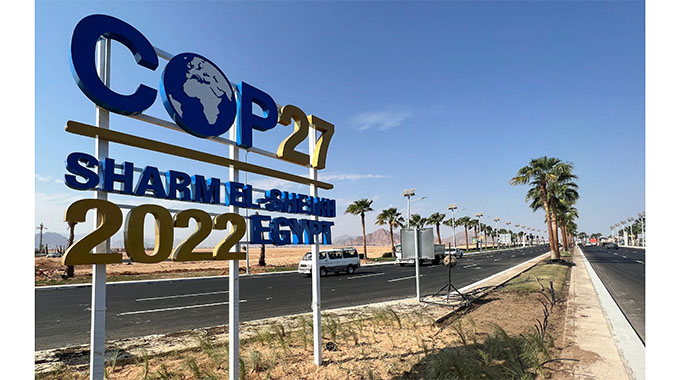
Flora Teckie-A Baha’i Perspective
This year’s United Nations Climate Change Conference — known as COP27, and held from November 6 to 20 was yet another event highlighting the urgent need for action to protect the environment.
Global climate change is now challenging us to rise to the next level of our collective maturity — a maturity which calls us to accept our fundamental unity and the fact that we are all one people living on one planet — that we are all members of one human family.
The impact of climate change can be seen, for example, through increasingly severe weather patterns.
According to a report from UNDP, the consequences of even a two-degree Celsius increase in global temperature will include: coastal flooding displacing 180-230 million people; and water shortages affecting 1,8 billion people.
In the Bahá’í view, solutions to climate change and other environmental problems will require a globally accepted vision for the future, based on unity and willing co-operation among the nations, races, creeds, and classes of the human family.
In addition, commitment to a higher moral standard and the development of consultative skills for the effective functioning of groups at all levels of society will be essential.
Need for higher degrees of unity of vision and action
According to a statement of the Bahá’í International Community: “for progress on the international stage to be sustainable, it must take place within a framework that promotes the attainment of progressively higher degrees of unity of vision and action among its participants.
Each forward step — far from representing a momentary triumph of a single person or faction in an environment of competition – becomes part of a collective process of learning by which international institutions, states and civil society advance together in understanding”, and that “as long as one group of nations perceives its interests in opposition to another, progress will be limited and short-lived”.
In addition, resources must be directed away from those activities and programmes that are damaging to both the social and natural environment and efforts bent towards the creation of systems that foster co-operation and mutualism.
The delegates from the Bahá’í International Community, who attended the recent United Nations Climate Change Conference, emphasised a pivotal idea that “the world must develop their capacity to work together to protect the environment and that the animating force behind this advance must be the recognition of humanity’s inherent oneness” and that “if humanity is to address the myriad of climate issues it is facing, the nations of the world need to reach consensus on the essential guiding principles that recast the relationship between society and the natural world”.
Such approaches can assist states to work together more effectively for the common good, and to identify and address the weaknesses that in our current systems restrict progress.
Values, attitudes and skills required for sustainable interaction with environment
“A fundamental component of resolving the climate change challenge” according to the statement of the Bahá’í International Community “will be the cultivation of values, attitudes and skills that give rise to just and sustainable patterns of human interaction with the environment. The engagement of children and youth will be particularly important as this population will be called upon to exercise leadership and address the dramatic and complex challenges of climate change in the decades to come. It is at a young age that new mind sets and habits can be most effectively cultivated”.
There will be need to observe the principles of economic justice, equality between the races, equal rights for men and women, and universal education.
All these points bear directly on any endeavour to protect the world’s environment.
For example, the issue of economic justice: In many parts of the world, the danger to forests comes as the poor, legitimately seeking a fair share of the world’s wealth, cut trees for fuel or to create fields, often without being aware that over the long term they may be damaging, rather than improving, their children’s chances for a better life. Any attempt to protect nature, must, therefore, also address the fundamental inequities between the world’s rich and poor.
According to a statement of the Bahá’í International Community: “Wealth needs to be acquired and expended by nations in a way that enables all the people of the world to prosper. Structures and systems that permit a few to have inordinate riches while the masses remain impoverished must be replaced by arrangements that foster the generation of wealth in a way that promotes justice”.
To have the opportunity for all people to realise their full potential is a basic human right, and all should be concerned with ensuring the same for others.
“The shift to sustainable modes of production and consumption is a further expression of this principle: put simply, to consume more than one’s fair share is to deplete the resources needed by others”.
Feedback: [email protected] or [email protected]
Website: www.bahai.org



 Online Reporter