admin
admin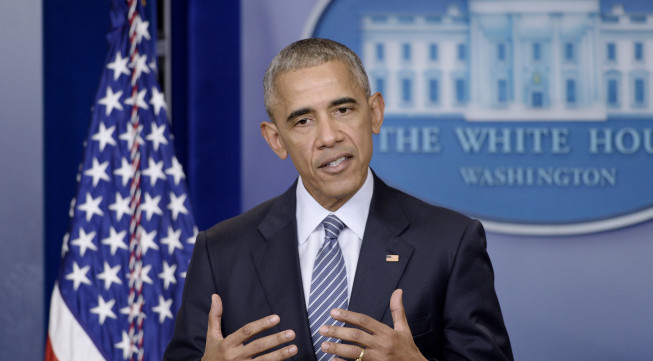
Ranga Mataire, Group Political Editor
Ahead of the US-Africa summit that kicked off yesterday in Washington, the United States State Department issued a general lofty aspirational statement: “Africa will shape the future- not just the future of the African people, but of the world. Africa will make the difference on tackling the most urgent challenges and seizing the opportunities we all face.”
It all indeed sounds magnanimous for the US to wax lyrical about Africa but a closer examination reveals a disturbing trend of a continent that of late has become the battleground of contending global powers. So what is the summit likely to offer to Africa?
Will America remodel its intrusive foreign policy towards Africa, which has not resulted in changed material conditions for the African peoples?
Many observers believe that nothing of material value is likely to come out of the summit unless the US remodels its foreign policy. As one analyst remarked, the problem is that the US has traditionally viewed Africa as a problem to be solved while others see Africa as a place of opportunities.
In analysing relations between the US and Africa, Stephen D Krasner in “International Politics: Enduring Concepts and Contemporary Issues” argues that the Third World states want both wealth and power and seek to use international platforms to advance their interests in ways viewed as antagonistic by most industrialised nations.
Krasner puts into perspective the inherent conflictual nature of relations between the US and Africa, with the former perpetually seeking to entrench its hegemonic influence while the latter is highly suspicious of Washington’s “philanthropic” gambits.
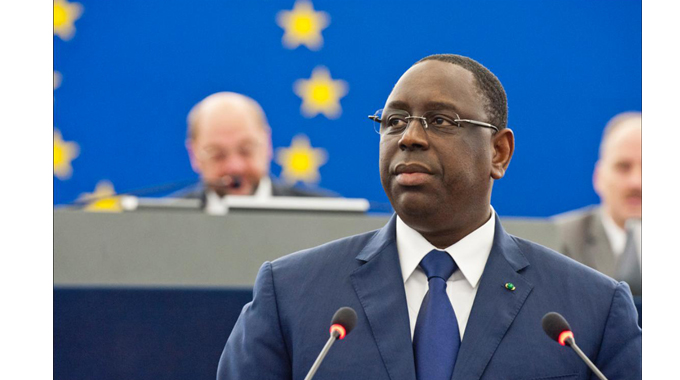
And as clearly explained by the African Union chairperson, President Macky Sall of Senegal, there is a clear difference in value systems borne out markedly varying historical perspectives and how the two sides situate themselves in the global scheme of things. “Let no one tell us no, don’t work with so-and-so, just work with us. We want to work and trade with anyone,” President
Sall said, premising a contentious engagement with the world’s super power.
What seems to escape the US as they engage with African Heads of State, is the fact that they are not looking to be taken out for ice cream. They want tangible things like debt relief and TRIPS waiver. (TRIPS is an intellectual property law that African countries want waived so they can manufacture vaccines.)
The White House says it will use the summit to revitalize older American initiatives like the Africa Growth Opportunity Act, a Clinton-era law lowering some trade barriers to Africa, which is set to expire in 2025.
While that approach makes sense, the danger is that African leaders will see it as a downgrade because when you prioritize everything, you prioritise nothing.
Common sense entails that in the post-colonial, post-Cold War and post-communist containment period, relations between Africa and United States need to be informed by the need to establish a New International Order based on mutual respect and the sanctity of nations sovereignty.
Sadly, the US foreign policy towards Africa is struggling to evolve from being omniscient to humanistic. It’s refusing to move away from its obsession in blackmailing and blacklisting “deviant” states through impositions of sanctions, waging wars and sponsoring regime change.
Even with the full knowledge of its lopsided foreign policy, especially when juxtaposed with China’s multi-polarity and non-intrusive approach, the US has continued with its headstrong and fatally destabilising approach. It has not helped the US in any way as figures show that China is now way ahead in terms of investments.
Chinese trade has continued to grow- hitting a record high last year of US$261 billion. In contrast, since first US-Africa summit hosted by President Barack Obama, the U.S trade with Africa has dwindled to $64 billion- a mere 1.1 percent of US global commerce. China has emerged as an influential player on the African continent because its foreign policy is viewed as dynamic, constructive, flexible and mutually beneficial. China’s massive investments in Africa since 1989 underline its acceptance as an equal partner in development.
While the world is changing, the US is failing to move from its elongated self-importance in world affairs. It’s stuck in a time warp when writers and poets waxed lyrical about it being the “first nation”. Nothing seems to have changed since then.
At the last summit, most African Heads of State felt demeaned by President Obama’s precursor statement that they should not come with begging bowls. The summit broke with tradition in a number of areas with no one-on-one meetings with the host
President. In contrast, similar meetings in China, Japan, India and Europe have seen some Heads of State having one-on-one with the host president.
The summit took the form of an interactive dialogue, with no formal document but mere shaking of hands. Various cabinet secretaries were asked to host the African leaders at private dinners even though they rank below Heads of State.
It is not clear whether this year’s summit would be in any way different. African leaders are not overly enthusiastic but are conscious of the massive bargaining power they possess. While poverty, conflict, famines and corruption are issues that still bobble Africa’s progress, the continent possesses many strengths that are drawing foreign powers.
The continent’s population is projected to double by 2050 to account for one-quarter of the world’s people- a potentially huge market for business. Africa’s huge reserves of rare minerals that will be needed to power the electric vehicles of the future. Africa’s vast forests are among the world’s biggest carbon sinks, and its cultural footprint is expanding.
Will US Secretary of State Antony Blinken’s statement that: “One that shaped our past, is shaping our present, and will shape our future,” match up with the outcome of the summit? We wait to see. Africa is ready to engage economically with the US but its leaders are not stupid. Until the US modifies its foreign policy, Africa will continue fostering relations with other nations seeking tangible mutual development.


 Online Reporter