admin
adminUnited States of America debt aggravated the gloomy economic outlook.
This was exacerbated by the eruption of social unrest in most parts of Britain, which saw malicious damage to property.
In the midst of all this confusion, Zimbabweans were commemorating the lives of gallant sons and daughters who perished in the trenches to liberate us from colonial bondage.
Whether these events mark the genesis of the second version of the 2008 mortgage crisis, which altered the form and shape of the transatlantic zone finance markets remains hazy.
A significant sell-off on a global scale saw most European, Asian and American markets stuttering.
What made the economic state astonishing is the spread of the financial cancer of debt crisis from the usual suspects who are Greece and Portugal to even countries with an impressive savings record such as Italy.
Most of the Italians are still shell-shocked as they presumed the whole crisis was limited to Lisbon and Athens.
This saw the intervention of European Central Bank president Jean-Claude Trichet through the bank’s support for the Spanish and Italian bonds, hence the significant decline in their yield rates.
Italian Prime Minister Silvio Berlusconi’s magnanimity seemed to have evaporated and he also had to patiently wait for the United States Federal Reserve chairman Ben Bernanke’s interest rate policy announcement which seems to have injected an aura of life to the already restive equities markets of the world.
The Spanish five-year credit default swap fell 17 basis points to 332 basis points, the US’s five-year credit default swap fell three basis points to 54 and the FTSE 100 fell below 5 000 for the first time since July last year.
The Bank of America shed 20 percent with mortgage fraud allegations against its chief executive Mr Brian Moynihan by AIG took centre stage.
The chief executive’s proposal to declare dividends for the year was shot down by the financial authorities.
The shaking up of one of Europe’s largest banks will definitely pose a systematic risk to the world markets and the US government’s continued fiscal imprudence leaves most banks more exposed than in 2008 since their appetite to save “too big to fail banks” is crippled.
For the first time since 1917, American debt has been degraded by Standard & Poor from AAA+ rating to AA+, this might have significantly sent investors scurrying for cover which saw most of the equities markets tumbling.
US President Barack Obama dismissed the S & P verdict claiming that the US will always be a triple rated economy.
He however, needs to be reminded that the US Treasury witnessed an unprecedented level of seigniorage which saw them pumping around US$2 trillion into the ailing economy, their unemployment rate at around 9,2 percent cannot tally well with a AAA+ rated economy.
Politicians had of late been setting pace for the biggest economy in the world ahead of technocrats.
This was evidenced by the recent tussle in the House of Representatives where Speaker John Boehner and his Republican followers had been dismissing the raising of the debt ceiling as was agitated by President Obama.
For starters, S & P is a rating agency in the same category of Fitsch and Moody.
These are companies which make their income through subscriptions from clients who request for market information.
In order to rate either a company or country, S & P looks at five variables which are political risk, economic risk, external risk, monetary risk and fiscal risk.
An analysis of risk levels for these factors justify the category a nation qualifies to fall under.
With chronic fiscal deficit, which saw the United States becoming a net borrower to the world alongside an unreliable currency, which had been under pressure notably from emerging markets, it comes as no surprise that the nation had been degraded.
President Obama’s antics against S & P might either be a strategy of denial or a ploy to comfort a restive electorate, which might judge him in next year’s elections for administering a downgraded economy.
The gist of the matter is that he sincerely knows that his country was never destined to remain in the upper echelons among debt nations.
NASDAQ experienced a huge drop in value since September 2008, it shed 66 points on Monday before rebounding on Federal expectations, this was a 6,9 percent decline to its lowest.
S & P 500 plummeted 6,66 percent to its lowest since September last year thus losing 23 points on the way.
Only 10 stocks in S & P 500 are still up over the past three months with German DAX shedding 5 percent Dow Jones losing US$193,5 billion in terms of value.
This financial meltdown was also a dent to ordinary citizens of the West as their pension portfolios were decimated.
Pension contributions went down 15 to 20 percent in value for the last trading days.
Market volatility is at its worst and this shifted investors focus to commodities notably gold and platinum.
The upward rally in gold prices continues with the US$1 773,27 mark having just been recently breached. Platinum closed the day yesterday at US$1 726,50.
China’s exposure to Western markets continues threatening the ever double-digit leap forward, despite recording a 14 percent year-on-year increase in industrial output in July, it had also hit the highest inflation level in three years of 6,5 percent.
Its demand for US Treasury bonds remains high inspite of the US downgrade. This could be the only source of hope for the American government as other Western fellows certainly lack appetite for its debt.
Looking at dividend yield and P/E ratios for most European stocks, there is clear evidence that they are significantly too cheap and one can only but hold onto their portfolio.
A resurgence was experienced back home on the Zimbabwe Stock Exchange, the joke doing the rounds this week is that most foreign investors are shifting their funds from the developed markets of New York Stock Exchange, London Stock Exchange, CAC 40, FTSE 100 to our own ZSE.
But honestly speaking, I don’t believe that the ability of the Indigenisation and Economic Empowerment Act to scare investors is as high as the uncertainty in the Western markets that have been threatening capital gains.
A rebound is to a limited degree being experienced with CBZ perched at 14 cents, Delta 81 cents, Old Mutual 150 cents, Rio Tinto 93 cents and Innscor at 64 cents.
In the long term, the ZSE will definitely rebound to benefit from the world market events.
Thank You and God bless you.
Christopher Takunda Mugaga
Head of Research
Econometer Global Capital
[email protected]
+263 772 340 353, +263 776 266 062


Online Reporter
- Chronicle , SundayNews
- September 10, 2026
- 3 views
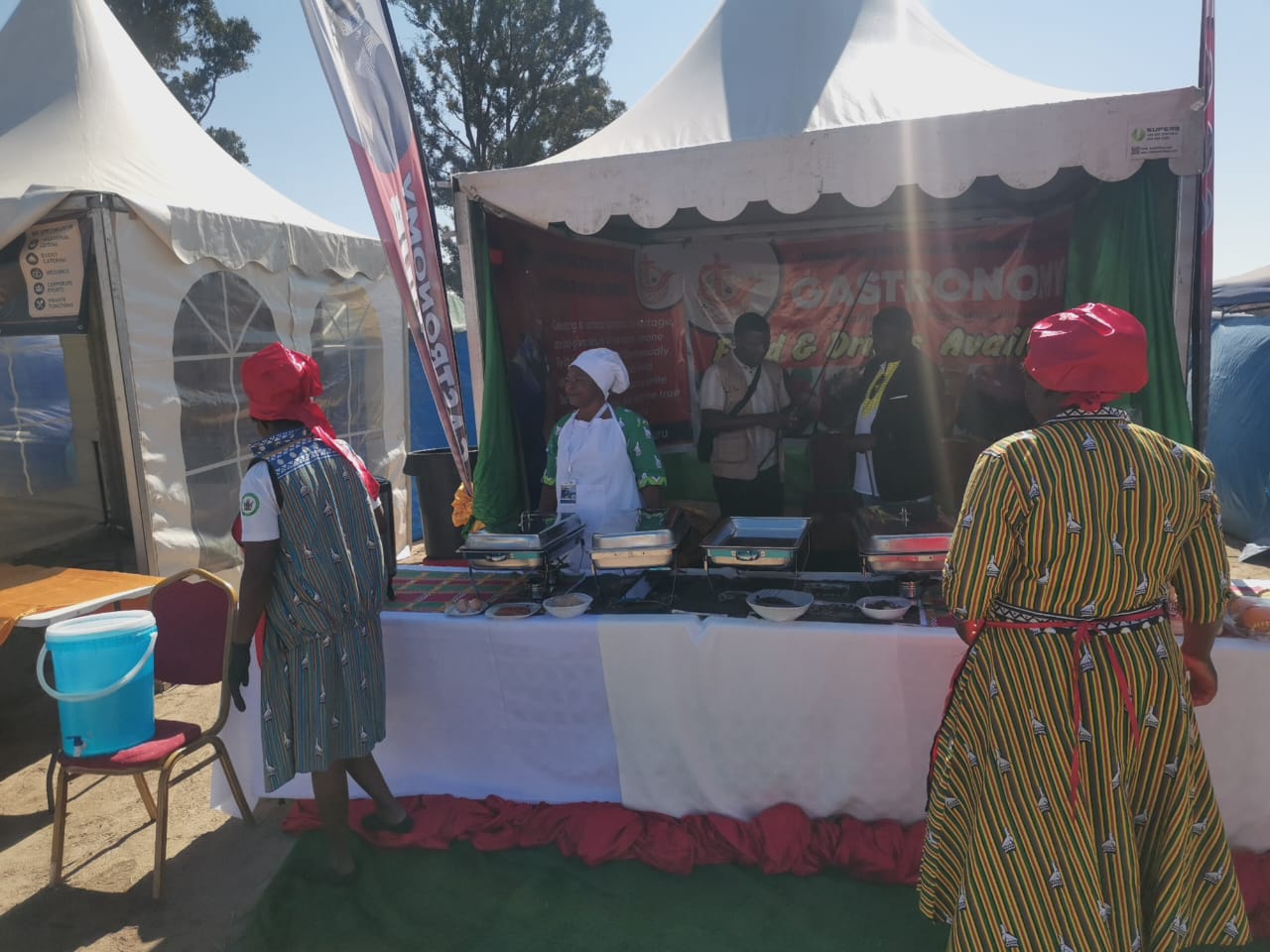
WATCH: Sanganai turns Masvingo food stalls into cash points
Nqobile Bhebhe in Masvingo LOCAL food traders are cashing in on the Sanganai/Hlanganani/Dzimbahwe World Tourism Expo, with some vendors reporting brisk sales while others sold out of food stocks…