Online Reporter
Sifelani Tsiko, Fact Check Editor
Zimbabwe is set to benefit from a US$10 million International Alliance for the Protection of Heritage (ALIPH) fund focused on restoring and protecting some selected 22 archaeological sites across the African continent.
The three-year project spearheaded by the University of Zimbabwe and its partners — National Museums and Monuments of Zimbabwe (NMMZ), Zimbabwe Parks and Wildlife Management Authority (Zimparks), the Nambya traditional leadership, local communities in Hwange and Bumbusi Wilderness Camp aim to preserve the country’s rich cultural legacy in north-western Zimbabwe.
The project aims to restore and protect three significant dry-stone archaeological sites — Bumbusi, Matowa and Shangano — in north-western Zimbabwe.
According to experts, Bumbusi, Shangano, and Matowa served as successive capitals of the pre-colonial Nambya state, which thrived in north-western Zimbabwe from the 14th to the 19th century.
“I’m so excited about this new International Alliance for the Protection of Heritage (ALIPH) project. This project builds on the previous one which was successful. It ran from 2016 to 2025 in north-western Hwange.
“This project provided an archaeological characterisation of dry-stone walled buildings of the Zimbabwe culture associated with the Nambya state that flourished in this region in pre-colonial times,” said Professor Plan Shenjere-Nyabezi, project coordinator and UZ archaeologist.
She said archaeological and cultural heritage research in the country has been uneven with the north-western part of the country going without much attention despite the existence of stone-built sites that date as far back as the early part of the 20th century.
North-western Zimbabwe, she said, remains one of the least researched and archaeologically known parts of the country.
“We’re targeting three archaeological sites — Bumbusi, Matowa and Shangano — in north-western Zimbabwe. We want to restore, rehabilitate, conserve and protect these rich heritage sites.
“These sites are quite unique and significant because they form the north -western expression of the Zimbabwe culture. They are similar to the Great Zimbabwe World Heritage site,” Prof Shenjere-Nyabezi said.
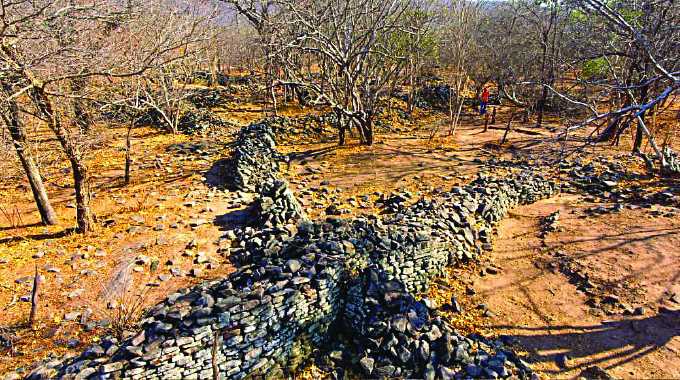
She said these sites are part of the Zimbabwe tradition, known for their distinctive dry-stone wall constructions, and are historically linked to the Great Zimbabwe site, which dates from the 11th to the 19th century AD.
Among the over 400 sites in southern Africa, Bumbusi and Shangano are the largest and most revered by the local communities, particularly the Nambya in north-western Zimbabwe. Bumbusi and Matowa sites are located within the Hwange National Park with Shangano in the adjacent Shangano Communal area.
“These stone structures symbolise the emergence of state societies in southern Africa and represent the capitals of the pre-colonial Nambya state, which thrived from the 14th to the 19th centuries AD,” the UZ archaeologist said.
“According to Nambya oral traditions, Shangano was the first capital, followed by Matowa and then Bumbusi. The Nambya people revere these sites as ancestral landmarks where they conduct traditional rituals.”
Over the past eight years, she said, a highly successful long-term research initiative — encompassing archaeological, ethnoarchaeological, ethnohistorical, and heritage management components — was undertaken in Hwange District with funding from the Volkswagen Foundation, Germany.
The new project will be collaborated with the NMMZ and Zimparks.
“The initial phase will involve consultations with local communities and stakeholders, including traditional ceremonies led by local leaders. This phase will also include ethnographic research on Indigenous Knowledge Systems and recruitment of local workers for restoration efforts,” said Prof Shenjere-Nyabezi.
“The second phase will focus on assessing the condition of the three sites and outlining a restoration roadmap, along with organising training workshops. The third phase will involve restoring collapsed walls, starting with Bumbusi, followed by Shangano and Matowa.
“The final phase will evaluate the activities and interventions, incorporating stakeholder feedback. Contemporary Nambya people trace their ancestry from this state system. Each of these sites played a crucial role in the governance and social organisation of the Nambya people, making them key historical landmarks,” she said.
Zimbabwe is rich in archaeological sites of national, regional and international significance that include Great Zimbabwe, Mapungubwe, Khami, Naletale, Danamombe, Zvongombe, Kasekete and more recently, Mapela.
The latest research in north-western Zimbabwe, on Nambya and the Zimbabwe stone buildings will add to the growing list of the country’s rich cultural heritage.
“The dry-stone structures in Hwange District represent the westerly expression of the Zimbabwe tradition and exhibit similarities and differences from other parts of Zimbabwe and the region,” Prof Shenjere-Nyabezi said.
“The sites showcase the traditional Nambya building techniques and skills. The craftsmanship involved reflects the skills and knowledge passed down through generations, highlighting the community’s architectural heritage and ingenuity.”
More than 300 dry-stone archaeological sites, in a variety of styles, are found in southern Africa, with the majority on the Zimbabwean plateau and adjacent lowlands in the mid-Zambezi and Save River valleys.
Several are scattered in the northern parts of South Africa, north-eastern Botswana and central Mozambique.
These heritage sites now face significant threats from climate change with shifts in temperature and precipitation leading to soil erosion and destabilisation of the stone walls.
Increased rainfall exacerbates this erosion, resulting in structural collapse. Climate change also alters vegetation patterns and causes extreme temperature fluctuations, which can dislodge stones and compromise structural integrity.