Online Reporter
Rumbidzayi Zinyuke in Bulilima
ZIMBABWE is fast-tracking the rollout of Phase Two of its national health infrastructure expansion programme, supported by a US$12,5 million Treasury investment aimed at improving access to healthcare in rural and under-served communities. The initiative is designed to strengthen primary healthcare delivery across the country, extending modern medical services to areas that have long struggled to access quality care.
The programme aligns with the Second Republic’s broader vision of achieving universal healthcare access under the National Development Strategy 2 (NDS2), which places strong emphasis on improving social services and upgrading key public infrastructure. Under NDS2, Government committed to constructing new health facilities, rehabilitating existing ones, improving drug availability and enhancing the country’s health workforce.
This week, Health and Child Care Minister Dr Douglas Mombeshora toured the confirmed site for the Lady Stanley Health Centre in Bulilima District, where one of the planned 22-bed facilities will be built as part of the ongoing programme. Phase Two includes the construction of four new facilities: Manhize Health Centre in Chivhu, Rudhanda Health Centre in Zaka, Paradza Health Centre in Chivi South and Lady Stanley Health Centre in Bulilima.
The first phase, costing US$11,2 million and fully funded by Government, delivered Stoneridge Health Centre, Cowdray Park Health Centre, Mataga Health Centre and Runyararo Health Centre — all of which have significantly eased pressure on urban and peri-urban facilities.
Speaking during the site visit, Dr Mombeshora said Government had already paid in full for the construction of the Bulilima facility, noting that delays were mainly due to water challenges at the site.
“Bulilima does not currently have a district hospital, but we have already identified land where we intend to construct one. The most important development here is the site where we are going to construct a 22-bed mini-hospital under the NMS project. The delays we experienced were largely due to challenges with water availability at the site.”
Dr Mombeshora said efforts to drill a borehole within the site had failed, prompting authorities to secure water about two kilometres away near a river.
“They have now successfully identified a viable borehole site about two kilometres from here. I met with the NMS team on Monday and directed that water be pumped from that point to this site. The piping is already underway and what remains is the installation of storage tanks. Once that is done, construction will commence in earnest.”
He said the new facility would greatly improve service delivery in the district, adding that parallel efforts were underway to boost drug supplies and ensure essential services such as mortuary facilities become fully functional. He expressed hope that the centre would be operational before year-end, offering critical care to villagers who have long travelled significant distances to access health services.
For Bulilima villagers, the planned health centre marks a long-awaited shift toward improved healthcare access. Mrs Janet Mvundla said the development showed rural communities were being prioritised.
“This development shows that our area has not been forgotten. For years, we have had to travel long distances to access proper medical care, especially for pregnant women and the elderly. Having a modern facility here will benefit many wards in Bulilima and even people from neighbouring districts,” she said.
Mr Godman Ncube said the project had reignited hope among residents.
“We are excited because this will greatly improve healthcare services in our community. Many families struggle to find transport to faraway hospitals, and sometimes patients delay seeking treatment because of the distance,” he said.
Mrs Sithabiso Nkomo added that the mini-hospital would ease a long-standing burden.
“We are very happy that a modern health facility is going to be built here. It means we will no longer endure the long and costly journeys to access proper treatment,” she said.
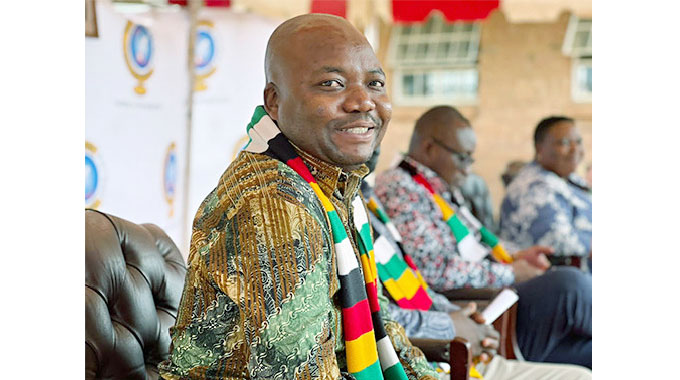
Bulilima legislator and Deputy Minister of Information Communication Technology, Postal and Courier Services, Dingumuzi Phuthi, welcomed the development, describing it as a major boost for the district.
“I am very excited about the state-of-the-art and modern health facility that is going to be constructed here in Bulilima, particularly at Ndolwane Village in Ward 6. It will reinforce the efforts that have been rendered by the existing Lady Stanley facility, which has served the community for many years but now faces significant capacity challenges.”
He said the new facility would serve at least six wards in Bulilima, as well as communities across the river in Tsholotsho District in Matabeleland North.
The continued implementation of Phase Two underscores Government’s commitment to decentralising healthcare and strengthening primary health services, particularly in rural and hard-to-reach areas.