admin
admin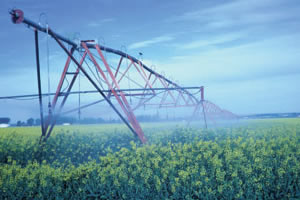
6 000 hectares.
Figures from the Finance Ministry show that about 80 new irrigation schemes were at various implementation stages while more than 30 projects were being rehabilitated.
Finance Minister Tendai Biti has set aside US$15 million for rehabilitation and development of irrigation schemes.
With the changing weather patterns across the world, analysts have called for prioritisation of irrigation schemes particularly in developing countries to mitigate the effects of climate change.
“In Africa, the climate change has not really affected the rains but it is the issue of the effectiveness of the rains.
“What we need to prioritise now is the ‘harvesting’ of water for irrigation projects,” Mr Gift Mugano, a lecturer of international economics at Bindura University, said.
“This will help to mitigate the effects of climate change while putting the country on course of reducing poverty by 50 percent in the next three years as spelt out in the Millennium Development Goals.”
According to reseaech, climate change could put the lives of an additional 75 million to 250 million people at risk. Also, flood-prone areas in Southern Africa are likely to become wetter as rainfall patterns shift.
This was likely to cause more frequent flooding, which would divert resources from development to emergency relief assistance. Experts have predicted that in some countries farmers will harvest just 50 percent of their current yields by 2020 as a result of climate change.
Irrigation, however, gives farmers an opportunity not only to produce in summer but to carry out their activities throughout the year.
Minister Biti noted that in the absence of irrigation schemes, most farmers have failed to grow from subsistence to commercial farming.
“This stark reality was brought out by many farmers during the budget consultative process noting that commercial farming without irrigation is no different from subsistence farming,” he said.
“This draws from unpredictability variability in the rainfall patterns which adversely affects agricultural output, particularly in the southern parts of the country.
“There is, therefore, need to enhance efforts in irrigation development and rehabilitation.”


 Online Reporter